
• 817 se 9th street Deerfield Beach FL 33441
  • Monday-Friday
    8:00 am - 6:00 pm
24/7 Emergency Service

954-695-2979

close

Understanding SEER HSPF and AFUE Before You Buy a New AC
Decode the Efficiency Ratings

Shopping for a new air conditioner or heat pump can feel like learning a new language. Sales reps throw around terms like SEER, HSPF, and AFUE as if everyone knows what they mean. Most people don’t. These ratings directly impact your monthly FPL bill. Understanding them helps you compare systems accurately and avoid overspending.

Explore Each Rating Type

Click each rating to learn what it means and how it affects your energy costs

SEER: The MPG for Your Air Conditioner

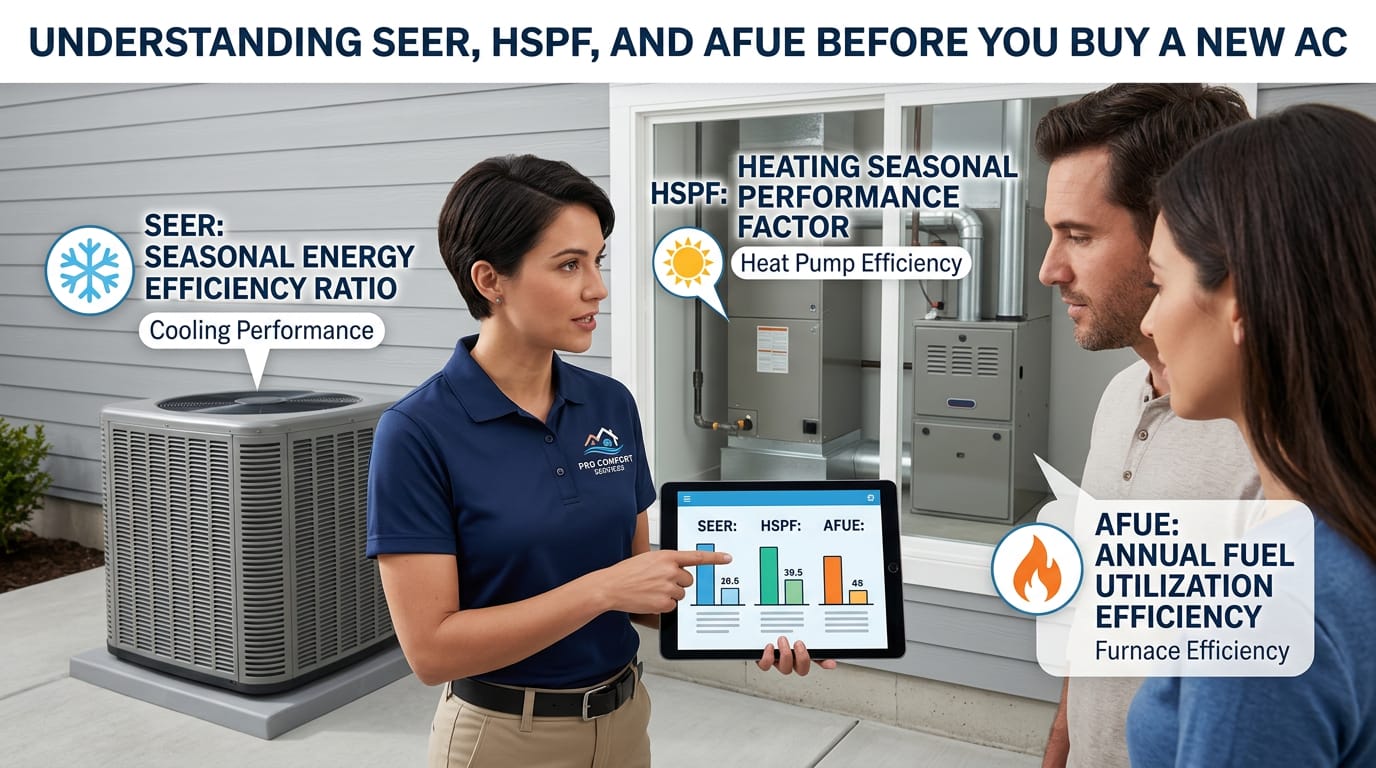
SEER stands for Seasonal Energy Efficiency Ratio. Think of it like the miles-per-gallon rating on a car. The higher the number, the less energy your AC uses to cool your home.

SEER Rating Scale
16 SEER2
Poor
13-14
Standard
15-16
Good
17-18
Excellent
19-22

What Is a Good SEER Rating in Florida?

For South Florida homeowners, SEER matters more than almost anywhere else in the country. Your AC runs 8 to 10 months out of the year, so even small efficiency gains add up fast. The current federal minimum for our region is 14.3 SEER2 for split systems up to 4 ton. Most contractors recommend systems between 16 and 20 SEER for Florida homes, depending on your budget and how long you plan to stay in the house.

SEER vs SEER2: What Changed?

In 2023, the Department of Energy updated testing standards, which is why you now see SEER2 ratings on new equipment. The new testing method uses higher external static pressure to better reflect real-world conditions. A unit rated at 16 SEER under the old system might be labeled 15.2 SEER2 now. When comparing units, make sure you’re looking at the same rating type.

HSPF: The Rating for Your Heat Pump

HSPF stands for Heating Seasonal Performance Factor. If you own a heat pump, this number tells you how efficiently it heats your home during cooler months.

HSPF Rating Scale
8.5 HSPF2
Minimum
7.5
Standard
8-8.5
Good
9-9.5
Excellent
10+

HSPF Rating for Heat Pumps Explained

The HSPF scale works differently than SEER. Current minimums require an HSPF2 of 7.5 for new installations in our region. High-efficiency heat pumps can reach 10 HSPF or higher. For most Florida homeowners, an HSPF between 8 and 9 offers a solid balance of performance and value. Since the heating season is short here, investing in a higher SEER rating may deliver better overall savings.

AFUE: The Rating for Your Furnace

AFUE stands for Annual Fuel Utilization Efficiency. This rating applies to gas and oil furnaces and measures what percentage of fuel gets converted into usable heat. An 80% AFUE furnace loses 20% of its fuel energy as exhaust, while a 96% AFUE furnace wastes only 4%.

AFUE Rating Scale
95% AFUE
Low
80%
Standard
85%
Good
90%
Excellent
95-98%

Does AFUE Matter in Florida?

Most South Florida homes don’t have traditional furnaces. Heat pumps handle both cooling and heating, making them the preferred choice for our climate. If your home does have a gas furnace, look for units with at least 90% AFUE. High-efficiency condensing furnaces reach 95% to 98% AFUE but cost significantly more upfront. Given how little we heat our homes, that premium rarely pays off here.

SEER Savings Calculator

Compare different SEER ratings to see your potential savings
Efficiency Improvement
29%
Monthly Savings
$57
Annual Savings
$688
10-Year Savings
$6,875

Compare Efficiency Levels

Slide through to see how different ratings perform

Standard vs High-Efficiency AC

14 SEER2 System

Initial Cost: $3,500 – $5,500

Monthly Bill: $200

Annual Cost: $2,000

10-Year Total: $25,500

18 SEER2 System

Initial Cost: $5,500 – $7,500

Monthly Bill: $143

Annual Cost: $1,429

10-Year Total: $21,788

Saves $3,712 over 10 years

Heat Pump Efficiency Comparison

8 HSPF2 Heat Pump

Heating Efficiency: Standard

Winter Monthly: $85

Best For: Budget-conscious buyers

Lifespan: 10-15 years

10 HSPF2 Heat Pump

Heating Efficiency: Excellent

Winter Monthly: $68

Best For: Long-term value

Lifespan: 12-18 years

25% more efficient

Return on Investment Timeline

16 SEER2 → 18 SEER2

Price Difference: $1,500

Annual Savings: $350

Break-Even: 4.3 years

15-Year Savings: $5,250

16 SEER2 → 20 SEER2

Price Difference: $2,800

Annual Savings: $525

Break-Even: 5.3 years

15-Year Savings: $7,875

Best long-term value

How to Read the HVAC Energy Guide Label
SEER2 Rating
18.0

Energy Efficiency Ratio

Every new HVAC unit includes a bright yellow EnergyGuide label. The large number in the center shows the unit’s efficiency rating. Below that, you’ll see a scale comparing it to similar models. Your actual operating costs depend on local electricity rates and how often you run the system.

A Florida Homeowner’s Cheat Sheet to Efficiency Ratings

Minimum SEER2

14.3

Recommended SEER2

16-20

Good HSPF2

8-9

Savings Potential

20-30%

You can also explore more ways to lower your energy bills without sacrificing comfort.

HVAC Ratings FAQs

What is the new SEER2 rating?

SEER2 is an updated efficiency measurement introduced in 2023. It uses more realistic testing conditions with higher air resistance. The rating numbers appear slightly lower than old SEER ratings, but the equipment performs the same.

Is it always worth buying the highest SEER rating?

Not necessarily. If you plan to move in five years, the energy savings won’t offset the higher purchase price. But if you’re staying long-term in a home with high cooling demands, an 18-20 SEER system often makes financial sense.

Do these ratings account for Florida’s humidity?

SEER and HSPF measure energy efficiency, not dehumidification. However, higher-efficiency systems with variable-speed compressors typically remove more humidity because they run longer at lower speeds.

Where can I find the efficiency rating on my current HVAC unit?

Check the yellow EnergyGuide label on the unit itself. You can also find model numbers on the nameplate and look up specifications on the manufacturer’s website. If the label is missing or faded, your local HVAC technician can identify the rating during a service visit.

Ready to Choose the Right System?

Understanding efficiency ratings helps you make an informed decision. Our team can assess your home’s specific needs and recommend the SEER, HSPF, or AFUE rating that delivers the best value for your situation.