

What Are Heat Strips and Do You Need Them in South Florida?
Decoding “AUX HEAT” on Your Thermostat
If you have a heat pump and spotted “AUX HEAT” on your thermostat during a cold night, you probably wondered what that meant. Heat strips are behind that display. For most South Florida homeowners, they are a normal part of how home heating systems operate, and understanding them can save you from unnecessary worry, and unnecessary energy bills.
Click each component to learn its role in your heating system
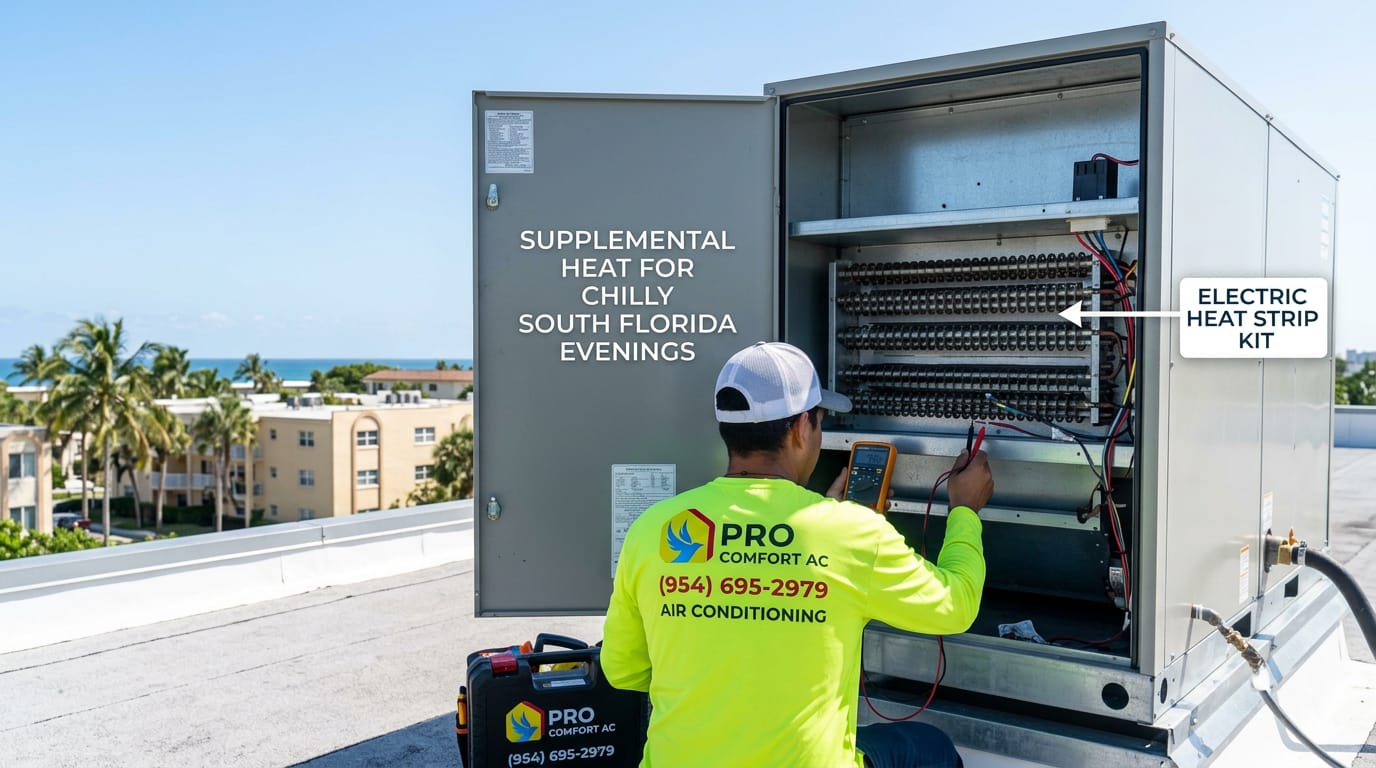
Heat strips are electric resistance coils that live inside your air handler unit. Think of them like the heating element in an electric oven, built directly into your HVAC system and controlled by the thermostat rather than a dial. When outdoor temperatures drop low enough that the heat pump cannot keep up on its own, the heat strips kick in as a secondary heat source.
Heat Pump vs. Heat Strips: How They Work Together
Toggle between modes to understand the difference
How Heat Pumps Work
A heat pump heats your home by pulling warmth from the outdoor air and moving it inside. This works well in mild weather, but as outdoor temperatures fall, there is less heat energy available in the air to pull from. Output drops, and the system needs a little help.
40°F+
300-400%
Low
How Heat Strips Work
Heat strips are electric resistance coils, similar to the heating element in your oven. When electricity flows through them, they generate heat directly. The thermostat manages the whole process. When the heat pump is not raising indoor temperatures fast enough, it signals the air handler unit to activate the strips.
Below 40°F
~100%
High
Why Heat Strips Are Common in Florida Homes
Most homes in Florida use heat pump systems rather than gas furnaces. Florida winters are short, and installing a full gas furnace for a handful of cold nights each year rarely makes sense. Heat strips give heat pump systems the backup capacity they need during cold fronts without requiring gas lines or additional fuel infrastructure.
The Three Ways Heat Strips Turn On
Slide through each activation trigger
Cold Fronts and Higher Electric Bills
Electric resistance heating draws significantly more power than a heat pump running in normal conditions.
During a cold front with overnight temperatures in the 40s, heat strips may run longer or cycle more frequently than usual. Homes with older insulation, tile floors, or single-pane windows lose heat faster and require the system to work harder to maintain the set temperature.
AUX Heat (Automatic)
What it is: Activates automatically when heat pump needs assistance
How it works: Heat pump + Heat strips run together
When you see it: Cold nights, temperature jumps, defrost cycles
What to do: Nothing – this is normal operation
Emergency Heat (Manual)
What it is: Manual setting that bypasses the heat pump entirely
How it works: Heat strips only (no heat pump)
When to use: ONLY when heat pump has failed while waiting for repair
What to do: Switch back to normal heating mode immediately
Important Distinction
AUX heat activates automatically. The thermostat brings the heat strips in alongside the heat pump when more output is needed. Both components run at the same time, and you do not control this directly. Seeing AUX on your thermostat during a cold night is completely expected behavior.
Emergency heat is a manual setting that disables the outdoor unit entirely and runs only the heat strips and blower fan. It exists for situations where the heat pump has failed and you need temporary warmth while waiting on a repair. Running the system in emergency heat for extended periods is costly and hard on the strips.
Do Heat Strips Make Sense for Your Home?
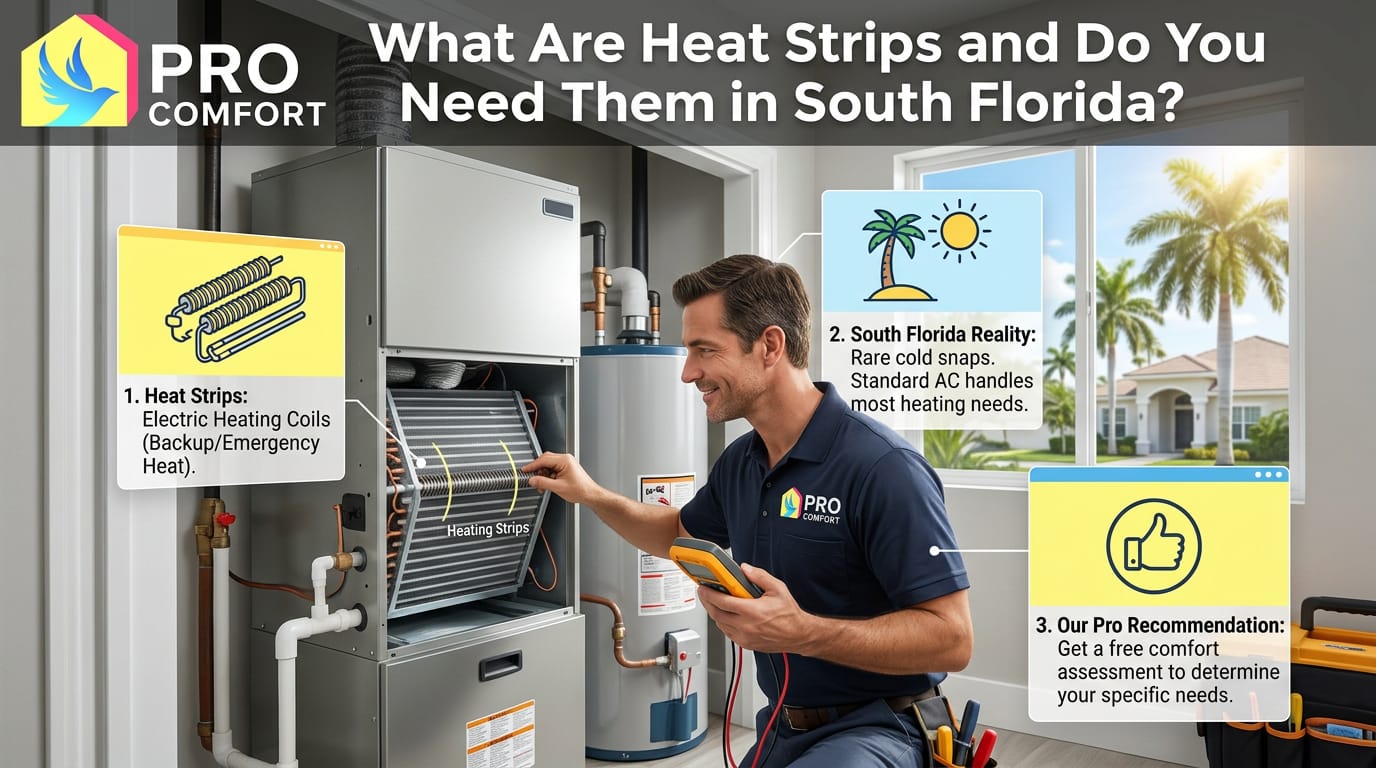
For most South Florida homeowners, heat strips are a standard part of a heat pump installation rather than an optional add-on.
You’ll Likely Use Them If…
- Your home uses a heat pump as the primary heating source
- You have family members who are sensitive to temperature changes
- Your flooring is tile or concrete, which holds cold during winter months
- You regularly run the heat during cold fronts
You May Rarely Notice Them If…
- You keep indoor temperatures low during winter and do not adjust sharply
- You tolerate cooler indoor temps and prefer layering
- Your home is well-insulated and holds heat efficiently
Either way, heat strips come standard with most air handlers used in Florida heat pump systems. The more useful question is not whether you need them but what to do when they seem to be misbehaving.
Warning Signs That Heat Strips Might Have a Problem
Heat strip issues are easy to miss during warm weather because they only activate in cold conditions. These are the signs worth watching for once temperatures drop.
AUX never appears on the thermostat
If outdoor temperatures are in the low 40s and the system is running but never triggering auxiliary heat, the strips may not be engaging. This could indicate a faulty contactor, broken wire, or thermostat issue.
Breaker trips repeatedly when heat runs
Heat strips draw considerable amperage, and a circuit that keeps tripping can point to an electrical issue with the strips or wiring. This requires immediate professional attention.
Burning smell at start of heating season
A burning smell at the start of the heating season is common when dust has settled on the coils over the summer. If the smell lingers beyond the first few cycles, it is worth having someone take a look.
Lukewarm air on cold nights
Lukewarm air on cold nights when the system is clearly running suggests the strips are not contributing heat the way they should. The heat pump alone may not be sufficient in cold weather.
None of these are guaranteed to mean a serious problem, but they are worth noting rather than ignoring before the next cold front arrives.
What Florida Homeowners Should Take Away From This
Heat strips are a backup heating source built into heat pump systems, stored inside the air handler, and activated automatically when the heat pump needs support. In South Florida, they matter most during cold fronts and defrost cycles.
Seeing AUX on your thermostat does not signal a problem. It means the system is doing what it was designed to do.
The more expensive scenario is running in emergency heat by mistake, or having heat strips that are silently not working when temperatures fall. Knowing what to look for and how these components interact gives you a much clearer picture of what your system is doing and why your bill looks the way it does in winter.
Need Help With Your Heating System?
If you’re seeing unusual behavior with your heat strips, or if your electric bills seem higher than they should during cold weather, our team can diagnose the issue and recommend the right solution for your South Florida home.