

Boca Raton Hurricane AC Prep Guide for Homeowners
Is your Boca Raton AC ready for hurricane season? Here is how to secure the outdoor unit, power it down safely, and inspect it before you run it again.
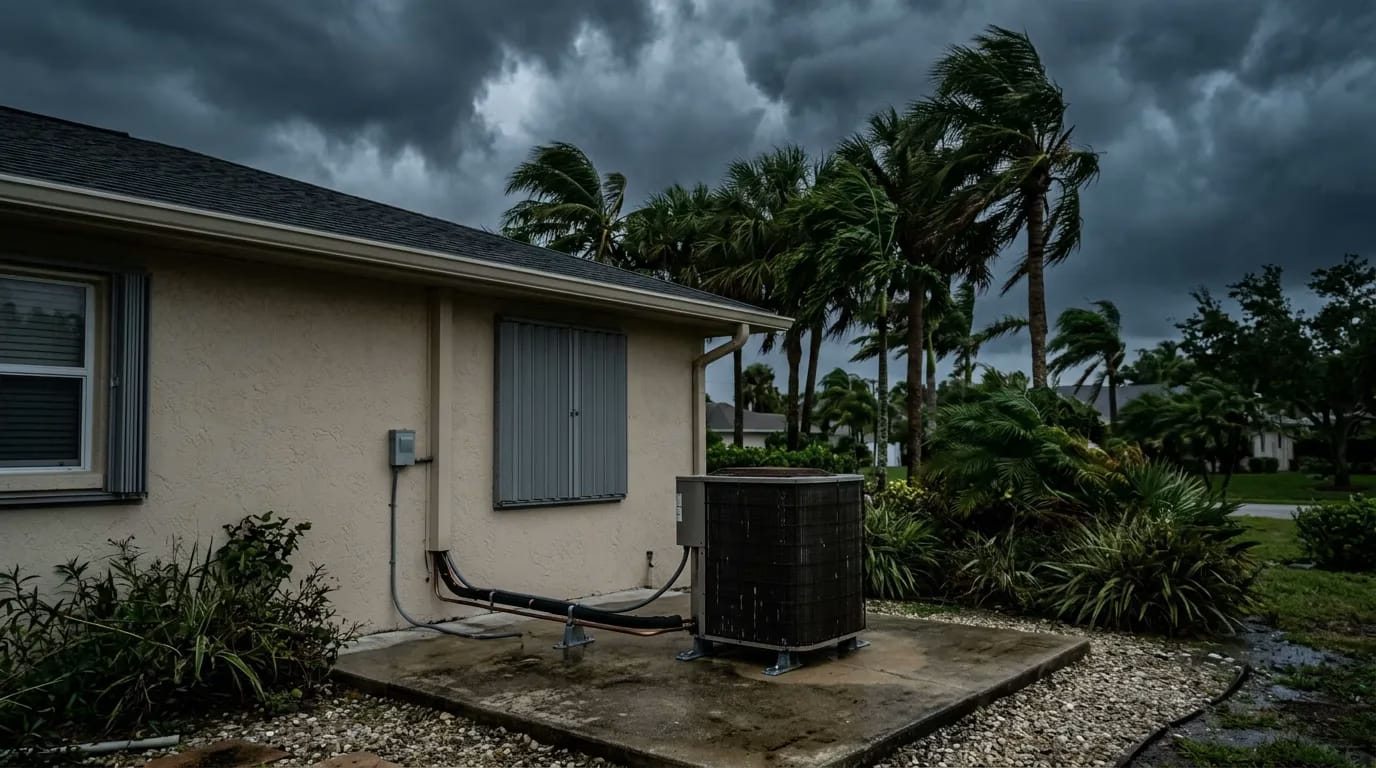
Hurricane season runs from June through November in South Florida, and your air conditioner is one of the most exposed systems on your property. The outdoor condenser can take a hit from wind, flying debris, flooding, power surges, or sudden restarts after an outage.
For Boca Raton homeowners, hurricane prep for AC systems usually comes down to three steps: shut the system down before the storm gets close, protect the outdoor unit as much as possible, and inspect the equipment before turning it back on once power returns.
This guide walks through what to do before, during, and after a storm so your AC system is not damaged by a rushed restart or missed warning sign.
Your Storm Prep, Phase by Phase
Tap through each phase and check off items as you go. Your progress saves as you work down the list.
Pre-Storm AC Checklist
Run through these a day or two ahead of any approaching system.
- Turn the thermostat to off, then shut the dedicated breaker for the AC
- Confirm the condenser is strapped or bolted to its pad
- Clear loose patio furniture, branches, and yard items that could become projectiles
- Raise portable or window units off the floor in flood-prone rooms
- Photograph the system for insurance records before the storm hits
- Use a breathable, manufacturer-approved cover only, if you cover the unit at all
During the Storm — Stay Powered Down
The system should already be off at the breaker.
- Leave the AC off at the breaker, not just the thermostat, to remove the electrical path entirely
- Do not run the system — cycling can pull moisture and debris into the equipment
- Keep it off through the worst of the voltage swings and any nearby lightning
- Wait to flip it back on until you have confirmed the outdoor unit is dry and undamaged
Post-Storm AC Checklist
Work through this list before flipping the breaker back on.
- Look for standing water or flood lines around the condenser
- Remove leaves, branches, and debris from around and inside the unit
- Check for bent coil fins, loose panels, or a unit knocked off its pad
- Listen for unusual sounds and watch for burning smells after power is restored
- Confirm the thermostat responds normally and the system begins cooling
- Schedule an inspection if anything looks off rather than running it on a guess
Should I Turn Off My AC During a Hurricane?
Yes — at the thermostat and the breaker.
You should turn off your AC at the thermostat and at the breaker before a hurricane reaches your area. Storms bring violent voltage swings across the FPL grid, and a single surge or a nearby lightning strike can damage the compressor or the control board in seconds. A unit that is powered down has nothing for that surge to travel through.
Leaving the system running also risks pulling moisture and debris into the equipment as it cycles. Switching it off at the breaker, not the thermostat alone, removes the electrical path entirely. Flip it back on only after you have confirmed the outdoor unit is dry and undamaged.
How to Protect Your Outdoor AC Unit Before the Storm
Your condenser stays outside, exposed to wind, rain, and whatever the storm carries along the way. The goal before landfall is to keep it anchored and shielded without trapping moisture against the metal.
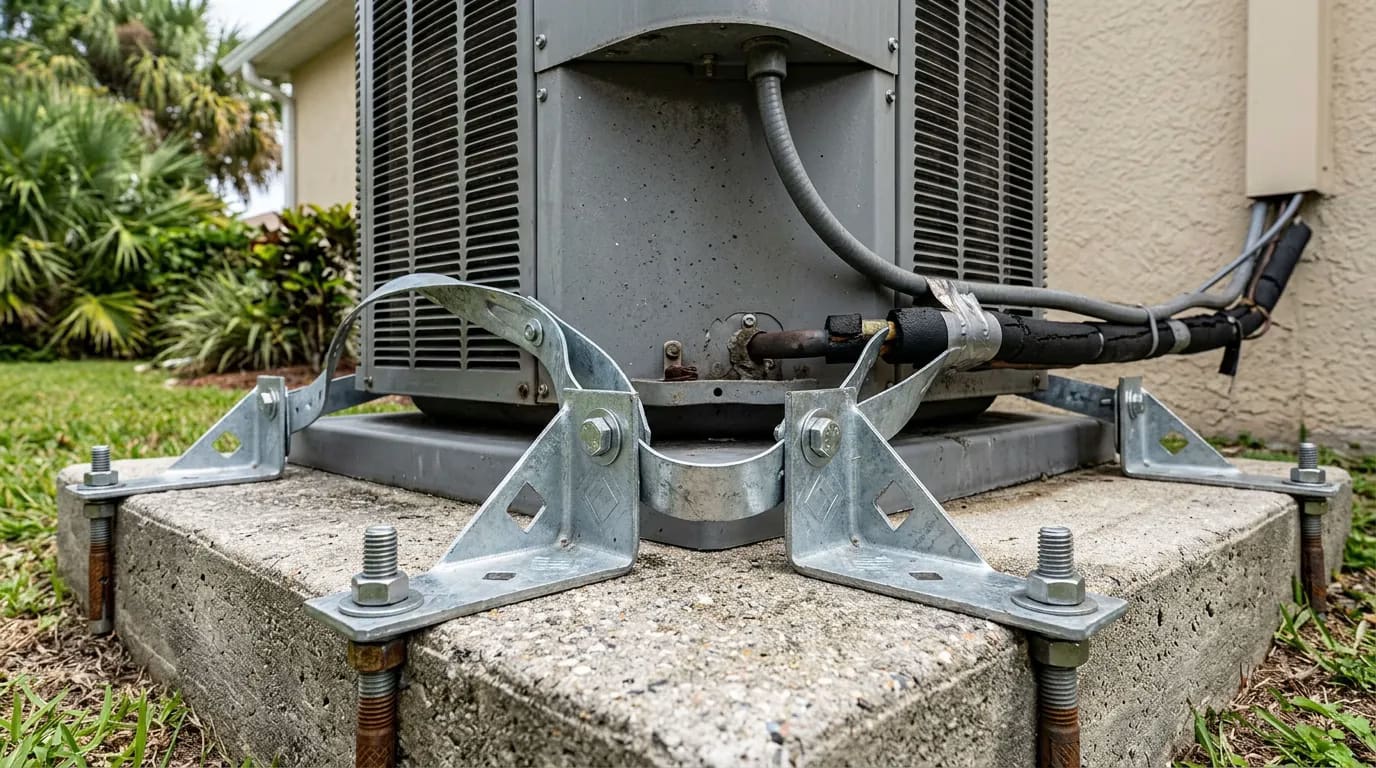
Tie-down straps or hurricane brackets rated for Palm Beach County wind codes hold the condenser to its pad during high gusts. Many newer installations already include them, but older Boca homes often do not, so it is worth checking now rather than the night before a warning. Avoid wrapping the unit in plastic tarps, which trap humidity and encourage corrosion in our salt-heavy coastal air.
Tie-Down Straps & Brackets
Rated for Palm Beach County wind codes — they hold the condenser to its pad during high gusts.
Skip the Plastic Tarp
Tarps trap humidity and encourage corrosion in salt-heavy coastal air. Use a breathable cover only.
How Often Should AC Be Serviced in Florida Before Hurricane Season?
In areas like Boca Raton, an air conditioner should usually be serviced twice a year. The spring visit before hurricane season is especially important because it helps catch small problems before heavy heat, humidity, and storm outages put more stress on the system.
During a pre-season service visit, a technician can check refrigerant levels, tighten electrical connections, clear the drain line, and confirm the outdoor unit is properly secured. Loose wiring, clogged drainage, or a shaky condenser pad can create bigger problems once wind, rain, and power interruptions enter the picture.
Boca Raton systems often run close to year-round, so they wear faster than units in cooler climates. Homes near the coast can also see more corrosion from salt air, especially around coils, fasteners, and fan components. A spring tune-up gives you a better chance of finding those issues before hurricane season starts.
What to Do With AC Damage After a Hurricane
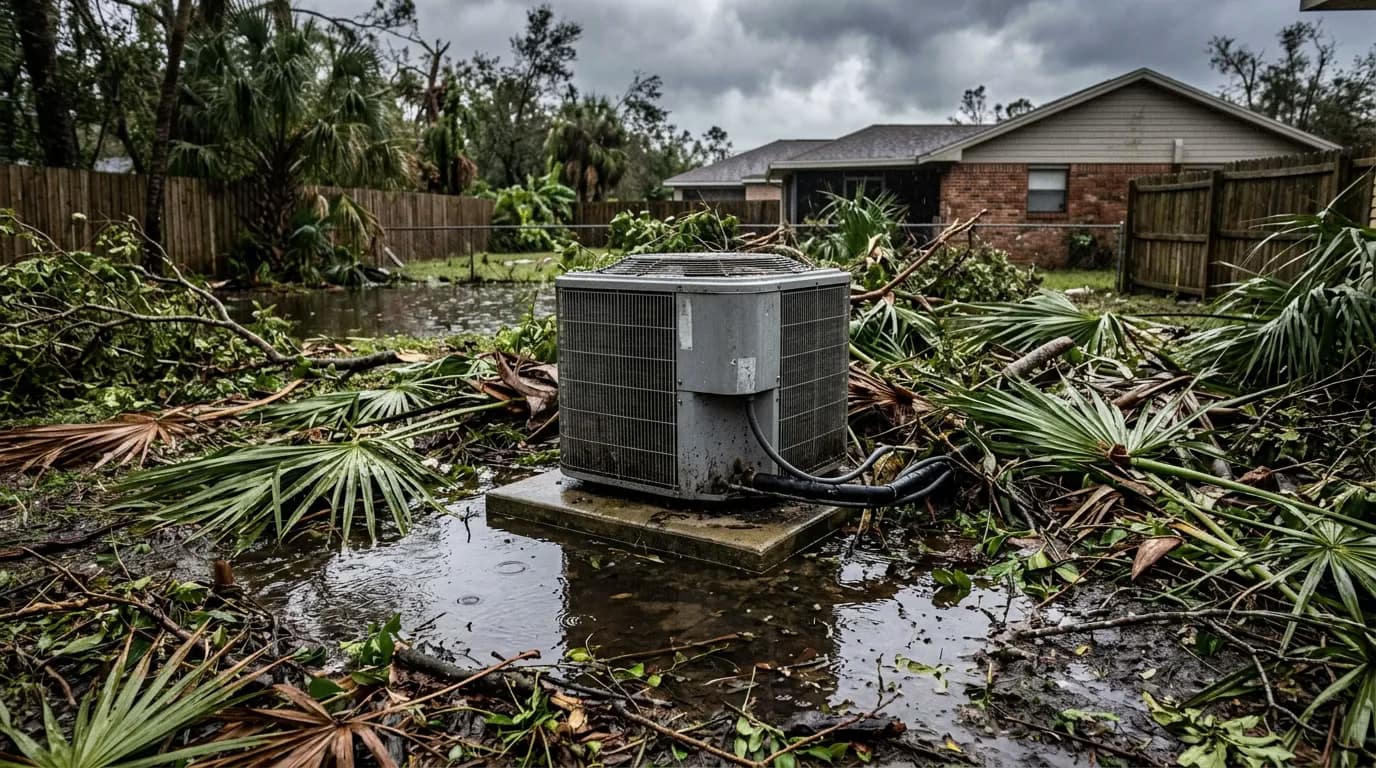
Do not turn the system back on right away after a hurricane. Start by checking the outdoor unit for standing water, debris, bent fins, loose panels, or signs that it shifted off its pad.
Standing water is the biggest warning sign
If water got into the electrical components, the system can short out as soon as power is restored. If the unit was flooded, hit by debris, or moved out of place, leave the breaker off and schedule an inspection before running it again.
If the unit was flooded, hit by debris, or moved out of place, leave the breaker off and schedule an AC repair inspection before running it again. Starting a damaged system too soon can turn a repairable issue into a much larger problem, especially if the compressor is affected.
Storm Damage and Your System Brand
Storm damage can affect any AC system, no matter which brand is installed outside your home. Flooding, flying debris, power surges, and loose electrical connections can all create problems after a hurricane.
The brand still matters when it comes to repair planning. Some systems have parts that are easier to source, while older or higher-end units may need a closer inspection before the best repair path is clear.
If your unit is already aging or you have been considering replacement, the weeks before peak storm season are a smart time to review your options. A properly installed system with surge protection, secure electrical connections, and a stable outdoor pad is better prepared for severe weather.
Keeping Your HVAC System Secure for Boca Raton Weather
Hurricane prep is not something to handle at the last minute. The systems that hold up best through storm season are usually the ones that are checked before problems start.
That means scheduling service before peak heat, keeping the outdoor unit clear, watching for corrosion, and checking that the pad, fasteners, and electrical connections are still in good shape.
If your system is older, already struggling, or exposed to salt air and storm debris, it is worth having it inspected before hurricane season gets busy. A small issue found early is easier to handle than an AC failure after the power comes back on.
Get Storm-Ready Before the Season Gets Busy
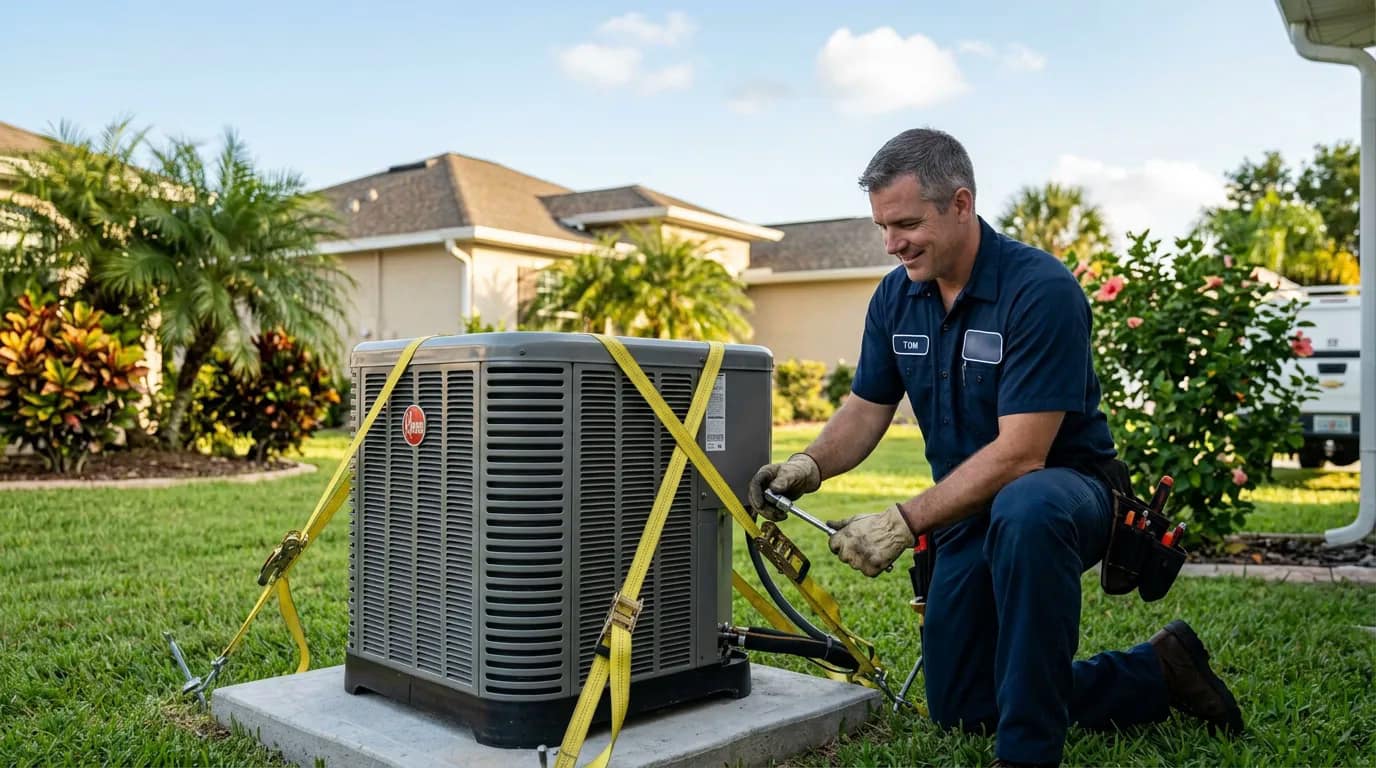
Schedule a pre-season tune-up and we’ll check refrigerant, tighten electrical connections, clear the drain line, and confirm your condenser is secured to its pad — same-day service across Boca Raton and Palm Beach County.
Frequently Asked Questions
Yes. Turn off your AC at the thermostat and at the breaker before a hurricane reaches your area. Storms bring violent voltage swings, and a single surge or nearby lightning strike can damage the compressor or control board. A powered-down unit has nothing for that surge to travel through.
Use tie-down straps or hurricane brackets rated for Palm Beach County wind codes to hold the condenser to its pad. Clear loose yard items that could become projectiles. Avoid plastic tarps, which trap humidity and encourage corrosion — use a breathable, manufacturer-approved cover only.
Don’t turn it back on right away. Check the outdoor unit for standing water, debris, bent fins, loose panels, or signs it shifted off its pad. If it was flooded, hit by debris, or moved, leave the breaker off and schedule an inspection — starting a damaged system too soon can turn a repairable issue into a much larger problem.
In areas like Boca Raton, an air conditioner should usually be serviced twice a year. The spring visit before hurricane season is especially important because it catches small problems before heat, humidity, and storm outages stress the system.