

Do You Need a Permit for AC Installation in Boca Raton?
Planning an AC replacement in Boca Raton? Here is when a permit is required, what the change-out form covers, and why skipping it costs you more later.
Yes — for any new install or full replacement.
The City of Boca Raton and Palm Beach County require a building permit for any new air conditioning installation or full system replacement. If you are putting in a new unit, swapping out a condenser and air handler, or changing the system entirely, that work has to be permitted and inspected under the Florida Building Code.
Most people only run into this question once they get a quote and notice a permit fee on the estimate, or when a neighbor mentions their AC swap got flagged during a home sale. The short version is that a permit protects you. The details around forms, fees, and timing are where it gets confusing, so here is what matters before the work starts.
Do I Need a Permit to Replace My AC in Florida?
Yes, replacing an existing AC system in Florida requires a permit, even if you are only changing the equipment and not the ductwork. Chapter 489 of the Florida Statutes requires licensed HVAC contractors to pull a building permit for installations, change-outs, and major repairs. A full system replacement, a condenser swap, and an air handler replacement all fall under this rule.
The one common exception is a window or through-wall unit. Boca Raton lists replacing a window AC unit as work that does not need a permit. Central systems, mini splits, and packaged units are a different story and always require one.
If you are still deciding whether replacement makes sense or another repair is enough, it helps to look at the age of the unit, the repair quote, the refrigerant type, and how often the system has needed service lately.
Does Your AC Job Need a Permit?
Tap the type of work you’re planning to see whether Boca Raton requires a permit.
New central AC installation
New installs are permitted and inspected under the Florida Building Code.
What AC Work Needs a Permit, and What Does Not
Not every job triggers a permit. Here is how the common types of work break down for residential systems in Boca Raton.
| Type of AC Work | Permit Required |
|---|---|
| New central AC installation | Yes |
| Full system replacement, change-out | Yes |
| Condenser unit replacement only | Yes |
| Air handler replacement only | Yes |
| Ductwork modification or replacement | Yes |
| Minor repair with no refrigerant or electrical work | No |
| Window or through-wall unit replacement | No |
If a job involves refrigerant, electrical connections, or replacing a major component, assume a permit is part of it. A capacitor swap or a quick diagnostic visit usually is not.
What Is the Boca Raton AC Change Out Form?
The Boca Raton AC change out form is the mechanical permit application used when you replace an existing air conditioning system with a new one. It tells the Building Division what equipment is going in, where it goes on the property, and who is doing the work. A change-out simply means swapping an old system for a new one rather than building a system from scratch.
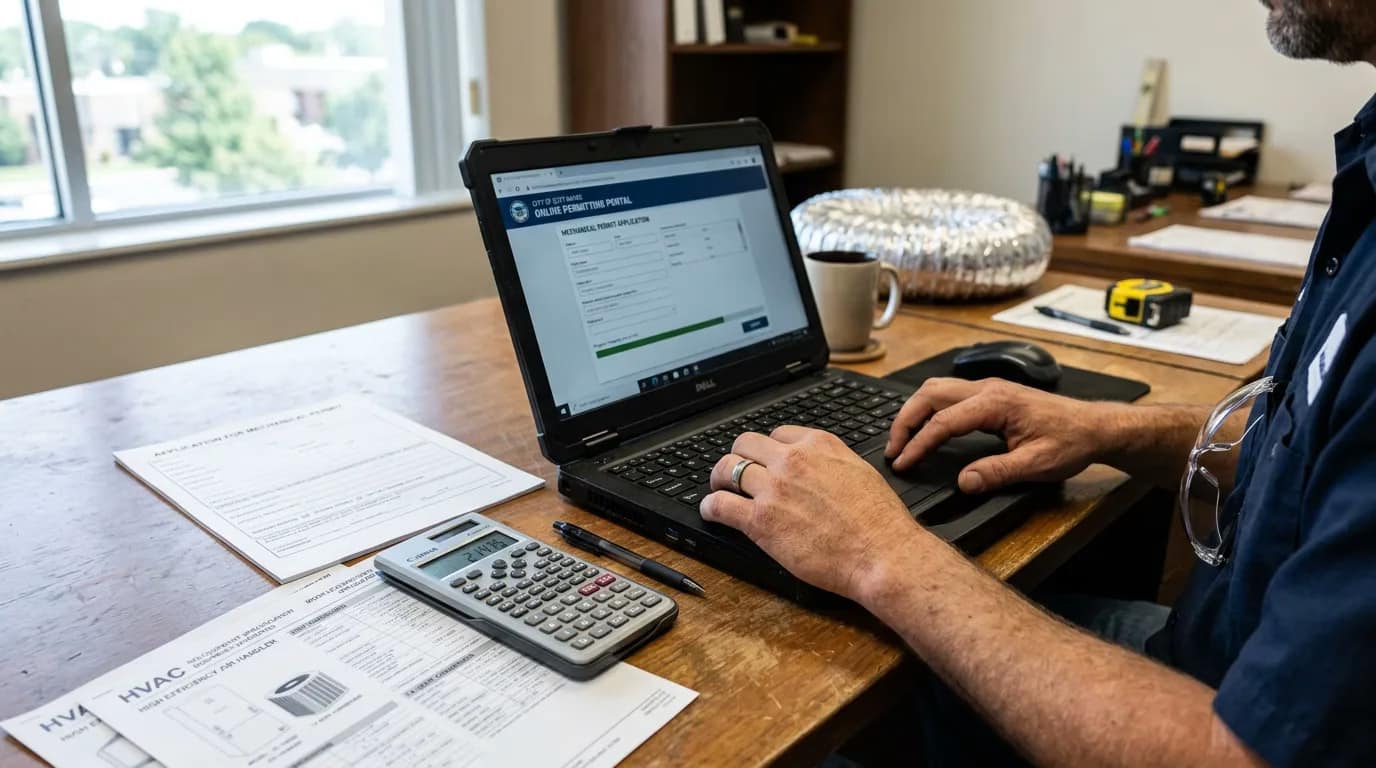
The application asks for property details, the contractor’s license and insurance information, manufacturer specs for the new equipment, and in many cases an energy calculation showing the system meets current efficiency code. Applications go through the city’s online permitting portal, which also lets you track the status as it moves through review.
Who Pulls the Building Permit for HVAC Work?
A licensed contractor pulls the permit in almost every case. Florida requires HVAC contractors to hold a valid license from the Department of Business and Professional Regulation, and the installing company normally files the Boca Raton building permit for HVAC work as part of the job. You can check any contractor’s license on the DBPR website before you hire.
Florida does allow homeowners to apply as owner-builders if the property is their residence and they perform or directly supervise the work. For AC systems this is rarely practical, since refrigerant handling requires EPA certification and the work still has to pass the same inspections as a professional install.
How Much Does an AC Permit Cost in Palm Beach County?
For most residential systems, an AC permit in Palm Beach County and Boca Raton runs somewhere in the range of $75 to $150, with the exact fee tied to the value and size of the job. Larger or more complex installations can cost more, and reinspection or expedited processing carries extra fees. Because the fee schedule changes over time, it is worth confirming the current amount with the City of Boca Raton Building Division before you budget.
Typical Permit Fee
Most residential systems; larger jobs cost more.
Review & Approval
Business days, shifting with department workload.
During a Heat Wave
Some replacements move faster as emergency jobs.
Review and approval typically takes about 5 to 10 business days, though that can shift with the department’s workload. During a heat wave, some replacements move faster as emergency jobs. A good contractor builds this timeline into the project so it does not catch you off guard.
Does an AC Replacement Need a Notice of Commencement?
For most home AC change-outs, no. Florida updated its rules so that contracts for repairing or replacing an existing heating or air conditioning system under $15,000 are exempt from the Notice of Commencement requirement. That covers the large majority of residential replacements in Boca Raton.
A Notice of Commencement, recorded with the county before the first inspection, still applies to bigger projects and to new HVAC systems installed as part of larger construction. If your replacement is a standard like-for-like swap under that threshold, this is usually one less form to think about. For anything unusual, your contractor or the Building Division can confirm what applies.
What Inspections Happen After the Permit Is Issued?
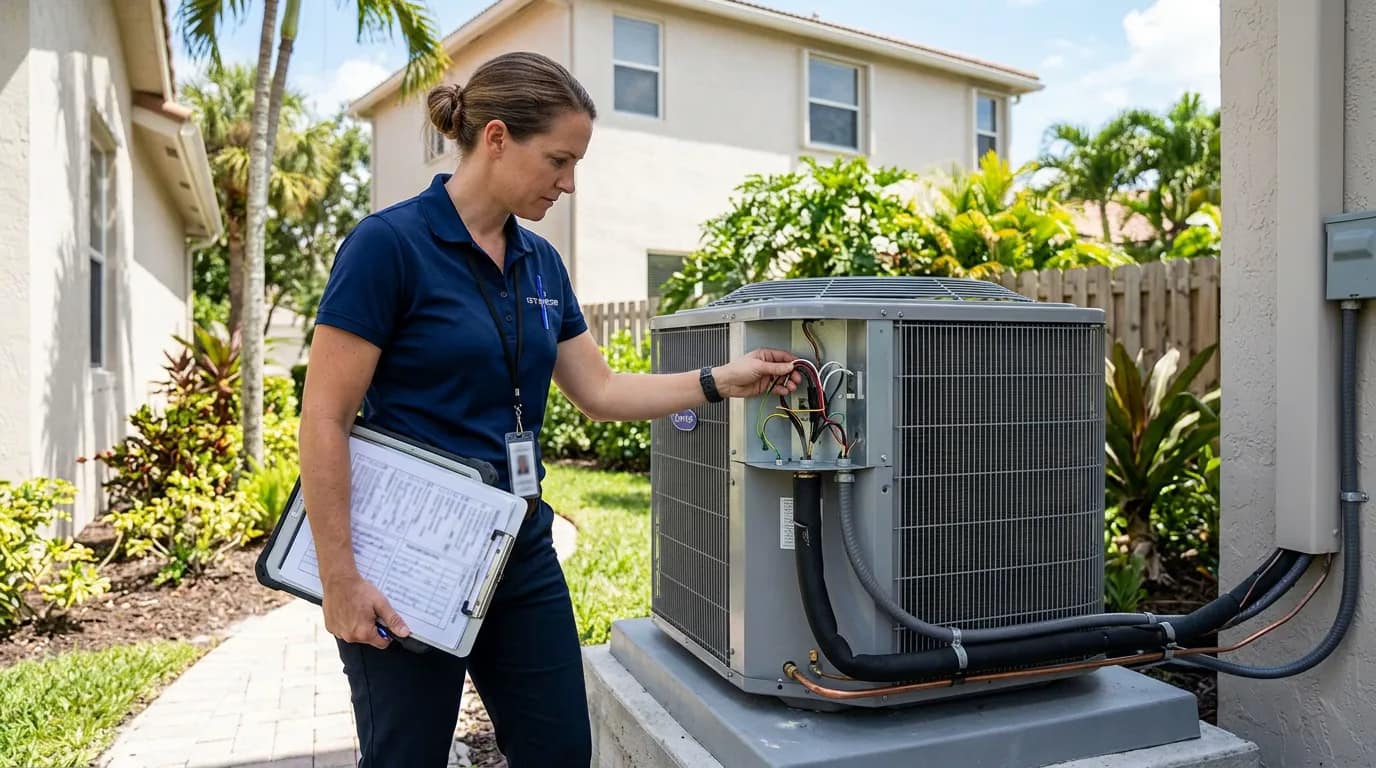
After the install is finished, a city inspector checks the work against the approved plans. Most residential AC replacements need at least a final inspection, while larger jobs may need a rough-in inspection along the way. The inspector looks at equipment placement, electrical connections, refrigerant lines, condensate drainage, and access to the unit.
- Inspector reviews the workEquipment placement, electrical connections, refrigerant lines, condensate drainage, and access to the unit.
- Correction notice if neededIf something doesn’t meet code, you get a chance to fix it before a reinspection.
- Permit closes on passOnce the system passes, the permit closes and the install is officially approved.
If something does not meet code, you get a correction notice and a chance to fix it before a reinspection. Once the system passes, the permit closes and the install is officially approved. That closed permit is the document you will want later for a home sale, an insurance claim, or warranty service.
After the system is approved, regular AC maintenance helps keep the new equipment clean, draining properly, and running within the condition expected after installation.
Why Skipping the Permit Costs More Later
Unpermitted AC work tends to surface at the worst possible time, and it gets expensive in more than one way.
If the system fails suddenly, starts leaking, or creates an electrical concern, it is better to schedule an emergency AC repair visit before the issue turns into a bigger code, safety, or insurance problem.
What are the penalties for unpermitted AC work?
The city can issue fines that often start at roughly double the original permit fee and climb from there. A stop-work order is also possible, halting use of the system until the paperwork is corrected. Repeat or hazardous violations push the cost higher still.
How Does Unpermitted Work Affect a Home Sale or Insurance Claim?
Many homeowner policies can deny a claim tied to unpermitted modifications, so a water leak or electrical fault from an uninspected system could land on you. During a sale, buyers and inspectors look for permits on major systems, and an unpermitted AC often means a renegotiated price, a demand to permit it after the fact, or a deal that falls apart. Retroactive permitting usually costs more and can require opening up parts of the install for inspection.
Does the AC Brand You Install Change the Permit Process?
The permit process is generally the same no matter which AC brand you choose. What changes are the equipment details submitted with the application.
The permit paperwork needs the manufacturer specs, model numbers, efficiency ratings, and other details for the exact system being installed. So the brand and model matter on paper, even though they do not usually change the city’s review steps.
This is why proper AC installation planning matters. The system has to fit the home, meet current efficiency requirements, and have the correct documentation ready for permit review and inspection.
Getting the Permit Handled Without the Headache
For most homeowners, the simplest option is to hire a licensed contractor who handles the permit, coordinates with the Building Division, and schedules the required inspections as part of the installation.
That keeps your role limited to reviewing the project details, signing where needed, and saving copies of the closed permit and inspection approvals for your records.
If you are planning an AC replacement in Boca Raton, the permit and change out form should be handled before the new system goes in. That way, the installation is documented properly, completed legally, and ready for inspection without last-minute confusion.
We Handle the Permit, Forms, and Inspections
Pro Comfort AC pulls the permit, coordinates with the Boca Raton Building Division, and schedules every required inspection as part of your installation — so your AC replacement is documented, legal, and inspection-ready.
Frequently Asked Questions
Yes. Replacing an existing AC system in Florida requires a permit, even if you’re only changing the equipment and not the ductwork. Chapter 489 of the Florida Statutes requires licensed HVAC contractors to pull a permit for installations, change-outs, and major repairs. The one common exception is a window or through-wall unit.
For most residential systems, an AC permit in Palm Beach County and Boca Raton runs roughly $75 to $150, tied to the value and size of the job. Review and approval typically takes about 5 to 10 business days. Confirm the current fee with the City of Boca Raton Building Division before you budget.
A licensed contractor pulls the permit in almost every case. Florida requires HVAC contractors to hold a valid DBPR license, and the installing company normally files the building permit as part of the job. Homeowners can apply as owner-builders, but it’s rarely practical since refrigerant handling requires EPA certification.
The city can issue fines that often start at roughly double the original permit fee and climb from there. A stop-work order is possible, and unpermitted work can cause a homeowner’s insurance claim to be denied or derail a home sale. Retroactive permitting usually costs more and may require opening up parts of the install.