

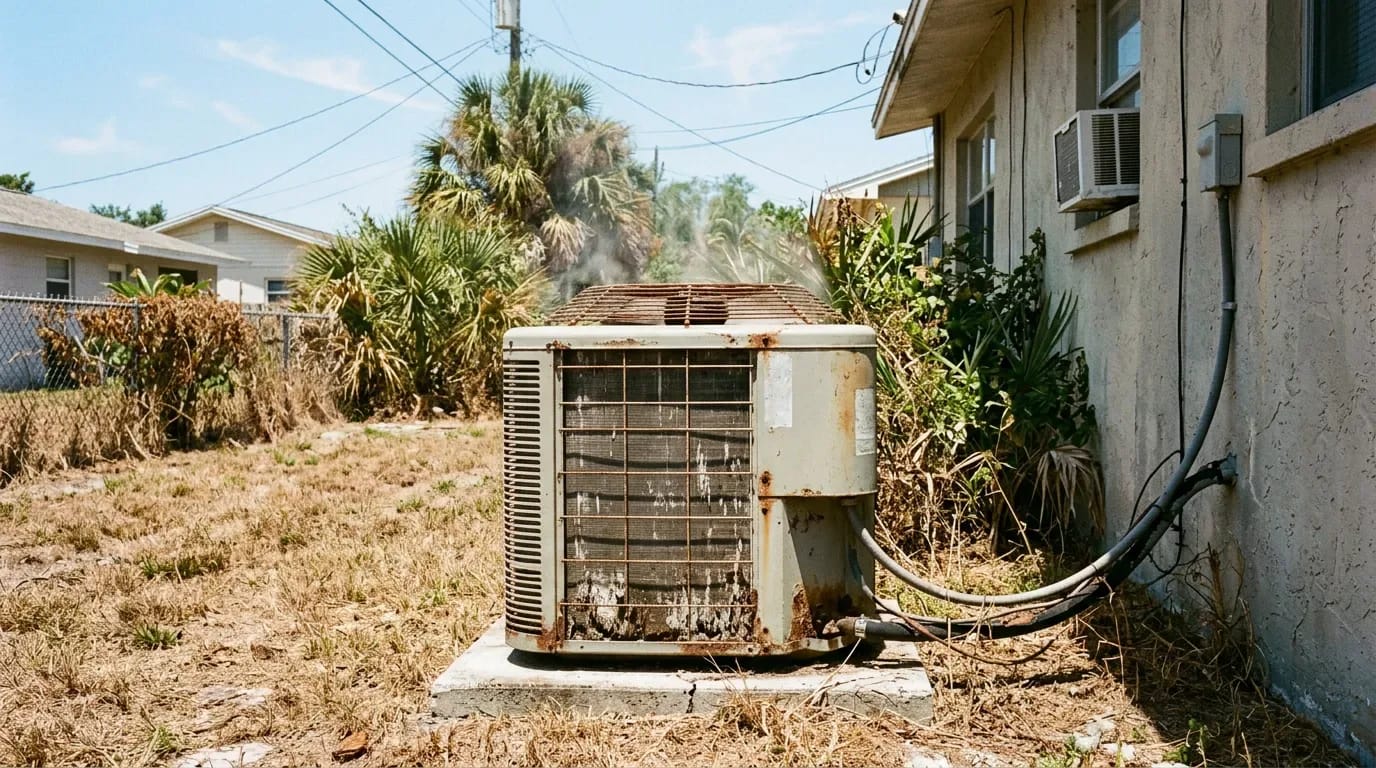
How Long Does an AC Unit Really Last in South Florida?
Year round cooling, coastal salt air, and humidity cut Boca Raton AC lifespan to 10 to 12 years. Here’s what to expect at year 5, year 8, and past the 10 year mark.
Most homeowners in Palm Beach County get about 10 to 12 years out of a central air conditioner. That’s shorter than the 15 to 20 year figure often quoted for the rest of the country, and there’s a straightforward reason for it. Systems running along the South Florida coast face year-round operation, high humidity, and salt-heavy air, and each of those forces chips away at the equipment.
If your system is closing in on the 10 year mark, you’re not being paranoid by starting to plan ahead. You’re being realistic.
How Long Does a Central AC Unit Last in Florida?
The short answer is 10 to 12 years for most South Florida homes, and coastal properties often land closer to 8 to 10 years. National averages of 15 to 20 years assume seasonal downtime and dry indoor air, neither of which applies in Boca Raton or anywhere else on this stretch of the coast.
Florida homeowners typically log around 2,000 hours of cooling per year. Compare that with roughly 1,200 hours in a mixed climate up north, and the math on wear and tear starts to make sense. Your compressor runs through more cycles, your evaporator coil pulls moisture out of humid air for more months, and your outdoor condenser is exposed to salt spray if you’re anywhere near the ocean.
Why Do AC Units Fail Faster in Florida?
Three forces drive early AC failure in this region. Year-round runtime, extreme humidity, and coastal salt air. Each one accelerates a different part of the system, and together they push the average service life down by several years.
Year-Round Cooling Loads
Even in January, a warm afternoon or stuffy laundry room can trigger the compressor. That constant duty cycle wears out motors, capacitors, and contactors on a timeline a Chicago homeowner would find surprising.
Extreme Humidity
Outdoor humidity stays above 75 percent most of the year. The AC isn’t only fighting heat — it’s pulling several gallons of water out of the air every day, stressing the coil, drain line, and electrical components.
Coastal Salt Air
Salt deposits build on aluminum fins, copper lineset connections, and the coated coil itself. Once corrosion takes hold, refrigerant leaks and coil failures follow.
Year-Round Cooling Loads
South Florida summers are long, and winters rarely give the system a real break. Even in January, a warm afternoon or a stuffy laundry room can trigger the compressor. That constant duty cycle wears out motors, capacitors, and contactors on a timeline that a Chicago homeowner would find surprising.
Short cycling makes this worse. An oversized or aging system that clicks on and off too frequently is harder on the compressor than one that runs longer cycles at a steadier pace.
Extreme Humidity
Outdoor humidity in South Florida stays above 75 percent for most of the year. The AC isn’t only fighting heat, it’s pulling several gallons of water out of the air every day. That moisture load stresses the evaporator coil, the drain line, and the electrical components inside the air handler.
If indoor humidity climbs above 60 percent, mold growth becomes a real concern, which is one reason variable-speed systems have become popular in coastal Palm Beach County homes. They run longer at lower capacity and remove more moisture per cycle.
Coastal Salt Air
If you live within a few miles of the Atlantic, salt is quietly corroding your outdoor condenser. Salt deposits build up on aluminum fins, copper lineset connections, and the coated coil itself. Once corrosion takes hold, refrigerant leaks and coil failures follow, and those repairs often cost enough to tip a homeowner toward replacement.
Boca Raton homes are especially exposed. The local Boca Raton climate combines humidity, salt, and heavy summer cooling loads in a way that few other markets in the country match, which is a common reason systems here don’t reach the ages advertised on the manufacturer warranty.
What Happens to Your AC Between Year 5 and Year 12?
Air conditioners rarely fail overnight. Tap each stage to see what’s happening inside the system and what it means for your decision.
Year 5 — Still Close to Spec
Early efficiency driftAt the five year mark, most systems are still performing close to spec. You might notice slightly higher electric bills, or a longer wait for the house to cool down on a 92 degree afternoon. Coil buildup and refrigerant charge levels are the usual suspects.
This is the point where routine system maintenance pays for itself. A tune-up now catches small problems before they cascade into larger ones.
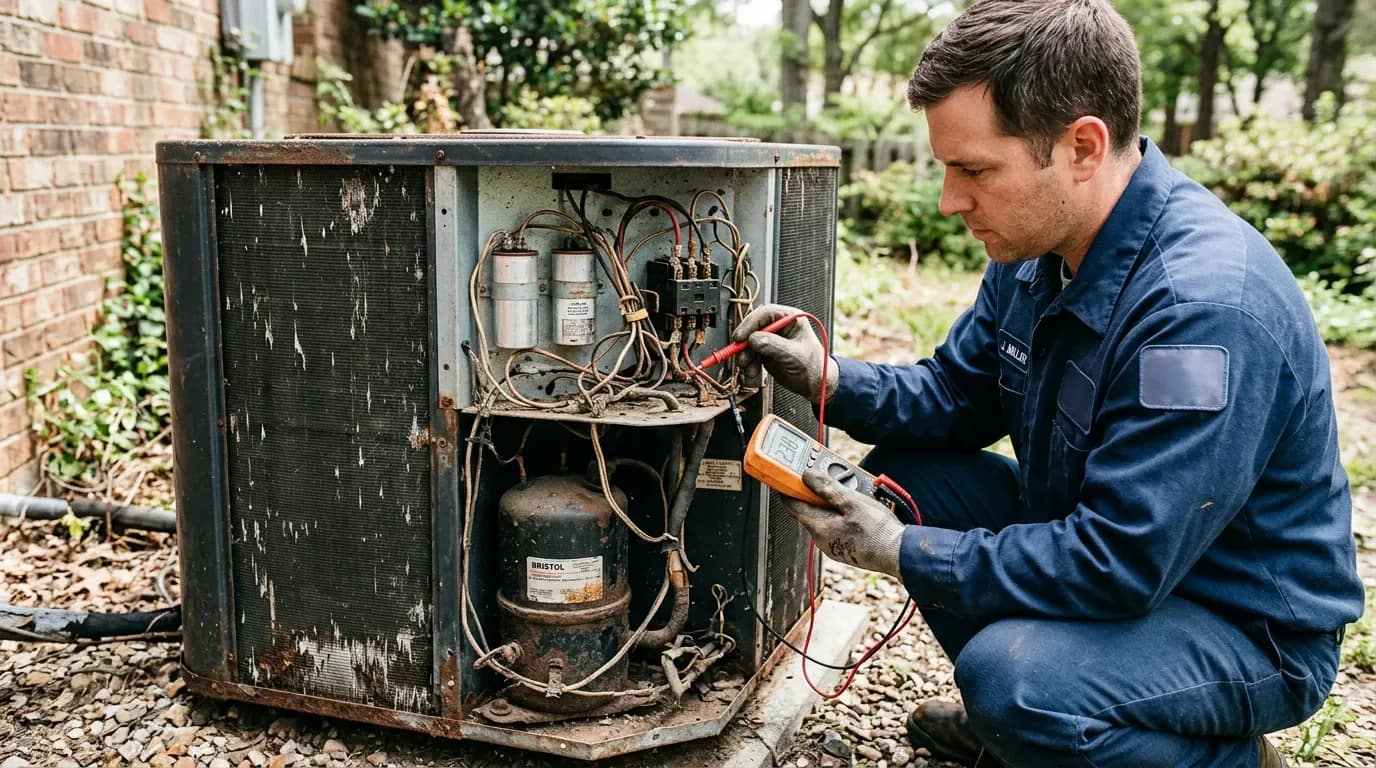
Does Salt Air Ruin Air Conditioners Near the Coast?
Yes, salt air noticeably shortens the life of an AC condenser. Homes within five miles of the coast see faster corrosion on outdoor units, and homes right on the water can lose a system in as little as seven or eight years without protective coatings and regular rinsing.
How proximity changes the math
The damage isn’t visible at first. Salt settles on the aluminum fins of the condenser coil, then combines with humidity to form a slow chemical reaction that eats through the metal. Once the coil starts leaking, refrigerant loss follows, and the compressor works harder against a partial charge, which shortens its own life. Coastal-grade coil coatings and periodic freshwater rinses are the two most effective defenses.
How to Extend AC Lifespan in South Florida
You can’t change the climate, but you can slow the decline. Homeowners who follow a few consistent habits often get two to three extra years out of their equipment before replacement makes financial sense.
Rinse the outdoor condenser with fresh water every few weeks if you’re within a mile of the coast, and keep two feet of clearance around the cabinet. Book a professional tune-up in the spring, and stay on top of regular filter changes every 30 days during peak cooling months. A smart thermostat helps too, since it smooths out run times, avoids overcooling, and can flag unusual behavior before it becomes a service call.
When to Replace an AC Unit Along the Coast
Knowing when to replace comes down to a few clear signals. Check the ones that apply — none on its own is a death sentence, but two or three at once usually shifts the math.
- The system is 10 or more years old and needs a major repair
- Your R-22 or R-410A recharge is quoted above 500 dollars
- FPL bills have climbed steadily despite consistent thermostat settings
- Indoor humidity stays above 60 percent even with the AC running
- You’ve had two or more repair calls in the last 18 months
- The house can’t get below 78 degrees on a hot July afternoon
No replacement signals yet
Keep up with maintenance and rinse the condenser. Check back if anything on this list starts to apply.
None of these on its own is a death sentence. Two or three at once usually means the math no longer favors repair.
AC Models That Hold Up in a Coastal Florida Climate
Not every air conditioner is built for salt air and 2,000 hours of annual runtime. Coastal-specific product lines exist for a reason, and the difference between a standard unit and a coastal one shows up around year seven or eight.
| Brand or Line | Strength in South Florida | Notable Feature |
|---|---|---|
| Carrier Coastal | Built for salt exposure | Factory-coated condenser coil |
| Trane XV or XR series | Humidity control | Variable-speed compressor |
| Rheem or Ruud | Value and parts availability | Solid warranty, widely serviced |
| Daikin Fit and mini-splits | Condos and additions | Inverter technology, quiet operation |
| Goodman | Budget replacement | 10-year parts warranty |
The right pick depends on your home’s square footage, ductwork condition, and how close you live to the water. A Manual J load calculation matters more than the brand badge on the front of the cabinet, and any homeowner within five miles of the Atlantic should confirm the outdoor unit has some form of coil coating, either factory-applied or a quality aftermarket product like Blygold.
Why Proactive Replacement Beats an Emergency Failure
Replacing an aging AC on your own schedule is almost always cheaper and less stressful than replacing one in the middle of a summer outage. Emergency replacements in July mean paying premium rates for both equipment and labor, and often accepting whatever system a contractor has in stock instead of the model you actually wanted.
What planning ahead buys you
Time to compare equipment, apply for FPL rebates and choose a contractor without the pressure of a hot house. A late-winter or early-spring replacement window opens up the widest equipment selection along with calmer pricing.
Planning ahead gives you time to compare equipment, apply for FPL rebates and choose a contractor without the pressure of a hot house. Homeowners who take that path are also far less likely to spend a weekend avoiding sudden breakdowns during peak season, and a late-winter or early-spring replacement window opens up the widest equipment selection along with calmer pricing on upgrading your system.
Getting a Realistic Read on Your System
If your unit is closing in on the 10 year mark, a professional inspection is worth the hour it takes. It won’t force a replacement, but it will give you a clear read on where the system stands and how much time you can reasonably expect before the next round of repairs starts to add up.
Closing in on Year 10? Get a Straight Answer.
A Pro Comfort AC inspection won’t force a replacement — it gives you a clear read on where the system stands and how much time you can reasonably expect before repairs start to add up.
Frequently Asked Questions
10 to 12 years for most South Florida homes, and coastal properties often land closer to 8 to 10 years. National averages of 15 to 20 years assume seasonal downtime and dry indoor air, neither of which applies here. Florida homeowners typically log around 2,000 hours of cooling per year versus roughly 1,200 up north.
Yes. Homes within five miles of the coast see faster corrosion on outdoor units, and homes right on the water can lose a system in as little as seven or eight years without protective coatings and regular rinsing. Salt settles on the aluminum fins, then combines with humidity to eat through the metal.
Rinse the outdoor condenser with fresh water every few weeks if you’re within a mile of the coast, keep two feet of clearance around the cabinet, book a spring tune-up, change filters every 30 days during peak cooling, and add a smart thermostat. Consistent habits often buy two to three extra years.
Consider replacement if the system is 10+ years old and needs a major repair, a recharge is quoted above $500, FPL bills climb despite consistent settings, indoor humidity stays above 60 percent, you’ve had two or more repair calls in 18 months, or the house can’t get below 78 on a hot July afternoon. Two or three at once usually means the math no longer favors repair.