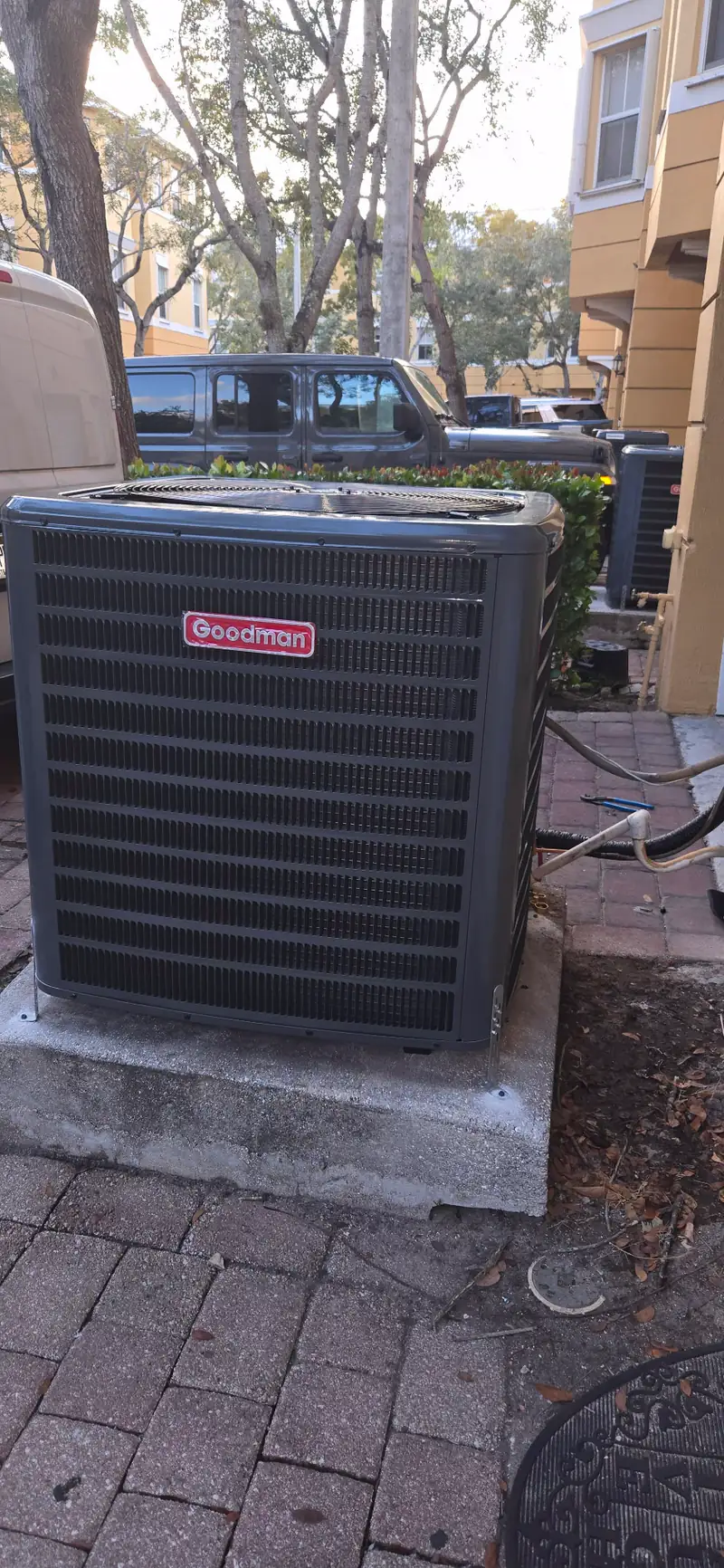
Sometimes, but the new outdoor unit must be an approved match for the indoor coil or air handler. Refrigerant, capacity, airflow, metering, controls, efficiency, and warranty terms all matter. Before approving a condenser-only replacement in Florida, ask for the AHRI certificate covering the exact indoor and outdoor model numbers.
If the outdoor unit fails while the indoor equipment is still fairly new, keeping that indoor section may sound like the obvious way to spend less. It can be reasonable, but only when the equipment works together as a documented system. Matching the tonnage or choosing the same brand is not enough on its own.
The condenser, compressor, indoor coil, and air handler are different parts. Ask the contractor to name the failed component and write the proposed scope clearly so you know what will stay and what will change.
Replacing a compressor means working inside the existing outdoor unit. Replacing the condenser means changing the entire outdoor cabinet. If the diagnosis is unclear, start by confirming what caused the AC to stop cooling before comparing replacement scopes.
A split AC does not perform as two independent machines. Its capacity, refrigerant flow, moisture removal, energy rating, and controls depend on the indoor and outdoor sections working as one combination.
The AHRI certificate is the clearest proof. It lists the certified combination, including both model numbers and the resulting capacity and efficiency ratings. AHRI advises homeowners to request either the AHRI reference number or the Certificate of Certified Product Performance for the installed combination.
That means a new three-ton condenser is not automatically compatible with every three-ton coil. Even two units from the same manufacturer may not be a certified pair if they come from different product generations. The condition and specifications of the existing air handler and indoor coil still need to be checked.
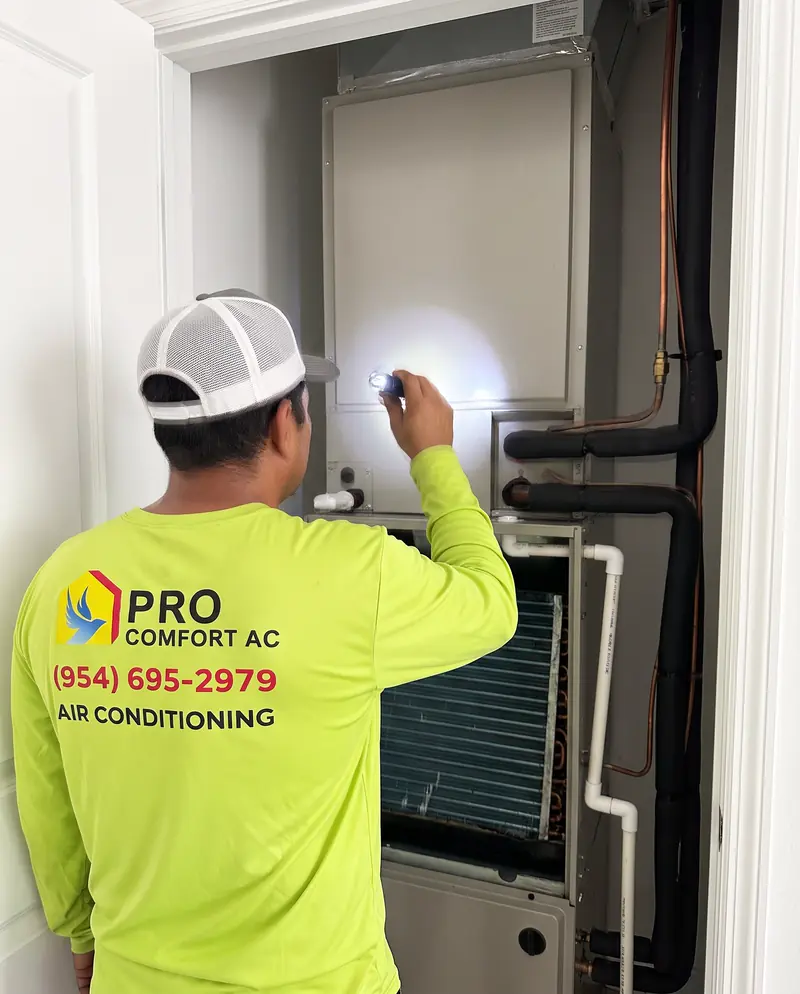
The refrigerant transition has reduced the number of practical matches between new outdoor equipment and older indoor sections. It has not made a working R-410A system illegal or forced homeowners to replace equipment that can still be serviced.
EPA’s current sector table sets a 700 global warming potential limit for new residential and light-commercial AC and heat-pump systems beginning January 1, 2025. It also states that components used to repair existing systems are not subject to those system-installation restrictions. The exact options still depend on when the components were manufactured, the equipment category, and the manufacturer’s approved combinations.
Above the current 700-GWP limit for new residential and light-commercial systems, but existing systems may continue operating and receiving repairs.
Below 700 and used in some current residential equipment. It does not automatically match an older R-410A indoor section.
Below 700 and used in some current residential equipment. Compatibility still depends on the exact equipment and manufacturer requirements.
Sources: EPA HFC restrictions by sector and the EPA GWP reference table, reviewed September 6, 2026.
A working system does not need to be replaced solely because it uses R-410A. Older R-410A equipment can generally stay in service while it remains repairable, which keeps this decision focused on the condition and compatibility of the equipment you own.
For replacement equipment, R-32 and R-454B are not interchangeable labels. Their technical differences matter less to this decision than the manufacturer-approved combination in front of you, though the practical differences between R-32 and R-454B can help when comparing complete systems.
Do not approve that pairing based on tonnage or a verbal assurance. Ask for an AHRI certificate listing both exact model numbers and written manufacturer documentation covering the refrigerant, metering device, controls, and required safety components.
Only the manufacturer documentation and AHRI listing can answer the question for the exact models. If no certified combination can be produced, treat the pairing as unsupported and compare a complete matched replacement instead.
A condenser-only replacement can be a sensible option when the retained indoor equipment is healthy and the full compatibility case is documented.
Look for all six of these conditions:
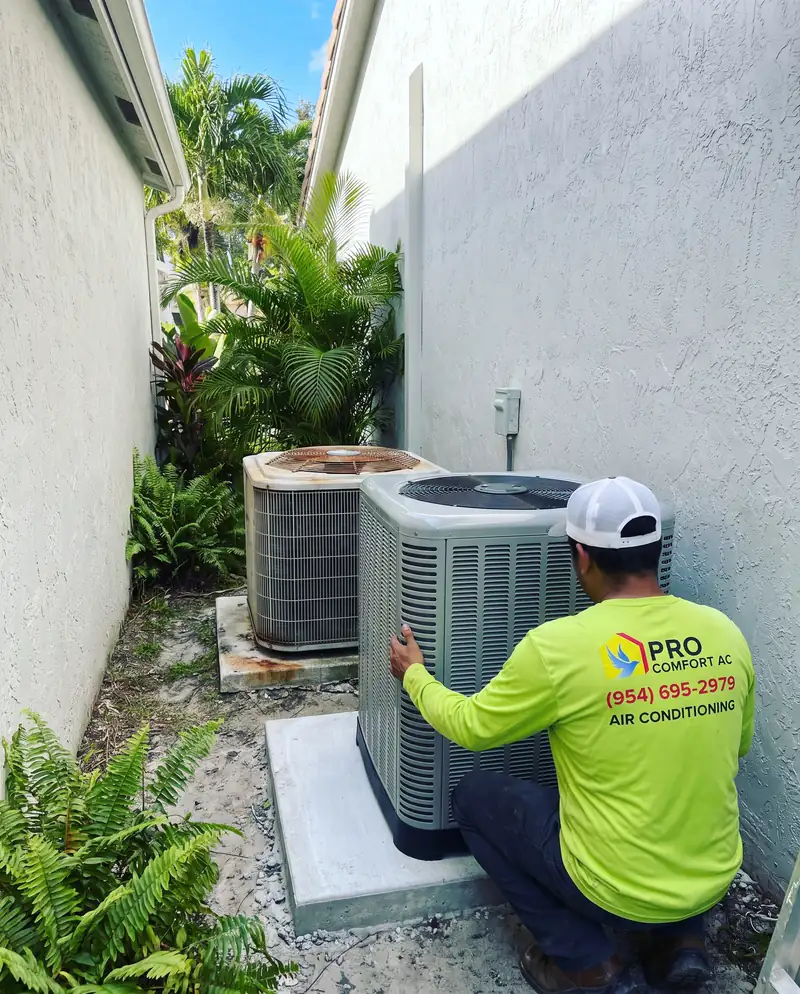
Insurance, home-warranty, or manufacturer parts coverage can also shape the decision. Get the approved scope in writing before equipment is ordered, especially when several parties are responsible for different parts of the bill.
A full system should be priced alongside the condenser-only option when no certified match exists, the refrigerants differ, or the indoor section is already showing problems. This is a comparison, not an automatic recommendation to replace everything.
Pay attention to findings such as:
Partial replacement can also split one project into two. If the indoor section fails soon afterward, you may pay again for setup, refrigerant handling, permits, labor, and startup.
A complete matched AC replacement may cost more now, but its price should be compared against one documented equipment rating, one coordinated installation, and the written warranty coverage for the full combination.
A strong quote does more than say the equipment “should work.” It gives you the model numbers, test results, certificate, and written terms needed to evaluate the proposed combination.
Compatibility check
Refrigerant
What the quote should answerDo both sections use the approved refrigerant and compatible components?
Evidence to requestEquipment data and manufacturer documentation
Reconsider the scope whenThe refrigerant or component requirements conflict
Compatibility check
Matched combination
What the quote should answerIs this exact indoor-outdoor pairing certified?
Evidence to requestCurrent AHRI reference number or certificate
Reconsider the scope whenNo listed match can be produced
Compatibility check
Capacity and coil
What the quote should answerDo the coil, metering device, capacity, and airflow work together?
Evidence to requestExact model numbers, selection data, and measured airflow
Reconsider the scope whenThe answer is based only on nominal tonnage
Compatibility check
Controls and safety
What the quote should answerAre the controls, electrical requirements, sensors, and safety components compatible?
Evidence to requestManufacturer instructions and field findings
Reconsider the scope whenA required component is missing or unsupported
Compatibility check
Efficiency
What the quote should answerWhat SEER2, EER2, and capacity apply to this exact pair?
Evidence to requestRatings shown on the AHRI certificate
Reconsider the scope whenThe quoted rating belongs to another combination
Compatibility check
Warranty and value
What the quote should answerWhat is covered, for how long, and what would a complete system cost?
Evidence to requestWritten manufacturer and contractor terms plus both itemized scopes
Reconsider the scope whenCoverage is unclear or the price difference does not justify the retained risk
Your quote should fill these fields with the actual model numbers, AHRI ratings, measurements, and written terms for your system. If a field is blank, the contractor has not yet shown that the indoor equipment can stay.
A few photos and documents can make a second opinion much more useful.
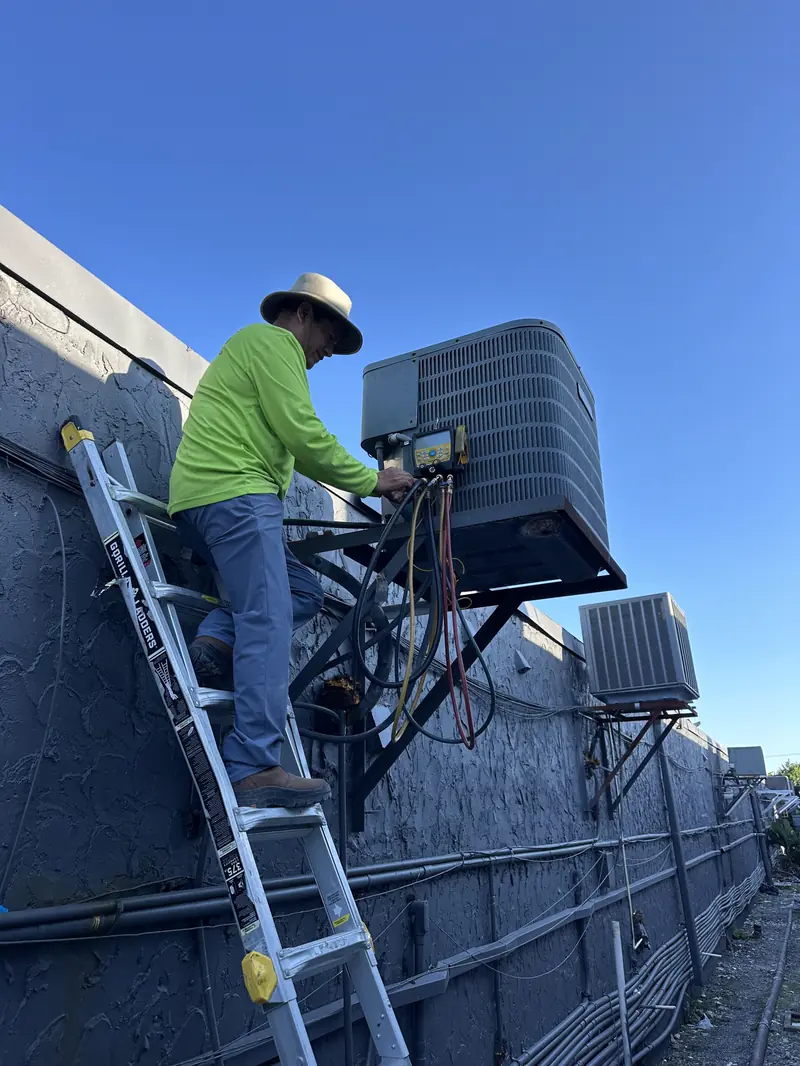
Bring these details to the appointment. They give the technician what they need to compare the proposed condenser with the equipment already in your home, so the recommendation is based on your system rather than assumptions.
Outdoor AC unit replacement cost in Florida varies too much for a generic statewide number to decide this question. Equipment, capacity, efficiency, electrical work, refrigerant lines, permit scope, access, and site condition all change the installed price.
Ask the contractor to show the condenser-only and matched-system options side by side. Compare:
The lower invoice may still be the better choice. The point is to see what you are keeping, what risk comes with it, and whether the price difference is large enough to justify that risk. The written warranty terms can also change the comparison, especially when the parts and labor periods are different.
Not without confirming the home’s cooling load and the indoor equipment. A larger condenser can create airflow and humidity problems if the rest of the system is not designed for it.
Yes, in some cases. Florida does not require both units to carry the same brand, but the exact combination still needs to qualify as a matched system.
Sometimes. The line set needs to be the correct size, compatible with the new equipment and refrigerant, and in suitable condition. The manufacturer’s installation requirements should determine whether it stays or is replaced.
Not necessarily. Florida’s guidance says a qualifying partial HVAC replacement does not have to meet the current minimum equipment efficiency, but the indoor and outdoor equipment must still meet matched-system requirements.
Often, yes. Condo and HOA rules may cover contractor paperwork, work hours, roof access, elevators, or equipment placement in addition to local permitting. In communities such as Boca Raton, condo AC replacement requirements may add another layer of approval before work begins.
If two quotes disagree, ask for a side-by-side recommendation based on the actual model numbers, refrigerant, AHRI certificate, measured airflow, indoor-equipment condition, and written warranty terms. That gives you a clear reason to keep the indoor section or replace the complete matched system.
Contact our team to request an AC compatibility review or a second opinion on a condenser-only quote.
Pro Comfort AC LLC
817 SE 9th St
Deerfield Beach, FL 33441
Phone: (954)363-9191
Email: procomfortac@gmail.com
Business Hours
Monday – Sunday: Open 24 Hours
Emergency Service Available