

Central AC vs. Ductless Mini Splits for Boca Raton Condos
No ducts in your Boca Raton condo? Compare ductless mini splits and central air so you can match the right cooling setup to your layout and building rules.
Choosing between central AC and a ductless mini split is not just about comparing two cooling systems. In a condo, the right choice depends on your building rules, existing ductwork, layout, and how much control you want over each room.
Some Boca Raton condos already have ductwork that can still support central air. Others have older layouts, tight ceiling space, balcony restrictions, or no ducts at all. Add South Florida humidity, and the decision becomes more practical than theoretical.
A beachfront condo with no usable ducts may be a better fit for a ductless setup. A newer unit with clean, working ducts may still make more sense with central AC. Below, we’ll break down how both systems work, when each option makes sense, and what can affect the cost.
Central Air vs Ductless
Two cooling approaches, two very different fits for condo life.
Central Air
One unit · One thermostat · DuctsOne cooling unit and a network of ducts push conditioned air to every room from a single thermostat — clean, mostly hidden, the standard where ducts already exist.
- Clean, mostly hidden equipment
- Lower upfront cost with existing ducts
- One thermostat for the whole unit
- Ducts lose energy through leaks
- Costly to add ducts where none exist
- Little room-by-room control
Ductless Mini Split
Zone control · No ducts · Fast installInstead of sending air through ducts, it cools individual rooms or zones directly and only needs a small opening for the refrigerant lines — ideal for condos never built for central air.
- No ductwork required
- Room-by-room zone control
- Short install, often one to two days
- Up to ~35 SEER2, no duct loss
- Higher cost per zone
- Needs HOA-approved outdoor placement
Your Options for Installing AC in a House Without Ducts
If your condo does not have existing ductwork, you usually have two options: add ducts for central air or install a ductless mini split.
Adding ducts to a finished condo can mean opening ceilings, building soffits, or finding space for duct runs inside an already tight layout. In many concrete condo buildings, that gets expensive and disruptive fast.
A ductless mini split avoids most of that work. Instead of sending air through ducts, it cools individual rooms or zones directly and only needs a small opening for the refrigerant lines.
That is why ductless systems are often the simpler choice for older Boca Raton condos and homes that were never built for central air. In some buildings, adding ductwork can cost as much as the cooling equipment itself, or even more.
How Does Central Air Work in a Condo?
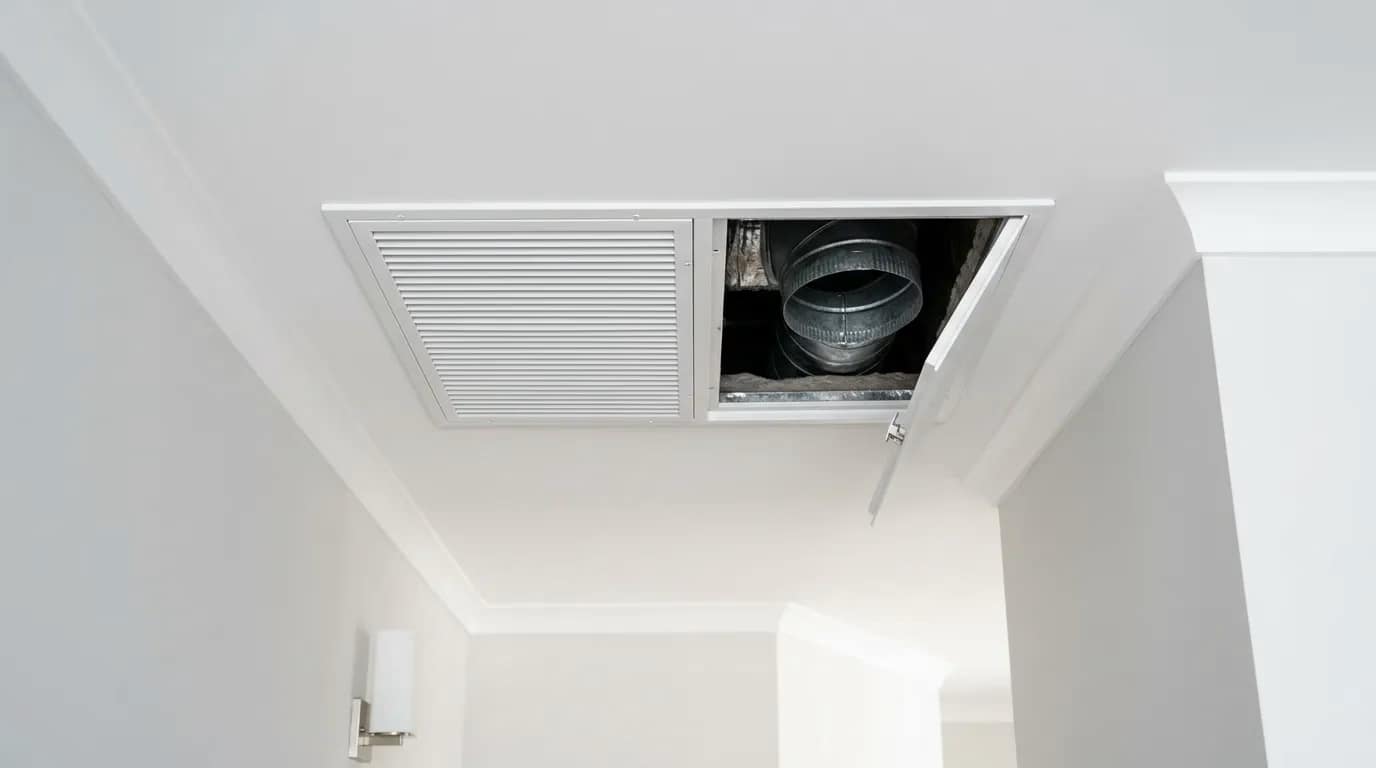
Central air uses one cooling unit and a network of ducts to push conditioned air to every room from a single thermostat. An outdoor condenser pairs with an indoor air handler, and a blower moves the cooled air through vents in the ceilings or walls. It is a clean, mostly hidden setup, which is why it remains the standard in condos and homes that already have ducts running through them.
The trade-off shows up in two places. Ducts lose energy through leaks and weak insulation, and adding ducts to a building that lacks them gets costly fast. There is also little room-by-room control without paying for zoning upgrades, so you generally cool the entire condo to one temperature even if half the rooms stay empty.
Why Ductless Mini Splits Work Well in Boca Raton Condos
Ductless mini splits work well in many Boca Raton condos because they fit tight layouts, handle room-by-room cooling, and do not require ductwork. Each indoor unit cools its own zone, so the bedroom, living room, or enclosed balcony area can be set to a different temperature.
That matters in coastal condos where one side of the unit may get strong afternoon sun while another stays cooler. Instead of forcing the whole condo to run from one thermostat, a mini split lets you cool the rooms you actually use.
Check this first: HOA or condo board rules. A ductless system still needs an outdoor compressor, and many buildings have rules about where that equipment can go, how visible it can be, and how much noise it can make. Getting written approval first can prevent expensive delays once the installation is already planned.
What Types of Ductless Units Fit Tight Condo Spaces?
Ductless mini splits come in a few indoor styles, so the right fit usually depends on your wall space, ceiling height, windows, and room layout. Tap each style to see where it works best.
Wall-Mounted Units
The most common option. They sit high on the wall and work well in bedrooms, living rooms, and smaller condo spaces. A reliable default for most rooms.
Floor-Mounted Units
These sit lower and can be a better fit when a room has large windows or limited upper wall space — common in coastal condos with floor-to-ceiling glass.
Ceiling Cassette Units
An option when the condo has enough ceiling clearance. These recess into the ceiling and keep the equipment less visible — good for main living areas where appearance matters.
The goal is not to force one style into every room. A good ductless layout should match the equipment to the space, especially in condos where every wall, window, and ceiling line matters.

Central AC vs Mini Split Cost in South Florida
When comparing central AC vs mini split cost, ductwork is usually the biggest factor.
If your condo already has clean, usable ducts, replacing the central air system is often the lower upfront cost. If there are no ducts, a ductless mini split usually costs less than adding a full duct system from scratch, especially in a finished condo where ceilings and walls would need to be opened.
| Factor | Central Air | Ductless Mini Split |
|---|---|---|
| Upfront Cost | Lower with existing ducts, high if ducts must be added | Higher per zone, lower than installing new ductwork |
| Installation Time | Longer in buildings without ducts | Short, often one to two days |
| Efficiency | Up to around 26 SEER2, some energy lost through ducts | Up to around 35 SEER2, no duct loss |
| Best Use Case | Condos and homes with sound existing ductwork | Older buildings, additions, and condos lacking ducts |
Mini splits can also help lower cooling waste over time. Since each zone runs on its own, you do not have to cool the whole condo just to keep one room comfortable. That matters during a long South Florida summer, when small efficiency differences can show up on the monthly electric bill.
Which System Is Best for Boca Raton Condos?
There is no single best AC system for every Boca Raton condo. The right choice depends on your layout, your ductwork, and how your space feels during the hottest parts of the day.
Choose Central Air If…
- Your condo already has clean, working ducts
- You want one thermostat for the whole unit
- You prefer equipment to stay mostly out of sight
Choose Ductless If…
- Older condo with no ducts
- Rooms that never cool evenly
- A converted space like a sunroom or enclosed balcony
Choosing Ductless AC for Older Boca Raton Homes
For an older Boca Raton home or low-rise condo with no ductwork, a mini split can solve the cooling problem with much less construction than central air.
The main question is how many zones you need. A small bedroom may only need one indoor unit, while a larger layout, enclosed balcony, or open living area may need a different setup. That is why the floor plan matters more than a general chart.
You also need to think about where the outdoor equipment can go. In condos and HOA communities, placement rules can affect the entire design before installation starts.
If your home already has solid ductwork, it is still worth comparing that against a standard central AC setup. The right system should match how the property is built, how each room is used, and how much control you want over comfort day to day.
If your AC fails during peak summer heat, you may not have time to compare every option calmly, so it makes sense to sort out the right setup in advance.
Not Sure Which Setup Fits Your Condo?
Pro Comfort AC installs both central air and ductless mini splits across Boca Raton and Palm Beach County — and we’ll recommend the right fit based on your layout, ductwork, and HOA rules, with upfront pricing before any work begins.
Frequently Asked Questions
Yes. You usually have two options: add ducts for central air, or install a ductless mini split. A mini split avoids most of the construction since it cools rooms directly and only needs a small opening for refrigerant lines — often the simpler choice for condos never built for central air.
It depends on ductwork. With clean existing ducts, central air is often the lower upfront cost. With no ducts, a ductless mini split usually costs less than adding a full duct system from scratch in a finished condo.
Usually yes. A ductless system still needs an outdoor compressor, and many buildings have rules about placement, visibility, and noise. Getting written approval first prevents expensive delays once the installation is planned.
Ductless mini splits reach up to around 35 SEER2 with no duct loss, while central air reaches up to around 26 SEER2 with some energy lost through ducts. Mini splits also let each zone run on its own, so you don’t cool the whole condo to keep one room comfortable.