

Hurricane Prep for Your HVAC System in South Florida
Hurricane Prep for Your HVAC System in South Florida
How to Prep Your AC Before a Hurricane?
Shut Off All Power First
The single most important step is cutting power to your HVAC system completely. Start at your thermostat and switch it off. Then head to your circuit breaker and flip the switch for your AC unit. This protects against power surges when electricity flickers during the storm. Lightning strikes can fry electronic components instantly, and surges can destroy your compressor, one of the costliest parts to replace.
Cover Your Unit Properly
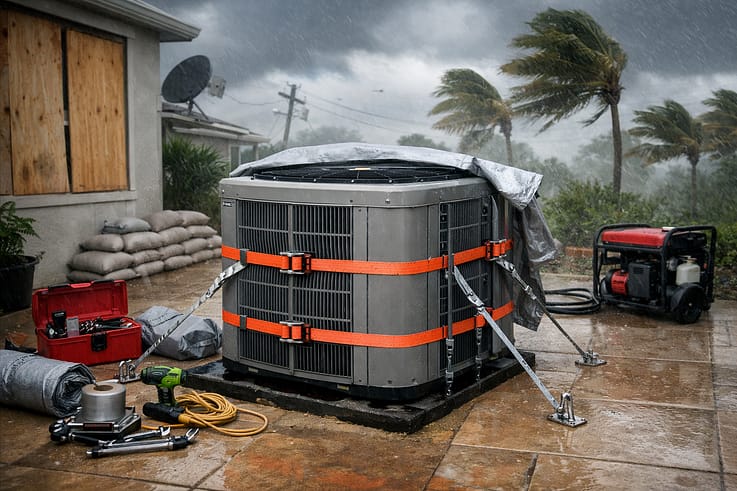
Never wrap your condenser in plastic or create an airtight seal. Trapped moisture breeds mold and corrosion. Instead, place a piece of plywood or a vented hurricane cover over the top to shield it from falling branches and debris. Secure it well, but leave the sides open for air circulation. This barrier prevents dents to the fins and damage to fan blades without creating moisture problems.
Clear the Surrounding Area
Walk around your outdoor unit and remove everything within a 10-foot radius. Decorative planters, grills, patio chairs—anything not anchored becomes a projectile in high winds. These items can slam into your condenser with enough force to bend coils or crack the housing.
Should I Cover My AC Unit for a Hurricane?
This is one of the most common questions homeowners ask, and the answer requires some care. Never wrap your condenser in plastic or create an airtight seal. Trapped moisture breeds mold and corrosion.
Instead, place a piece of plywood or a vented hurricane cover over the top to shield it from falling branches and debris. Secure it well, but leave the sides open for air circulation. This barrier prevents dents to the fins and damage to fan blades without creating moisture problems.
After the Hurricane Ends & It’s Safe
Inspect Your Unit Before Restarting
Once the winds die down and local authorities give the all-clear, resist the urge to immediately flip your system back on. Walk outside and examine your unit carefully. Look for visible dents, bent fins, or debris lodged inside. Check if refrigerant lines are still securely attached. If you notice water pooling around the base or inside the unit, stop right there.
If Your AC Was Underwater
This cannot be stressed enough: If your AC unit was submerged in floodwater, do not turn it on. Saltwater is particularly destructive to electrical components and metal parts. Running a flooded unit can cause electrical fires or destroy the compressor immediately.
If water damage has occurred, getting your system inspected after storm damage can determine if it can be salvaged.
Turning On Your AC After a Power Outage from a Storm
Once you’ve verified no visible damage and restored power, pay attention when your system kicks on. Strange rattling, grinding, or banging sounds indicate internal damage. The compressor might struggle to start, or the fan could wobble.
Unusual noises after a storm are your system’s way of signaling problems. Address small issues now to prevent bigger failures down the road.
Getting Professional Help After the Storm
HVAC systems are complex machines with electrical and mechanical components. If you’re uncertain about anything after a storm, a post-storm inspection brings peace of mind. Technicians can test electrical connections, check refrigerant levels, and spot damage that isn’t obvious to the untrained eye.
In coastal areas, scheduling preventive maintenance before hurricane season helps you address vulnerabilities early. Salt air and humidity already stress your system. Adding hurricane damage creates compounding problems. A pre-season checkup in May gives you time to fix weak points before storms arrive.
Adding Extra Security to Your System
While discussing storm prep in South Florida, consider installing a whole-home surge protector if you haven’t already. These devices guard all your major appliances and electronics from voltage spikes. For a few hundred dollars, you get year-round protection against power fluctuations.
Hurricane straps and anchoring systems add another layer of security for your outdoor unit. In extreme conditions, even units weighing over 200 pounds can shift or topple. A few brackets keep everything locked down tight.
A Little Storm Prep Goes a Long Way
Living in South Florida means accepting hurricane season as part of life. Following these straightforward steps protects both your investment and your family’s comfort. Turn off power, protect your unit, clear debris, and know when to call for expert help.
Your air conditioning system works hard all year. Spending 30 minutes on storm prep gives it the best chance to survive and keep running when you need it most.
Don’t wait until a storm is 48 hours out and everyone’s scrambling. Take action now, and you’ll face the next hurricane watch with one less worry.
Get Ready Before Hurricane Season
Schedule your pre-season HVAC maintenance now to identify vulnerabilities before the next storm arrives. Our team can assess your system’s readiness and recommend protective measures to keep your home comfortable all season long.