

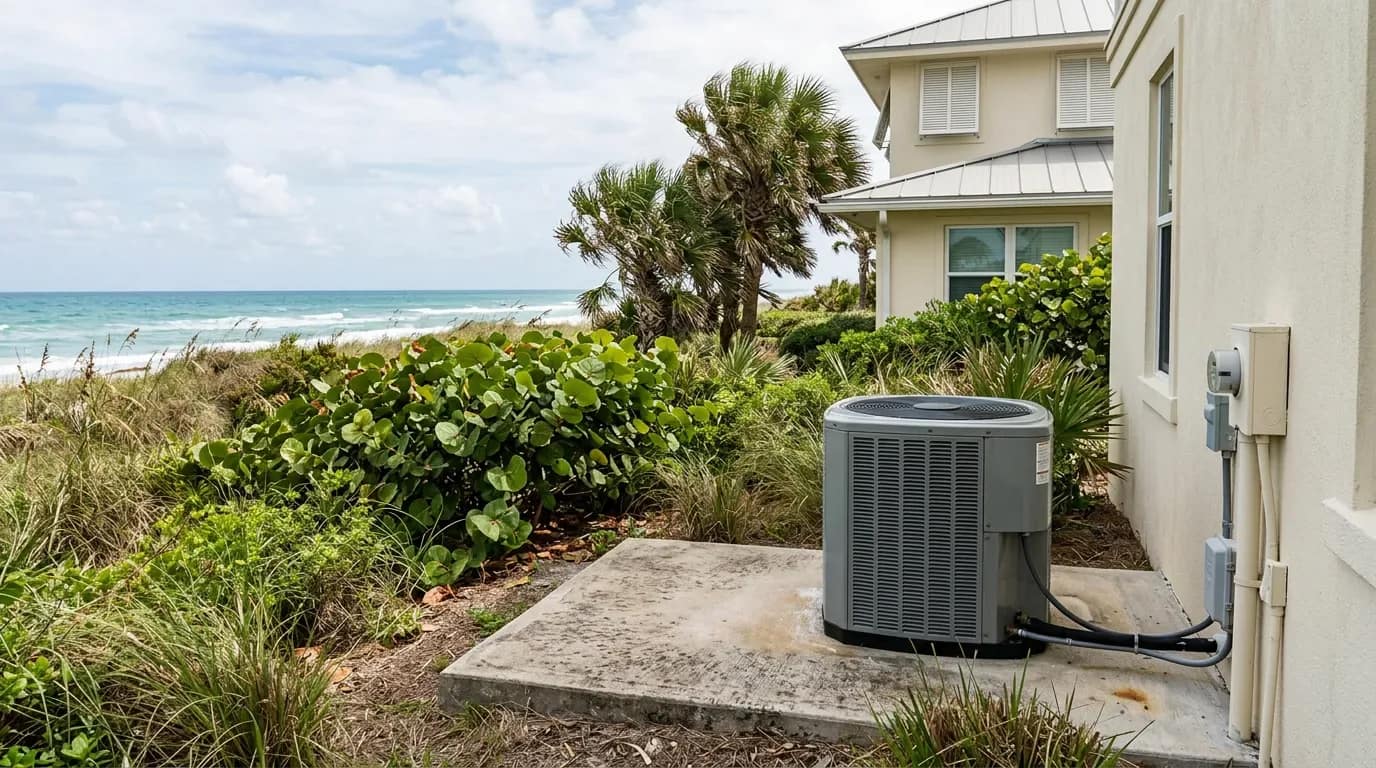
Lowering Your Boca Raton FPL Bill with a New AC System
Boca Raton homeowners upgrading from a 10 SEER unit typically see $50 to $90 off peak summer FPL bills. Here’s the math, the tech, and the rebate stack for 2026.
Opening a July FPL statement in Boca Raton and seeing the total climb past $300 has become a routine kind of shock. Cooling costs run more than half of a typical Florida summer electric bill, and if the outdoor unit humming behind your house is 10 or 12 years old, it’s the main line item driving that number up.
Replacing an older air conditioner with a modern SEER2 system is one of the few home upgrades that pays for part of itself every month. Lower FPL bills through a Florida summer come down to how efficiently the system pulls heat and moisture out of the house, and older equipment loses ground on both counts as it ages.
How Much Does a New AC Save on Your Electric Bill?
Swapping an older 10 SEER unit for a modern 16 SEER2 air conditioner can reduce cooling-related electricity use by up to 37 percent. For a household paying the Boca Raton average of around $277 a month, that reduction takes a meaningful bite out of the July and August bills where cooling accounts for the bulk of the total.
Real savings depend on the home. Insulation quality, duct condition, thermostat habits, and shade all move the number. As a working figure, most homeowners upgrading from a decade-old single-stage system to a variable-speed inverter model report drops of $50 to $90 per month during peak summer, with smaller savings during the shoulder months of April, May, October, and November.
Estimate Your Monthly Savings
Enter your current summer bill and what you’re running now. Cooling accounts for roughly 50 to 60 percent of the summer electric load in South Florida.
Does not include the FPL rebate, the federal tax credit, or the drop in repair costs an older system racks up in its final years.
Why Is My FPL Bill So High This Month?
Two things usually explain a sudden climb. FPL’s residential rate has been running around $0.16 per kilowatt-hour, and July temperatures in Boca Raton push AC runtime past 14 hours a day for most homes. Combine those conditions with an aging system and consumption spikes even if your thermostat setting hasn’t changed.
The other factor is the equipment itself. An air conditioner does not fail all at once. It loses efficiency in small steps that add up over three or four summers before anyone notices the bill has crept up.
What’s Draining the Extra Power?
Four things quietly pull more electricity out of an aging system. Tap each to see what’s happening.
Compressors lose amp efficiency
Compressors lose amp efficiency as motor windings and bearings wear. A 10 year old compressor can draw 30 to 40 percent more current to move the same amount of refrigerant than it did new.
Grime and scale block heat transfer
On the coil side, a thin film of grime and mineral scale builds up over time, heat transfer suffers, and each cooling cycle runs longer.
Low charge starves the evaporator
Refrigerant leaks add another layer, starving the evaporator and forcing the compressor to push against low pressures.
Cooled air escapes into the attic
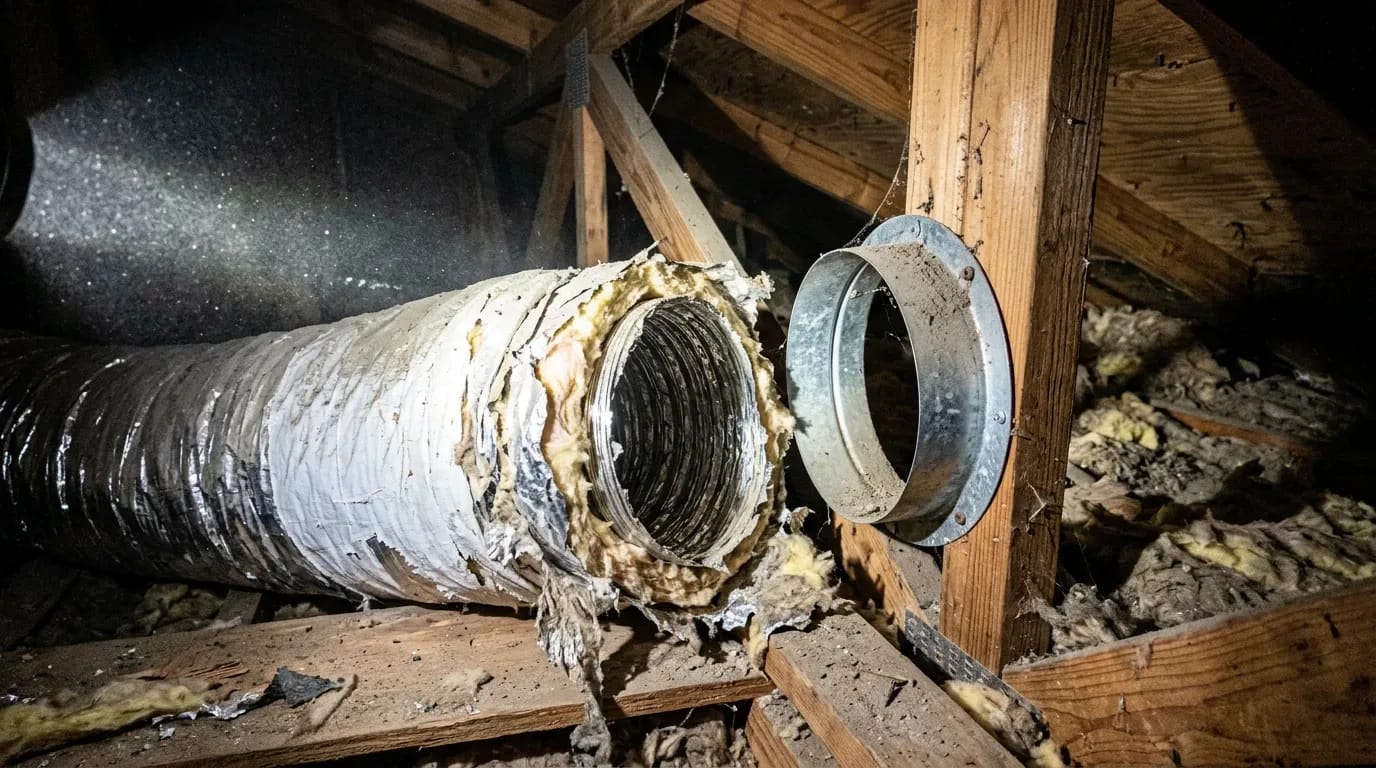
Duct problems compound all of this. In an older attic system, 15 to 25 percent of cooled air can escape into the attic before it reaches the vents. The system runs longer, the meter spins faster, and the FPL bill climbs.
The Savings Math for a Boca Raton Home
Cooling accounts for roughly 50 to 60 percent of the summer electric load in South Florida. A rough breakdown puts the numbers in perspective for a home already paying near the Boca Raton average.
| Old system, 10 SEER, 12 years old | New system, 16 SEER2 variable speed | Approximate monthly savings in July |
|---|---|---|
| $170 cooling portion of a $277 bill | $107 cooling portion after 37 percent reduction | Around $63 per month |
| $0.16 per kWh FPL rate | Same rate, fewer kWh consumed | ~$378 across a 6 month peak season |
Those numbers do not include the FPL rebate, the federal tax credit, or the drop in repair costs an older system tends to rack up in its final years. Once those are folded in, the payback timeline on a 16 SEER2 installation tightens further.
What Cooling Technology Cuts Costs the Most?
Three pieces of technology do most of the work in a modern setup. None of them are new, but the way they’re integrated has changed a lot in the last five years.
Variable-Speed Inverter Compressors
Inverter compressors ramp up and down like a car cruising at highway speed rather than pulling out of a stop light every few minutes. Running longer at lower capacity uses less total energy and pulls more moisture out of the air.
Smart Thermostats & Setbacks
A Wi-Fi thermostat that learns your daily pattern can trim another 10 to 15 percent off cooling costs. The savings come from small adjustments during work hours or overnight, not dramatic swings.
Duct Sealing & Airflow
If the ductwork leaks or the return is undersized, no amount of new equipment will hit its rated efficiency. Sealing joints with mastic recovers 10 to 20 percent of lost airflow.
Variable-Speed Inverter Compressors
Older AC units are single-stage. They run full blast until the thermostat hits its setpoint, then shut off entirely. Inverter compressors instead ramp up and down like a car cruising at highway speed rather than pulling out of a stop light every few minutes. Running longer at lower capacity uses less total energy, holds temperature within half a degree, and pulls more moisture out of the air, which lets homeowners raise the setpoint a degree or two without feeling warmer.
Smart Thermostats and Setback Schedules
A Wi-Fi thermostat that learns your daily pattern can trim another 10 to 15 percent off cooling costs. The savings come from small adjustments during work hours or overnight, not from dramatic swings that force the system to overwork once the household returns.
Duct Sealing and Airflow Corrections
If the ductwork leaks or the return is undersized, no amount of new equipment will hit its rated efficiency. A blower door or duct blaster test is typically part of a good replacement job, and sealing joints with mastic recovers 10 to 20 percent of lost airflow. This step often decides if the new AC delivers a modest improvement or the drop in monthly FPL charges that made the upgrade worth doing.
Efficient AC Models Worth Considering for South Florida Homes
The market has settled around a few families of high efficiency systems suited to the year-round runtime and salt air of coastal Palm Beach County. Coated coils and warranty coverage matter as much as raw SEER2 ratings this close to the ocean.
Variable-Speed Systems Homeowners Ask About Most
- Trane XV20i and XV18Full variable-speed inverter operation, TruComfort control, and strong dehumidification performance in humid climates. Rated up to 22 SEER2 in top configurations.
- Carrier Infinity 26 with Greenspeed IntelligenceInverter-driven, rated up to 26 SEER2, and available in Carrier’s Coastal package with factory-coated coils for salt air resistance.
- Rheem Endeavor Line Prestige RA20Variable-speed compressor, rated up to 20 SEER2, and one of the better price-to-efficiency ratios among premium tier equipment.
- Lennox SL28XCVVariable-speed inverter, rated up to 28 SEER2, suited to homeowners looking for the deepest cooling cost reduction they can get.
- Daikin Fit and Daikin DZ20VCInverter side-discharge systems designed for tight lot lines, a common fit for Boca Raton condo and townhouse yards.
More Modest 15 to 17 SEER2 Options
Not every household needs a top-tier variable-speed system to see meaningful savings. A two-stage 16 SEER2 system from Goodman, Amana, or Bryant will still cut cooling costs 25 to 30 percent against a 10 SEER unit and comes in at a lower installed price. For homeowners planning to sell within five years, this tier tends to be the more sensible spend.
Rebates, Tax Credits, and Financing That Change the Math
The upfront price of an efficient AC is the first thing homeowners look at. The out-of-pocket cost after incentives is usually a very different conversation.
What comes off the price
The FPL $200 Instant Rebate
FPL offers a $200 instant rebate for qualifying high efficiency air conditioners installed by a participating contractor. Eligible equipment tiers and how the credit is applied at the invoice are covered in the utility rebate programs available to Boca Raton households.
Federal Tax Credit Under the Inflation Reduction Act
Heat pumps and central AC systems meeting the CEE highest efficiency tier can qualify for a federal tax credit of up to $2,000 for heat pumps and up to $600 for high efficiency central AC. The credit is claimed on IRS Form 5695 the year the system is placed in service.
Financing That Follows the Savings
The payment vs the savings
A $9,000 replacement financed at 84 months runs around $130 to $150 a month depending on rate and credit. If the new system trims $60 to $90 off the FPL bill during summer, the effective out-of-pocket cost of ownership is a fraction of the monthly payment.
Homeowners weighing the timing usually want to look at flexible financing options alongside the rebate and tax credit numbers, because the interaction between all three reworks the payback timeline entirely.
Pro Comfort AC handles energy-efficient AC installation across the coastal Palm Beach County service area and processes the FPL rebate paperwork as part of the job.
Is a New AC the Right Move for Your Boca Raton Home Right Now?
An energy efficient AC replacement in Boca Raton makes the most financial sense once the system passes ten years old, uses R-22 or R-410A, and the July FPL bill has climbed noticeably year over year. Boca Raton homeowners running systems from the early 2010s are the most likely group to see full 30 to 37 percent drops in cooling costs after switching to a modern variable-speed system.
Homeowners looking for more immediate ways to bring the bill down before a full replacement can find other ways to reduce energy costs in the meantime, from thermostat schedules to duct sealing and ceiling fan use. If replacement makes financial sense, that’s the point to look at how the rebate, financing, and modeled savings fit together for the specific household rather than a generic estimate.

See the Numbers for Your Actual Bill
Pro Comfort AC models the savings against your real FPL history, stacks the $200 instant rebate with the federal credit, and handles the rebate paperwork as part of the job — across coastal Palm Beach County.
Frequently Asked Questions
Swapping an older 10 SEER unit for a modern 16 SEER2 air conditioner can reduce cooling-related electricity use by up to 37 percent. Most homeowners upgrading from a decade-old single-stage system to a variable-speed inverter model report drops of $50 to $90 per month during peak summer.
FPL’s residential rate runs around $0.16 per kilowatt-hour, and July temperatures push AC runtime past 14 hours a day for most Boca Raton homes. Combine that with an aging system — worn compressor windings, grimy coils, refrigerant leaks, and leaky ducts — and consumption spikes even if your thermostat setting hasn’t changed.
Three things. Variable-speed inverter compressors run longer at lower capacity for less total energy. Smart thermostats trim another 10 to 15 percent. And duct sealing recovers 10 to 20 percent of lost airflow — without it, no amount of new equipment hits its rated efficiency.
Once the system passes ten years old, uses R-22 or R-410A, and the July FPL bill has climbed noticeably year over year. Homeowners running systems from the early 2010s are the most likely group to see full 30 to 37 percent drops in cooling costs after switching to a modern variable-speed system.