

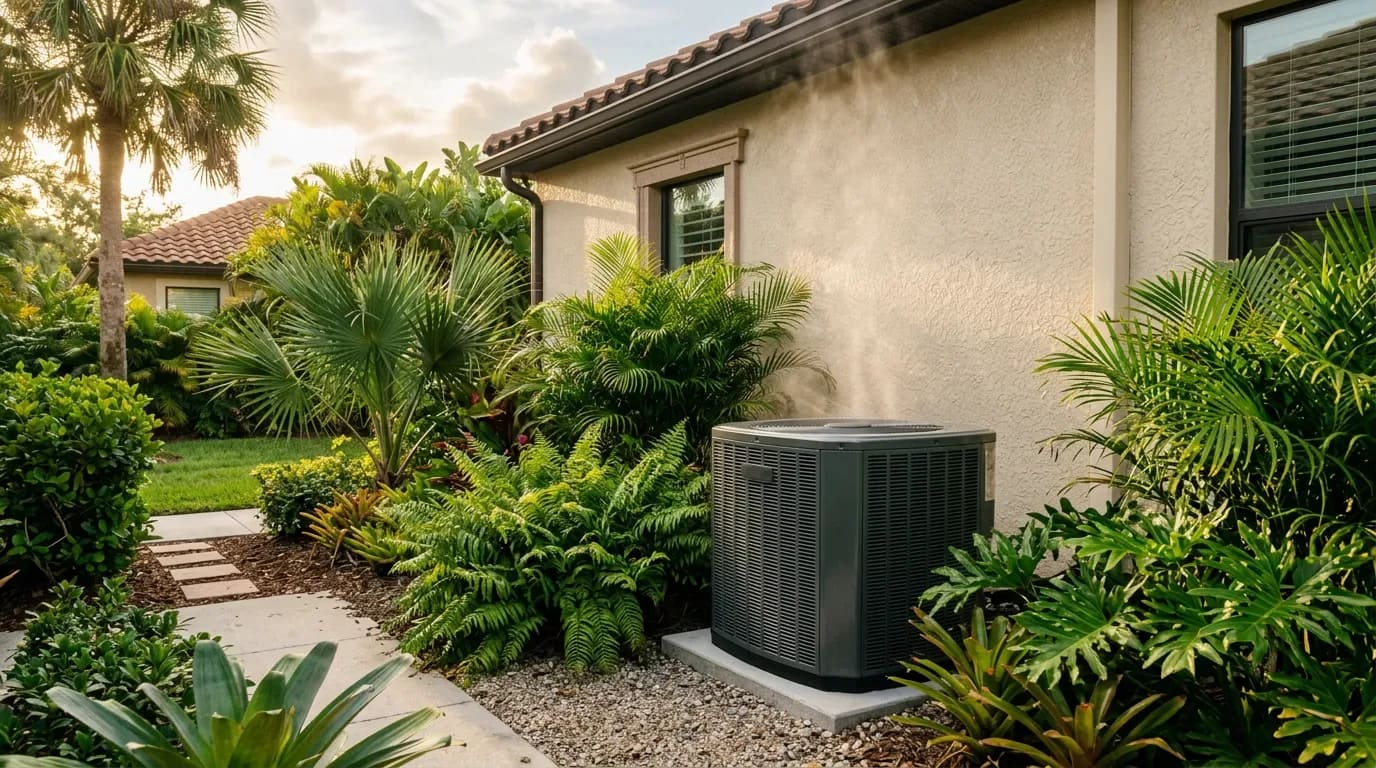
Variable-Speed vs Single-Stage AC for Florida Humidity
Compressor stage decides how well your AC handles Boca Raton humidity. Here’s how single stage, two stage, and variable speed differ on runtime and moisture removal.
In Florida homes, a variable-speed AC handles humidity noticeably better than a single-stage system. It runs long, low-capacity cycles that pull moisture from the air continuously, holding indoor humidity around 45 to 50 percent on typical Boca Raton summer afternoons. Single-stage units cool the air quickly and shut off, which leaves indoor humidity closer to 55 to 65 percent even when the thermostat reads 76 degrees.
The trade-off is upfront cost. A single-stage system costs the least. A variable-speed inverter costs the most. Two-stage systems land in the middle and give South Florida homeowners much of the humidity control without the full variable-speed price tag. The rest of this article breaks down how each type works, what to expect from each in Palm Beach County conditions, and how to decide which one fits your home.
Why Humidity Matters More Than Temperature in Boca Raton
Outdoor humidity in Palm Beach County averages 75 to 90 percent through most of the summer. Once indoor humidity climbs above 60 percent, mold and mildew begin to grow on drywall, carpet, and inside the ductwork. That threshold matters more than the temperature reading on your thermostat because a 76-degree home at 55 percent humidity feels comfortable, and the same 76-degree home at 65 percent humidity feels clammy and sticky.
Compressor stage count is the biggest factor in how well an AC pulls moisture from the air. Cooling cycles that end after five or ten minutes barely dehumidify the space. Longer cycles at lower output extract far more water from the airstream, which is why the type of compressor you buy shapes your daily comfort more than the SEER2 rating alone.
How Each Compressor Type Handles the Cooling Cycle
Stage count describes how many output levels the outdoor compressor can run at. Tap each one to see the run pattern and where indoor humidity lands.
Single-Stage Compressors
On or off · 100 percent capacityA single-stage compressor runs at one output only. The unit remains inactive until the thermostat calls for cooling, then kicks on at 100 percent capacity, drives the indoor temperature down fast, and shuts off once the setpoint is reached. There is no low gear or middle gear. During Boca Raton’s shoulder seasons in March and October, a correctly sized 3-ton single-stage system will short cycle several times an hour because it overshoots the target temperature before the indoor coil has time to remove real moisture.
The result inside the home is a temperature that lands close to the setpoint but air that still feels heavy. Furniture, bedding, and floors hold onto moisture. Homes near the coast feel this most because outdoor humidity spikes higher near the water. Single-stage systems work fine for smaller homes, tighter budgets, or properties where the owner does not spend the full summer indoors, but they are not the strongest choice if humidity control is a priority.
Two-Stage Compressors
Low stage ≈ 70 percent of annual runtimeA two-stage compressor runs at roughly 65 to 70 percent capacity most of the time and ramps to 100 percent only when the load calls for it. In Boca Raton, the low stage handles about 70 percent of the annual runtime. That means longer cooling cycles at gentler output, which gives the indoor coil enough contact time to condense water out of the return air before the system shuts down.
Homeowners with two-stage systems commonly see indoor humidity settle in the 50 to 55 percent range through the summer. Noise is lower on low stage than a single-stage unit at full blast. Cycling frequency drops. Temperature drift across the house stays inside a smaller window. This tier tends to be the practical answer for mid-sized Boca Raton homes where a full variable-speed inverter feels like more system than the budget allows.
Variable-Speed Inverter Compressors
Modulates in fine incrementsA variable-speed compressor, sometimes called an inverter compressor, modulates from roughly 30 percent output up to 100 percent in fine increments. Instead of two preset speeds, the system reads supply temperature, return temperature, indoor humidity, and outdoor conditions, then settles into whatever output matches the current load. On most Boca Raton summer days, a variable-speed AC runs continuously at 40 to 60 percent capacity for hours at a time.
The compressor never slams on or off. The indoor coil stays cold long enough to pull a meaningful amount of water out of the air. Real-world measurements from installed inverter systems in coastal South Florida show indoor humidity settling around 45 to 50 percent even during afternoon peak humidity outside. Sound levels are lower than either single-stage or two-stage systems, and temperature stays inside a very tight band across every room.
Does a Variable-Speed AC Remove More Humidity Than Single-Stage?
Yes. A variable-speed AC removes noticeably more humidity than a single-stage unit, typically 6 to 8 percentage points more inside the home during Florida summer conditions. The reason comes down to runtime. Water condensation on the evaporator coil happens after the coil has been cold for several minutes, so any cooling cycle that ends before that point produces limited dehumidification.
Single-stage systems reach setpoint fast and shut off, which cuts the coil’s contact time with warm indoor air. Variable-speed systems stay on and hold the coil cold across long, low-capacity cycles, condensing water on the coil surface for hours. That mechanical difference is what makes variable-speed inverter systems the best AC for high humidity in coastal Florida markets like Boca Raton, Delray Beach, and Boynton Beach.
Side-by-Side Comparison of Single-Stage, Two-Stage, and Variable-Speed
Here is how the three tiers compare across the factors that matter most in a South Florida install.
| Factor | Single-Stage | Two-Stage | Variable-Speed Inverter |
|---|---|---|---|
| Compressor output | One speed only | Low and high | Modulates 30 to 100 percent |
| Typical indoor humidity | 55 to 65 percent | 50 to 55 percent | 45 to 50 percent |
| SEER2 efficiency range | 14.3 to 15 | 15 to 17 | 17 to 22 |
| Sound level | Loudest | Quieter | Quietest |
| Cycling frequency | Frequent on and off | Less frequent | Continuous long cycles |
| Temperature drift | Around 3 degrees | Around 1.5 degrees | Under 1 degree |
| Typical Boca Raton lifespan | 8 to 12 years | 12 to 15 years | 12 to 16 years |
| Relative install cost | Lowest | Mid-tier | Highest |
The install cost gap between two-stage and variable-speed narrows once the federal 25C tax credit and Florida Power & Light rebate incentives get applied, because those programs favor higher SEER2 numbers that variable-speed systems are more likely to hit.
What Two Stage vs Variable Speed AC Looks Like Day to Day
For a homeowner living in the space, the practical difference shows up in three places. Comfort feels more even across rooms because the compressor stays running longer at lower capacity, which keeps the air handler moving air steadily. Humidity stays lower without a dedicated dehumidifier, which matters most in homes with tile floors, wood cabinetry, and finished attics that would otherwise show moisture damage over time.
The sound difference is noticeable too. A single-stage condenser outside a bedroom window kicks on at full volume every 15 to 20 minutes through the night. A two-stage runs quieter on low speed and only ramps up during the hottest hours. A variable-speed inverter is nearly inaudible from a few feet away at low output. Homes with rooms close to the outdoor unit tend to feel this trade-off the most, and it factors heavily into what compressor stage makes sense.
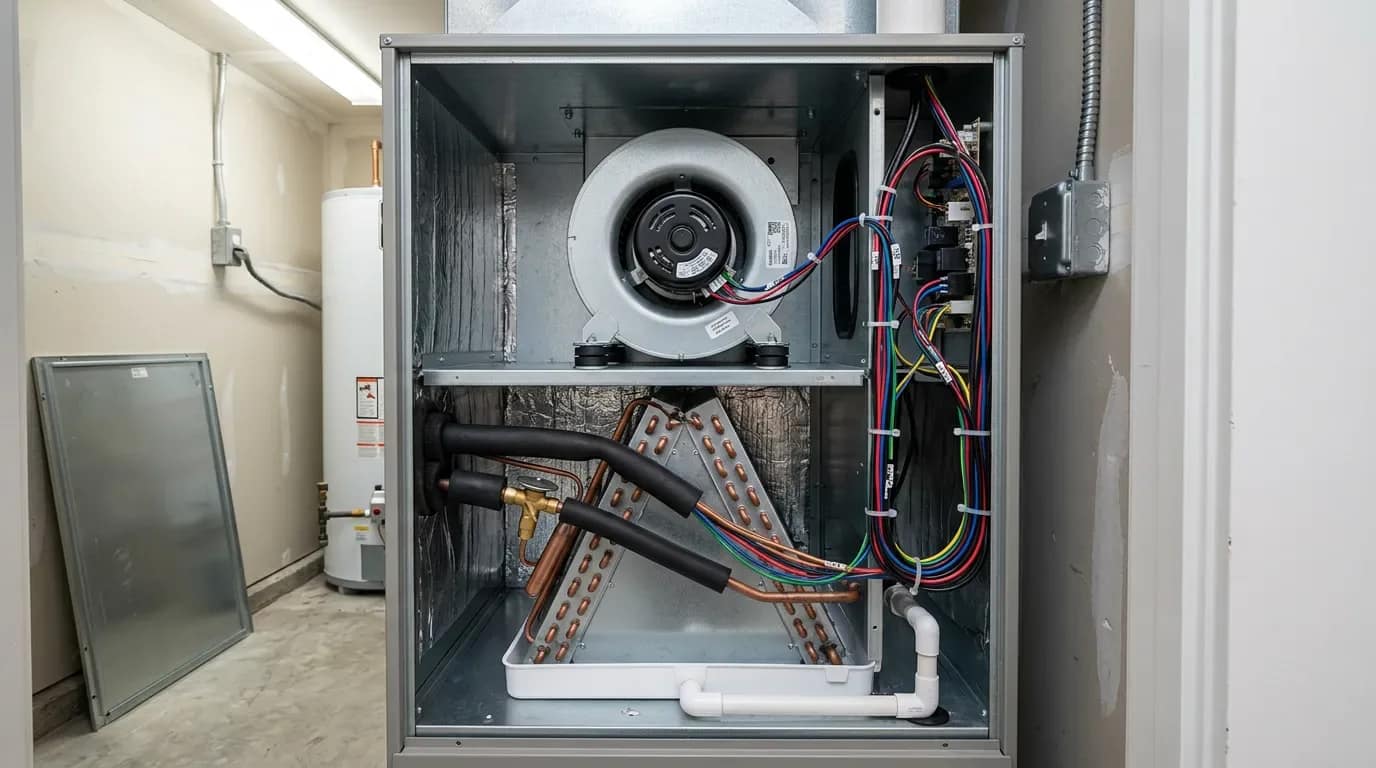
How the Right Air Handler Fits Into the Equation
A matched indoor blower is part of the humidity story. A variable-speed compressor paired with a fixed-speed blower loses much of the humidity advantage because air keeps moving fast across the coil even when the compressor is running slow. Matched indoor equipment on the air handler side of the system lets the blower slow down alongside the compressor, which gives the coil more contact time with the return air and improves moisture removal further.
A common installation mistake
A homeowner upgrades the outdoor condenser to a variable-speed inverter and keeps the original single-speed indoor blower to save money. The system still cools, but the humidity performance never lands where it should. A correctly matched indoor and outdoor pairing separates a variable-speed install that lives up to the spec sheet from one that only cools slightly better than a single-stage.
Popular Compressor Types Available for Boca Raton Homes
Most residential systems in Palm Beach County fall into these general product families, grouped by compressor stage. Model lineups shift year to year, so treat these as representative options within each tier rather than a definitive shopping list.
- Carrier Comfort series
- Trane XR13 and XR14
- Rheem Classic single-stage
- Goodman GSXN series
- Carrier Performance series
- Trane XL16i and XL17i
- Rheem Classic Plus two-stage
- Goodman GLXS series
- Carrier Infinity with Greenspeed intelligence
- Carrier Infinity Coastal with factory-coated coils
- Trane XV18 and XV20i
- Daikin Fit and Daikin Atmosphera
- Lennox Signature Series SL
Coastal Boca Raton installs benefit from models with factory-applied coil coatings because salt air corrodes uncoated coils faster within five miles of the shoreline. Any homeowner east of I-95 should ask about coil coating options before signing off on equipment, regardless of which compressor stage they choose.
Is a Variable-Speed AC Worth the Extra Cost?
Two questions get most homeowners to the right tier. Pick what applies to you.
Variable-Speed Inverter
For most Boca Raton homeowners staying five or more years, a variable-speed inverter pays back through a combination of lower humidity, lower FPL bills, and longer equipment life.
For most Boca Raton homeowners staying in the home five or more years, a variable-speed inverter pays back through a combination of lower humidity, lower FPL bills, and longer equipment life. The comfort difference is felt immediately at the same thermostat setting. The lower humidity also reduces strain on wood floors, kitchen cabinets, and any leather or upholstered furniture that would otherwise show wear from long exposure to damp indoor air.
For short-term owners, part-time residents, or homeowners planning to sell within a few years, a two-stage system is often the smarter allocation of budget. It captures most of the humidity control benefit at a lower upfront cost. Snowbirds, small condos, and rental properties often work well with two-stage systems or even a correctly sized single-stage unit paired with a dehumidification setting on the thermostat.
How Compressor Type Affects Mold Risk
Mold growth becomes a real concern once indoor humidity crosses 60 percent for extended periods. Single-stage systems drift into that range during shoulder seasons and cooler-but-humid days in October and April. Two-stage and variable-speed systems hold humidity below the 60 percent threshold across a much wider set of conditions, which is the primary reason humidity-sensitive families in coastal areas tend to prioritize higher-tier compressors.
Homeowners already dealing with visible mildew or musty odors sometimes pair a variable-speed system with additional mold prevention through UV lights installed inside the air handler cabinet. The compressor handles humidity. The UV treatment handles surface microbial growth on the coil and drain pan. Together they address both sides of a persistent indoor air quality problem in humid coastal homes.
Signs Your Current AC Is Not Handling Humidity Well
Several practical signs point to inadequate dehumidification from an aging or undersized system.
Cool but Sticky
The home hits the setpoint but the air still feels heavy.
Fogging Windows
Bedroom windows fog on the inside during summer evenings.
Swelling Doors
Wooden doors swell in their frames through peak humidity.
Slow-Drying Towels
Bathroom towels take noticeably longer to dry.
Musty Smells
Odors near vents or inside closets during humid months.
Freezing Over
The system ices up during long cooling calls.
An oversized single-stage system produces all of these issues even when it is fairly new, because it cools too fast to dehumidify. In some cases the system also freezes over during long cooling calls, an issue tied directly to why an AC freezes up during high humidity conditions in coastal Florida homes. Any combination of these symptoms is worth having a licensed HVAC contractor inspect before assuming the system is doing what it should.
Choosing the Right System for Your Boca Raton Home
The decision on compressor stage should come out of a Manual J load calculation on your specific home, not a rule of thumb based on square footage alone. Factors like ceiling height, insulation quality, window orientation, and how much of the home faces east or west all shape the correct system size and the right compressor stage. A load calculation matched to a coastal home under a tile roof will point toward different equipment than the same calculation on a stucco ranch a mile inland.
Homeowners planning a system replacement can request a load calculation and side-by-side stage comparison from a licensed contractor working across the Boca Raton area. Once the load is known, comparing single-stage, two-stage, and variable-speed options against upfront cost, projected electric bills, and expected indoor humidity becomes a much clearer decision. Details about the full central AC installation process round out what to expect from equipment removal through startup and commissioning.
Compare All Three Stages Against Your Actual Load
Pro Comfort AC runs a full Manual J load calculation, then shows you single-stage, two-stage, and variable-speed side by side against upfront cost, projected FPL bills, and expected indoor humidity for your home.
Frequently Asked Questions
Yes — typically 6 to 8 percentage points more inside the home during Florida summer conditions. Water condensation on the evaporator coil happens after the coil has been cold for several minutes, so any cooling cycle that ends before that point produces limited dehumidification. Variable-speed systems hold the coil cold across long, low-capacity cycles.
Single-stage systems typically leave indoor humidity at 55 to 65 percent. Two-stage settles at 50 to 55 percent. Variable-speed inverters hold around 45 to 50 percent even during afternoon peak humidity. The 60 percent line matters because that’s where mold and mildew begin to grow.
Two-stage captures most of the humidity control benefit at a lower upfront cost, and it’s often the smarter allocation for short-term owners, part-time residents, snowbirds, small condos, and rental properties. Variable-speed pays back for homeowners staying five or more years through lower humidity, lower FPL bills, and longer equipment life.
Yes. A variable-speed compressor paired with a fixed-speed blower loses much of the humidity advantage, because air keeps moving fast across the coil even when the compressor runs slow. Matched indoor equipment lets the blower slow down alongside the compressor, giving the coil more contact time with return air.