

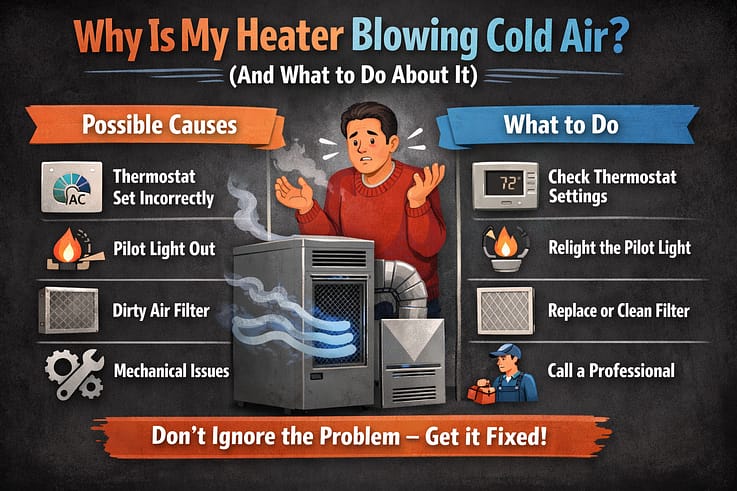
Why Is My Heater Blowing Cold Air? (And What to Do About It)
Why Is My Heater Blowing Cold Air? (And What to Do About It)
Quick Fixes to Try First
Check Your Thermostat
Before troubleshooting heating system problems, check your thermostat settings. After months of running your AC, your thermostat might still be set to “Cool.” Switch it to “Heat” and set the temperature at least five degrees above your current room temperature. Look at the fan setting. If it’s on “On” instead of “Auto,” your system blows air constantly even when not heating. This is often why you’ll find a furnace blowing cold air but the fan is running. Switch to “Auto” so the fan only runs during heating cycles.
Replace Your Air Filter
Dirty filters top the list of heating problems. When your filter gets packed with dust, it restricts airflow through your system. This triggers a safety switch that shuts down the heating elements while the fan keeps running, leaving you with cold air blowing through your vents. Pull out your filter and hold it up to a light. Can’t see through it? Replace it with a clean filter immediately. Most homes need new filters every 60 to 90 days.
Check the Circuit Breaker
Head to your electrical panel and find the breaker for your heating system or air handler. A tripped breaker cuts power to your heater. If the switch sits between “On” and “Off,” flip it all the way off, then back on. If it trips again immediately, stop and call a heating repair technician. Repeated tripping signals a bigger electrical issue.
Check the Pilot Light (Gas Systems)
Gas furnaces over 20 years old typically have a pilot light that needs to stay lit. Find your furnace and look for a small viewing window. You should see a small blue flame. If it’s out, relighting instructions are usually posted right on the unit or in your owner’s manual. Safety warning: If you smell gas at any point, leave your home immediately and call your gas company.
Issues You Shouldn’t Try to Fix Yourself
If you’ve tried the basic fixes above and still have problems, the issue likely requires technical expertise. Several components can fail:
- Flame sensors get covered in grime and prevent your burners from staying lit. The system starts a heating cycle, detects no flame, and shuts down while the fan keeps running.
- Limit switches can malfunction and cut heating prematurely.
- Ignition sensors might fail to light the burners at all.
Each requires diagnostic tools and replacement parts most homeowners don’t have.
Is Your Heat Pump Not Heating?
Heat pumps work differently than traditional furnaces. If your heat pump is not heating just blowing cool air, the issue often involves reversing valves, refrigerant levels, or defrost cycles. These systems need refrigerant checks or valve repairs that only licensed technicians can handle safely.
When Cold Air Comes from Damaged Ducts
Sometimes your heater works fine, but damaged ductwork lets cold attic air mix with heated air before it reaches your rooms. Gaps, holes, or disconnected sections mean warm air leaks out while cold air seeps in.
If some rooms get warm while others stay cold, ductwork could be the culprit. This problem also affects your cooling efficiency in summer.
Know When to Stop DIY Troubleshooting
Don’t attempt work on gas lines, electrical connections inside your unit, or refrigerant systems. These require specific licenses and training. Safety matters more than saving a service call fee.
Regular Maintenance Prevents Most Problems
Most heating failures happen because systems sit unused for 10 or 11 months, then get fired up without any maintenance. Annual service visits catch small issues before they become big problems. A technician will clean components, test safety controls, and verify your system is ready when you need it.
Between professional visits, you can:
- Replace filters regularly
- Keep outdoor units clear of debris
- Test your system once in early fall
These simple habits prevent most emergency calls and extend your equipment’s lifespan. Scheduling annual heating maintenance offers the best protection against unexpected failures.
Making Your Home Warm Again
Most heater problems fall into two categories: quick fixes you can handle yourself, or internal issues needing professional attention. Start with the simple stuff like thermostat settings, filter changes, and circuit breakers. If those don’t work, the issue lives inside your equipment where specialized knowledge and tools become necessary. The key is knowing when to stop troubleshooting and call for help.
Still Blowing Cold Air?
If you’ve tried these fixes and your heater still isn’t working, it’s time for professional help. Our experienced technicians can diagnose and repair any heating problem quickly, getting your South Florida home warm and comfortable again.