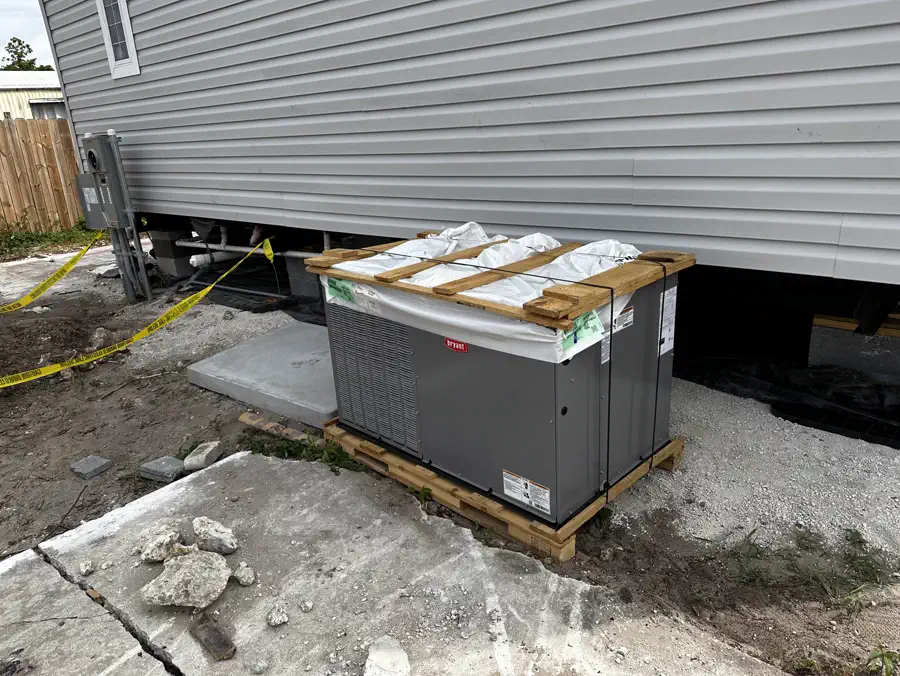
Storm damage, a lightning strike or plain old age has left you with a dead AC and a quote for a new one. Going without cooling in a Florida house can’t wait long, and the first question is who pays for the new system, you or your homeowners policy.
Florida’s regulators describe homeowners insurance as protection against perils such as fire, storms, hurricanes and theft, and insurers’ own consumer pages say standard policies don’t pay for wear, old age or neglect. Only your insurer decides what your policy covers, so the declarations page and a call to your insurer or agent come first.
Florida also adds rules of its own, from a separate hurricane deductible to deadlines for your claim and the insurer’s answer.
Insurers’ consumer pages say a homeowners policy can pay to replace an AC when a covered peril, such as fire, lightning, hail or a falling object, damaged it. Your insurer decides what caused the damage and what the policy pays.
Florida’s Office of Insurance Regulation, OIR, describes the basic HO-1 and broad HO-2 policies as named-peril forms, which cover the events they list. It describes the HO-3 as open-peril, so it covers any peril the insurer doesn’t exclude.
One insurer’s consumer page adds that a central system usually falls under dwelling coverage and a window unit under personal property. The same page notes that wind may not be covered in some areas.
Florida Statutes Section 627.7011 sets the order of payment for a home insured at replacement cost. The insurer first pays at least the actual cash value, less the deductible, and then pays the rest as the work is done. Your declarations page shows which basis your policy uses.
Florida’s Department of Financial Services, DFS, says that when a covered disaster damages a home, the policy may help pay to repair or rebuild it. A repair, like a replacement, turns on what caused the damage, and the insurer decides that.
OIR’s descriptions of Florida’s basic and broad policy forms name specific perils, and insurers’ consumer pages list most of the same ones for AC damage.
| Cause | How Florida Regulators and Insurers Describe It | What to Document |
|---|---|---|
| Lightning | A named peril on Florida’s basic forms and on insurers’ pages | Photos or video, receipts, and the damaged parts if you can keep them |
| Power surge with no lightning strike | Depends on the policy. Florida’s broad form lists sudden damage from artificially generated electrical current | Photos or video and receipts, then a call to your insurer or agent about the terms |
| Windstorm, hail or hurricane | Named perils on Florida’s policy forms. A separate hurricane deductible applies during a declared hurricane | Photos or video, receipts and the date of loss, which for a hurricane is the landfall date |
| Falling tree or object | A named peril on Florida’s broad form and on insurers’ pages | Photos or video of the unit and what hit it, plus receipts |
| Fire or smoke | A named peril on Florida’s policy forms and on insurers’ pages | Photos or video, receipts, and any damaged parts you can keep |
| Flood or storm surge | Often left out of homeowners policies, so flood needs its own policy. Flood policies through the National Flood Insurance Program usually start after a 30-day wait | Photos or video for the flood claim, which goes to the flood insurer |
| Theft or vandalism | Named perils on Florida’s policy forms and on insurers’ pages | Photos or video of what was taken or damaged, and receipts |
| Age, wear or lack of maintenance | Insurers’ pages say wear, old age and neglect aren’t covered | The policy’s exclusions, checked with your insurer or agent |
Whatever the damage, its cause shapes the answer, and your insurer decides what the cause was.
Storms are the one cause you usually see coming, so securing your AC before a hurricane is the first job when one is forecast.
A part that fails from a manufacturing defect points to the equipment’s warranty, and how a manufacturer’s AC warranty works in Florida is a separate question from insurance.
One insurer’s water-damage page says standard policies usually cover sudden, accidental water damage but not replacing the appliance that leaked, and that gradual leaks and damage from neglect aren’t covered.
OIR’s broad form also lists accidental discharge or overflow of water among its named perils. The insurer’s page talks about household appliances in general, not AC units, so ask your insurer how your policy treats water from a leaking AC.
Florida law requires insurers to offer a range of hurricane deductibles, from a flat dollar amount to a percentage of the dwelling limit, under section 627.701. The choices they have to offer can change with the size of the dwelling limit.
Three more rules in Florida law shape what a hurricane loss costs you.
The declarations page shows the amount. Insurers have to show the hurricane deductible’s actual dollar value there, and again at renewal.
It applies once a year. The deductible applies on an annual basis to all covered hurricane losses in the calendar year.
The hurricane period has a set start and end. It begins when a hurricane warning is issued for any part of Florida and ends 72 hours after the last hurricane watch or warning is over.
Once you have that dollar amount, set it beside what a new AC system typically costs and the written estimate for your home.
If the system does need replacing, its price can be spread out by paying in monthly installments through a lender, subject to approval.
Florida law also requires insurers to offer law and ordinance coverage, at 25% or 50% of the dwelling limit, for the added cost of bringing repairs up to current building codes. Your insurer or agent can tell you which level, if any, your policy carries.
Equipment breakdown coverage is an add-on to a homeowners policy, and it’s what some homeowners call an AC rider. DFS describes it as paying to repair or replace equipment that breaks down suddenly and accidentally, including heating and air conditioning systems.
It doesn’t apply to damage from wear and tear, rust or corrosion, DFS adds, and insurers’ consumer pages describe it as optional.
Some Florida policies also carry a Preferred Contractor endorsement, which DFS describes as a premium or deductible discount for using contractors the insurer approves. That’s one more reason to call your insurer before you sign with anyone.
Wear itself is where homeowners policies stop, according to insurers’ consumer pages, and it’s the kind of breakdown a separate home warranty plan is sold to cover, within its limits.
Florida’s Homeowner Claims Bill of Rights, in section 627.7142, advises the first four of these steps, and other parts of Florida law set the last two. Most of them happen before any new equipment goes in.
Under section 627.7152, a homeowner can’t assign a claim’s benefits to a contractor on any policy issued on or after January 1, 2023, so the claim stays between you and your insurer.
A Florida insurer has to pay or deny a claim within 60 days of receiving notice of it, under section 627.70131. Before that, it has to acknowledge the claim within 7 days and send you a copy of any detailed estimate within 7 days of the adjuster writing it.
If you disagree, a disputed residential claim can go to free mediation through DFS. The state’s homeowners insurance guide explains the program and lists the Insurance Consumer Helpline, 1-877-693-5236.
Insurers’ consumer pages describe paying only when a covered peril caused the damage, and even then it isn’t free, because the deductible still applies. After a hurricane, a percentage hurricane deductible can be a large amount, and only the insurer decides what caused the damage.
Florida law also takes deductible deals seriously. Under section 817.234, a contractor who knowingly or willfully, and with intent to injure, defraud or deceive, pays, waives or rebates any part of an insurance deductible commits a third-degree felony.
Once the insurer has paid or denied the claim, a new system, installed and permitted is priced the same way as any other replacement.
The same DBPR lookup lists our own license, CAC1822561, as a state-certified air conditioning contractor.
If a new system is the next step, talk with us about a replacement and the permit it will need. You’ll get an itemized estimate in writing that covers the equipment, the labor and any extra materials, so you know what the work includes before it starts.
Pro Comfort AC LLC
817 SE 9th St
Deerfield Beach, FL 33441
Phone: (954)363-9191
Email: procomfortac@gmail.com
Business Hours
Monday – Sunday: Open 24 Hours
Emergency Service Available