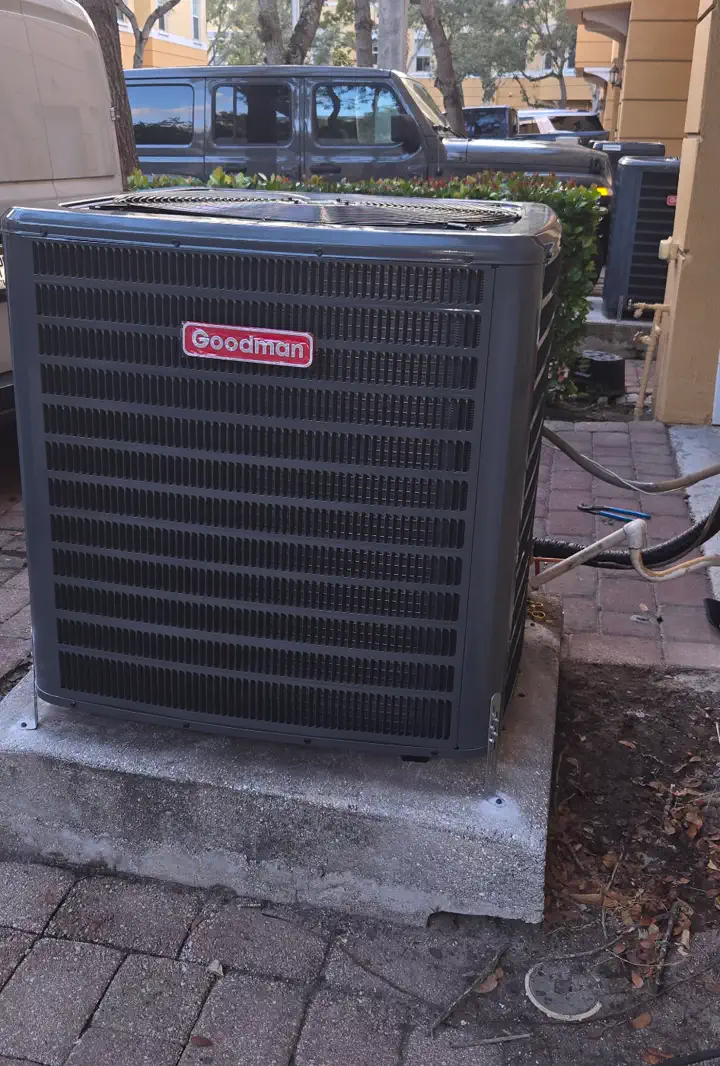
A home warranty that came with the house feels like a safety net right up until the AC quits and the company’s technician has been out twice. The company has started talking about a replacement, a capped payout or a check instead, and you want to know what the plan really owes you.
A home warranty replaces an AC only on the terms of your own contract. One company’s sample contract gives the company "the sole right" to choose repair or replacement and caps each covered system at $5,000, while another caps each covered item at $2,000 and at no more than its book value.
Florida law also limits what a plan can refuse, and rust alone can’t void an AC claim unless it helped cause the breakdown.
Your own contract decides if a plan replaces an AC, how much it pays and who picks the contractor.
Florida makes a plan say in bold if it won’t replace working parts to keep a new system compatible, and offer that cover at extra cost.
Compare any cash offer with an independent written price before you accept it.
In Florida, a home warranty is a service contract that pays to repair or replace home systems, typically after wear and tear. It’s sold by a home warranty association licensed by the Office of Insurance Regulation, or by an authorized insurer, and state law adds these protections.
Florida’s guaranty associations don’t protect home warranty contracts if the company fails, so the state’s home warranty consumer guide points you to the Department of Financial Services’ Company Search to check a company’s license.
A builder’s or manufacturer’s guarantee that comes with no separate charge isn’t a home warranty under Florida law.
Yes. Under section 634.312 of the Florida Statutes, a home warranty can be assigned to the next buyer of the home. The contract has to tell the holder about that right, which lasts at least 15 days from the sale, and any assignment fee can’t be more than $40.
If your plan came with the house, ask the company for the full contract, since its terms decide your AC claim.
Two companies’ sample contracts show how these limits are written. Neither is a Florida contract, so Florida law governs where they differ from it, and your own contract decides the rest.
Limit
Payout cap
In One Sample Contract"$5,000 per Covered System and Component"
In Another Sample Contract"$2,000 per Covered Item", and no more than the item’s "Book Value"
What to Check in YoursThe cap for each system and any total cap
Limit
Who decides
In One Sample ContractThe company has "the sole right" to decide on repair or replacement
In Another Sample ContractThe company arranges the repair or replacement and picks its contractor
What to Check in YoursWho chooses, and if you can get an independent diagnosis
Limit
Replacement standard
In One Sample Contract"Similar or equivalent quality and efficiency"
In Another Sample Contract"Similar core mechanical functionality"
What to Check in YoursWhat "equivalent" means for size and efficiency
Limit
Matching
In One Sample ContractNot responsible for matching color or brand
In Another Sample ContractNot responsible for matching dimensions, color or brand
What to Check in YoursThe bold HVAC compatibility line and the optional coverage
Limit
Code work, permits and cranes
In One Sample ContractNo code work or permits unless an option was bought, and crane rentals excluded
In Another Sample ContractCode-driven work and cranes excluded
What to Check in YoursWhich upgrades you’d pay for yourself
Limit
Refrigerant
In One Sample Contract"Up to $10 per pound"
In Another Sample Contract"Limited to $20 per pound", with recovery excluded
What to Check in YoursThe per-pound cap, which matters on an older R-22 system
Limit
Fee per claim
In One Sample ContractA trade call fee for each request, even if coverage is later denied
In Another Sample ContractA per-claim fee paid before a contractor is sent
What to Check in YoursThe fee, and when it’s charged
Limit
Start date, old problems and upkeep
In One Sample ContractStarts 30 days after payment, with known or pre-existing breakdowns and skipped maintenance excluded
In Another Sample ContractA holding period, covered items working on the start date, and pre-existing conditions and poor maintenance excluded
What to Check in YoursYour start date and your maintenance records
Find your contract’s version of each of these limits before you agree to a repair, a replacement or a check, since those lines set what you’d still pay.
How much a plan is worth for an AC depends on these limits, weighed against the system’s age and what you pay for the plan each year.
Both sample contracts cap refrigerant by the pound, which matters on an older R-22 system, so keeping or replacing an R-22 AC unit is a choice to settle before the claim.
Both also exclude breakdowns caused by poor or skipped maintenance, so keep a record of yearly tune-ups with the plan papers.
In both sample contracts, the company makes the key calls in a claim, from who diagnoses the unit to what you’re offered.
Neither sample contract sets an age limit in its text, but age still shapes the answer. Both exclude known or pre-existing problems, one requires covered items to be working on the start date, and one caps payment at the item’s book value, which is low for a unit that old.
With an AC that age, weigh any repair the plan offers against the typical lifespan of a central AC, since patching it may only put the replacement off.
Three different products can pay toward an AC, and each one covers a different kind of failure.
Home warranty plan
What It’s Meant ForRepair or replacement, typically after wear and tear
Who Provides ItA licensed home warranty association or an authorized insurer
Where to Take a QuestionThe plan company, then the state’s helpline if the claim stalls
Manufacturer’s warranty
What It’s Meant ForDefects in the equipment, with no separate charge
Who Provides ItThe equipment’s manufacturer
Where to Take a QuestionThe installer or the manufacturer
Homeowners insurance
What It’s Meant ForSudden covered perils such as lightning, fire and windstorm, as Florida’s insurance regulator describes them
Who Provides ItYour insurer
Where to Take a QuestionYour insurer or agent
Both sample contracts exclude damage from lightning, storms, fire and electrical surges, so an AC that failed in a storm starts as an insurance question rather than a warranty one.
A home warranty plan is a service contract you pay for, while the manufacturer’s parts warranty on a new AC comes with the equipment at no separate charge.
If a storm or a lightning strike caused the failure, what homeowners insurance usually covers is the next question, and only your insurer can say what your policy pays.
Compare the offer with an independent written price before you accept it. A check based on the company’s own cost can fall short of the price range for a new central AC, and once you cash it, any gap is yours to cover.
Taking the cash means arranging a new AC installation yourself, with the equipment and contractor you choose. If the payout still falls short of a real quote, financing the difference through a lender is one way to close the gap, subject to approval.
If you disagree with a denial, call the state’s Insurance Consumer Helpline at 1-877-693-5236, which takes home warranty questions and complaints.
Ask whoever prices the replacement for a state license number, and check it. Ours is CAC1822561, a state-certified air conditioning contractor license, and the state’s licensing database lists it as current and active.
A check from the plan can feel like the end of a long claim, but it only settles things if it covers the new system. Before you take it, get a second price for the replacement. We’ll put the whole job in writing, including anything the plan won’t pay for, so you can see the real gap before you decide.
Pro Comfort AC LLC
817 SE 9th St
Deerfield Beach, FL 33441
Phone: (954)363-9191
Email: procomfortac@gmail.com
Business Hours
Monday – Sunday: Open 24 Hours
Emergency Service Available