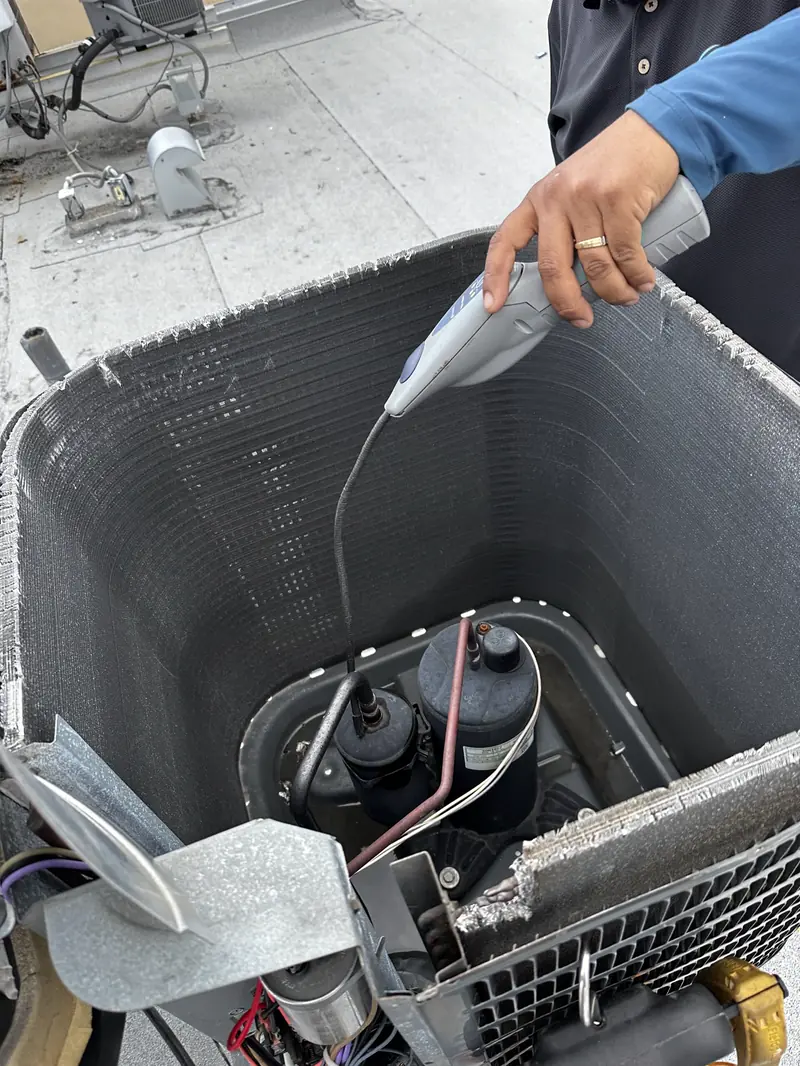
Before buying a Boca Raton condo with old AC, collect the equipment details, service records and building replacement requirements. Cooling during a showing is useful information, but it does not tell you the system’s full condition or what replacing it would involve. Use the home inspection findings to decide which questions need a separate HVAC assessment.
You do not need to become an AC expert before closing. You need a clear picture of the equipment you are buying, any documented problems and the building restrictions that could affect your budget.
Ask the seller or listing agent for records that identify the equipment and show its maintenance and repair history. Start with model-label photos, service invoices and any installation paperwork. These help an HVAC professional review the system without relying on the seller’s estimate of its age.
Keep everything in one buyer folder and mark each item as received, missing or needing clarification.
Record To RequestWhat It Helps You Confirm
If indoor and outdoor components were replaced at different times, request records for both. One invoice may describe only part of the system. Missing paperwork does not automatically mean the AC was neglected, but it gives you a specific question to raise during the assessment.
A home inspection can identify cooling-system concerns, but its scope may differ from a dedicated HVAC assessment. Ask what each provider will inspect, test and document before booking.
Your home inspector may report operating observations, accessible equipment condition and concerns that need follow-up. An HVAC specialist may investigate a reported fault, take system-specific measurements or assess what a future replacement would require. The checks depend on the equipment, access and agreed scope.
If you are arranging an HVAC inspection before buying a condo, ask:
Send the home inspection report beforehand if you have it. A note about a leak, unusual noise or limited cooling gives the technician a useful starting point.
The equipment type affects what needs checking and how a future replacement could work. Gather clear photos of accessible labels and equipment locations, then ask the HVAC professional to confirm the configuration.
You can gather accessible photos without opening equipment panels or going onto the roof. Ask building staff for records or access when components are out of reach.
Association approval and access requirements can affect a future condo AC replacement even if the existing system works today. Request the rules for the specific building before relying on a replacement estimate.
Ask the property manager:
Get the answers in writing where possible. Requirements that apply to another condo in the neighborhood may not apply to yours. Share any access charges or coordination requirements with the contractor so they can be included in the estimate.
Build your budget around documented conditions and the likely installation scope. General expectations for AC lifespan in South Florida provide context, but age alone cannot tell you when this system will need replacement.
A local replacement cost range can help with an initial budget. Before relying on it, ask for an estimate that accounts for this condo’s equipment, access and building requirements. For a water-source heat pump, the estimate should reflect that configuration rather than a standard split-system installation.
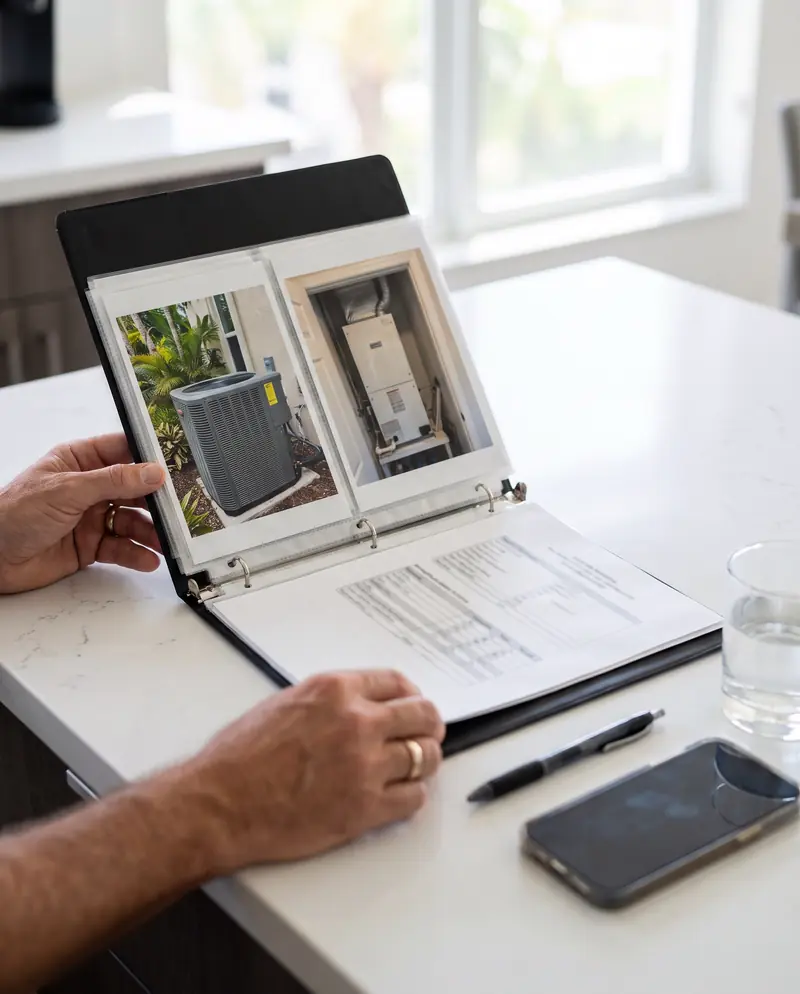
Use a short worksheet to separate what is known from what still needs checking:
Budget ItemWhat To Record
Ask whether the estimate covers the complete AC installation or only selected equipment and labor. If something could not be checked, have that limitation stated rather than treating the estimate as a confirmed total.
Missing records call for further assessment, not an automatic replacement decision. You can still build a useful picture of the equipment, provided the relevant components are accessible.
If the assessment identifies a fault, ask for the findings and available options before deciding whether to repair or replace the existing AC. A documented problem gives you a firmer basis for that decision than age or missing invoices alone.
Ask questions that connect the system’s current condition to what ownership may involve. Bring your records folder and management’s responses so the technician can address the gaps.
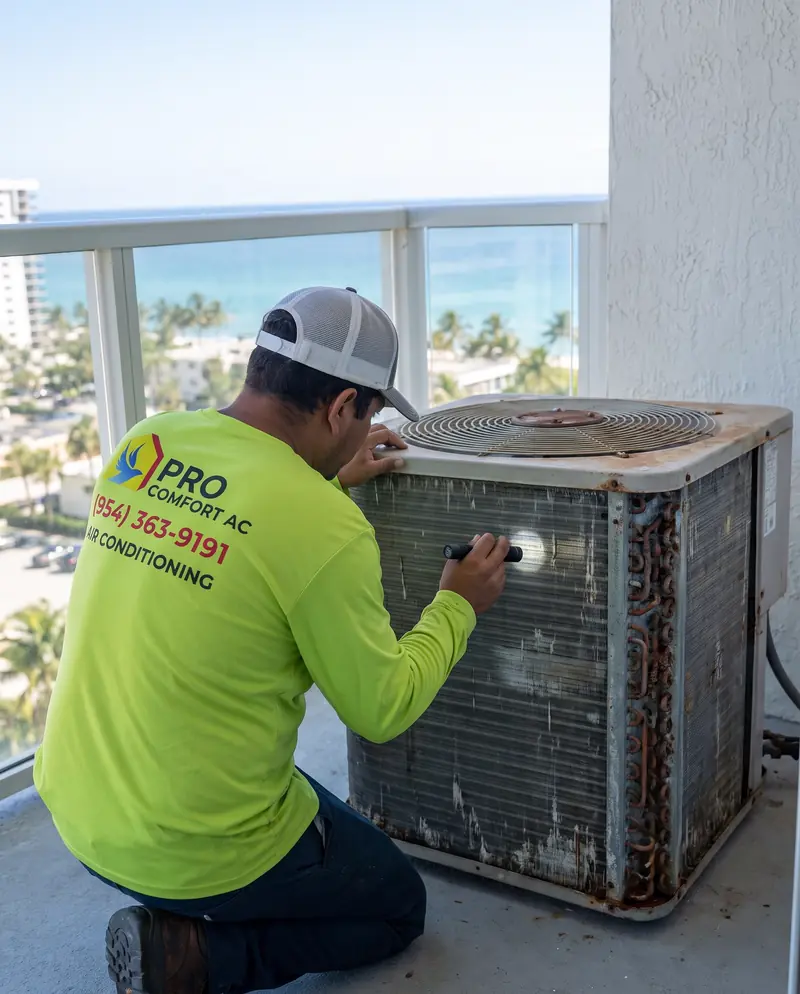
If you plan to renovate after moving in, mention any changes to closets, ceilings or the equipment location. Those plans may affect the access assessment. Moving an outdoor condenser also needs its own feasibility review rather than being assumed possible.
Before committing to the condo, aim to have documented findings, a clear account of what remains unknown and a realistic view of the work the building may allow.
When you ask about a pre-purchase HVAC assessment, share the condo address, equipment photos, available records and your closing timeline. These details help clarify scope, access and availability before booking.
Pro Comfort AC LLC
817 SE 9th St
Deerfield Beach, FL 33441
Phone: (954)363-9191
Email: procomfortac@gmail.com
Business Hours
Monday – Sunday: Open 24 Hours
Emergency Service Available