A technician tells you the system is low, that it runs on R-22, and that refrigerant for it is expensive. Now there’s a recharge price on one line of the quote and a new system on the next, and you’d like to know which one makes sense before you sign anything.
You don’t have to replace a working R-22 system, even though no new R-22 has been made or imported since January 1, 2020. EPA doesn’t require homeowners to replace it, and technicians can still service it with reclaimed R-22.
That means keeping it can be a reasonable choice when the leak is found and fixed and the rest of the system is sound. If it keeps losing refrigerant or a major part has failed, pricing a new matched system usually makes more sense than buying R-22 again.
A working system doesn’t have to go. EPA doesn’t require replacement, and reclaimed R-22 can still be used to service it.
You have four options. You can repair and recharge, convert to an approved substitute, replace only the outdoor unit or install a new matched system.
R-410A can’t be swapped in. Moving to it means new matched equipment, not a change of refrigerant.
The price and supply of R-22 are part of the decision, but the condition of the system usually settles it.
Keeping an R-22 system can make sense if
Start pricing a replacement if
Refrigerant is one part of the picture, and other signs a system is due for replacement include repeated repairs and rising power bills.
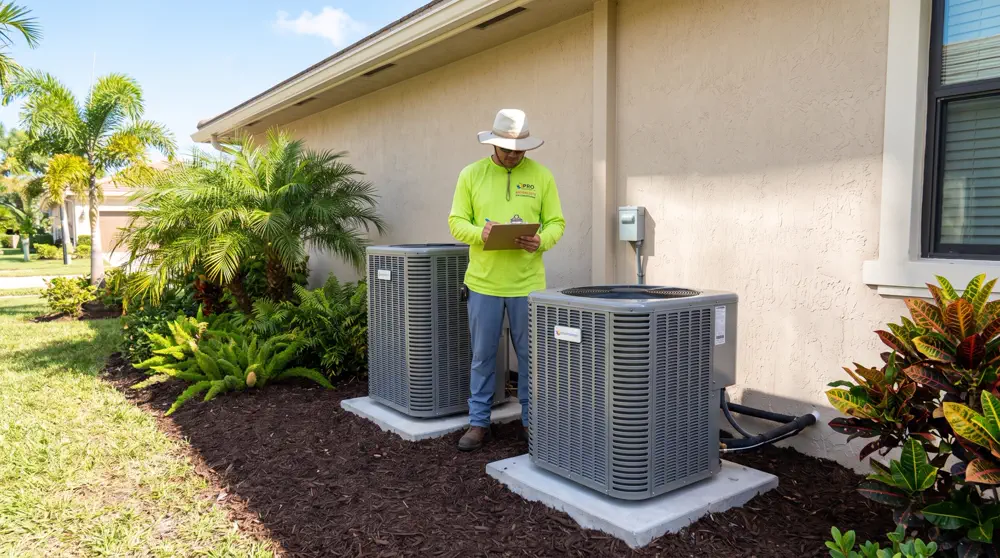
The outdoor unit usually tells you, and the age of the equipment backs it up. Three checks settle it.
The typical home was built in 1974 in Pompano Beach and in 1978 in Deerfield Beach, but a house’s age won’t tell you the age of its air conditioner. Most R-22 systems still running were made before 2010, so most are more than 15 years old in 2026, though part of a system can be younger if the outdoor unit was replaced.
Yes, R-22 is still available as reclaimed, recycled or previously produced refrigerant. What ended on January 1, 2020, was new production and import.
The phaseout came in two steps. From 2010, new R-22 could be made or imported only to service equipment built before 2010, and in 2020 that stopped too. EPA expects reclaimed R-22 and existing stock to meet owners’ needs well beyond the phaseout date.
R-22 costs about $90 to $250 a pound nationally, as of October 2026, and EPA expects it to rise in price as supplies are used up. That price matters most on a system that’s leaking. A repaired system needs one recharge, while an unrepaired leak means buying R-22 again each time the charge runs low.
No. EPA limits sales of refrigerant for home systems to technicians with Section 608 certification and the companies that employ them, so R-22 for your AC comes through a certified technician.
Be wary of products sold as "22a" or "R-22a." EPA says they’re flammable and not acceptable for home air conditioners, even though they’re marketed as R-22 replacements.
All four options are legal for an existing R-22 system, and each comes with its own conditions.
Option
Repair the leak and recharge with reclaimed R-22
What It InvolvesA certified technician finds and fixes the leak, then recharges the system
Choose This IfThe system cools well and the leak is in one repairable spot
Keep in MindR-22 runs about $90 to $250 a pound nationally, as of October 2026, and a top-off without a repair leaks out again
Option
Convert to an EPA-approved substitute
What It InvolvesThe old R-22 is recovered first, the substitute is charged, and some parts may change
Choose This IfThe parts are sound and you want to stop buying R-22
Keep in MindNo drop-in exists, and cooling and energy use can change
Option
Replace only the outdoor unit with a dry-shipped unit made for R-22
What It InvolvesA new outdoor unit, shipped without refrigerant, is charged with R-22 on site
Choose This IfThe outdoor unit failed and the indoor coil is sound
Keep in MindIt must meet the regional efficiency standard, which your contractor confirms. It still runs on R-22 and doesn’t qualify for FPL’s rebate
Option
Replace with a new matched system
What It InvolvesA new indoor coil and outdoor unit go in together, on a current refrigerant
Choose This IfYou’ve had repeated leaks, a failed compressor or coil, or you want R-22 behind you
Keep in MindThe highest upfront cost, with the refrigerant choice part of the quote
Start with the leak. Where it is, and how worn the rest of the system is, usually decides which option fits your home.
Recharging without a repair loses the refrigerant again, so finding and fixing the leak comes before any top-off. If the leak is in one repairable spot and nothing else is failing, a repair on a system that’s worth keeping is a sensible use of reclaimed R-22.
On an R-22 system, replacing a leaking indoor coil means pairing a new coil with an old outdoor unit, so the two have to match. A dry-shipped outdoor unit raises the same question from the other side, because it has to work with the indoor coil it’s paired with.
For an R-22 system that keeps leaking, installing a new matched system often makes more sense than paying for more R-22. A new system will use a newer refrigerant than R-22, and choosing between R-32 and R-454B is part of picking the equipment.
No. EPA’s homeowner guidance on R-22 says there are no drop-in replacements, even though some online answers call certain blends one. Converting a system means using a substitute EPA lists as acceptable for R-22 equipment, after a Section 608-certified technician recovers the remaining R-22.
Cooling performance and energy use can change after a conversion, so ask what to expect before you agree to one. Different refrigerants also can’t be mixed in the same system, which rules out topping off R-22 with something else.
Not by swapping the refrigerant. EPA lists R-410A for new equipment, not for converting an R-22 system, and new systems use compressors and other parts designed for the refrigerant they run on.
R-410A also runs at different pressures than R-22 and uses a different oil. Carrier’s guidance on converting R-22 systems adds that the compressor and expansion valves would have to change, so in practice, moving to R-410A means new matched equipment.
If you’d like to keep the existing equipment and stop buying R-22, a conversion to an approved substitute is the route, not R-410A.
Under EPA’s rule effective July 27, 2026, R-410A equipment made or imported before January 1, 2025, may continue to be installed. If you’re pricing a new system, where R-410A stands in 2026 affects which refrigerant makes sense for it.
Replacing an R-22 unit is priced like any other new system. The size of the system, a matched indoor and outdoor pair, the refrigerant you choose, the condition of the refrigerant lines, access to the equipment and the permit all move the price.
Those are the same drivers behind any replacement quote, and typical prices for a new system give you a range to compare yours with.
As of November 2026, FPL’s $200 rebate requires a complete replacement, indoor and outdoor, installed by an FPL Participating Independent Contractor. Converting the system or replacing only the outdoor unit won’t qualify under FPL’s rebate rules for full replacements, since partial replacements are excluded.
A clear R-22 quote answers each of these, and it’s fair to put them to any contractor before you sign.
You can look up any contractor in the DBPR licensee search before work starts. We hold license CAC1822561 as a certified air conditioning contractor, and it shows as current and active.
If your older system still cools the house, it deserves a fair look at every option. Tell us which of the four you’re leaning toward, and book an assessment of the system before anyone adds more R-22. We’ll walk you through what a matched replacement would involve for your home, so you can weigh it against keeping the system you have.
Pro Comfort AC LLC
817 SE 9th St
Deerfield Beach, FL 33441
Phone: (954)363-9191
Email: procomfortac@gmail.com
Business Hours
Monday – Sunday: Open 24 Hours
Emergency Service Available