A new condo AC does not automatically require an electrical panel upgrade. For your Boca Raton replacement, the answer depends on the new equipment’s electrical requirements, the existing AC circuit, and the condition and capacity of the electrical system. A breaker, wiring, or disconnect change may be enough. Ask for the required work to be listed separately before approving your quote.
If your estimate says “electrical upgrades,” you deserve a clearer explanation. Does that mean replacing a small box near the AC, updating the circuit that powers it, or replacing the panel itself? Those are different jobs, and the wording should tell you which one you are paying for.
Yes, if the existing circuit meets the proposed unit’s requirements and is in suitable condition. A replacement can also need limited electrical changes without requiring a new panel.
The assessment should lead to one of three outcomes:
Existing circuit is suitable
What It Means for Your ReplacementThe wiring, breaker, and disconnect can remain where they meet the new equipment requirements.
What You Should ReceiveWritten confirmation of what will be reused.
Limited electrical changes are needed
What It Means for Your ReplacementSpecific parts of the AC circuit need updating, such as the disconnect, breaker, or wiring.
What You Should ReceiveAn itemized description and price for the required changes.
Panel or service assessment is needed
What It Means for Your ReplacementA condition or capacity issue needs further evaluation before the installation scope can be confirmed.
What You Should ReceiveThe reason for the assessment, who will complete it, and any unresolved costs.
“Same size as the old AC” is not enough to settle this question. Two units with the same cooling capacity can have different electrical requirements. Likewise, a higher efficiency rating does not prove that the old circuit is suitable.
You do not need to work out the electrical specifications yourself. You need the contractor to compare the proposed equipment with what is installed and explain the result in plain language.
The exact model’s nameplate and installation instructions should guide the electrical review. Cooling capacity alone cannot determine the wiring or breaker requirements.
These are the main terms you may see on your quote or equipment paperwork:
Voltage: The power supply the equipment needs. The contractor checks that the condo’s supply matches the proposed model’s requirements.
Phase: Another characteristic of the power supply that must match the equipment. Do not assume every unit available in the right size uses the same supply.
Minimum Circuit Ampacity, or MCA: The minimum current-carrying capacity required for the circuit conductors. It helps the professional assess the wiring; it is not a breaker-size instruction for the owner.
Maximum Overcurrent Protection, or MOCP: The maximum permitted fuse or breaker rating specified for the equipment. The manufacturer may label it “maximum fuse” or “maximum circuit breaker.”
For a split system, the indoor and outdoor equipment may have separate requirements. Any electric auxiliary heat included in the proposed setup also needs to be accounted for.
Ask your contractor to identify the exact equipment being assessed. A quote that names only the brand and tonnage leaves too much open if the final model has different electrical needs.
No. Replacing the AC disconnect addresses the means of shutting off power near the equipment. A panel upgrade affects the panel supplying the circuits, while a service upgrade concerns the electrical supply feeding the property.
Separating these items helps you understand why work is being recommended and whether it affects only your AC or a larger part of the electrical system.
Electrical Work
Disconnect replacement
The local shutoff near the AC equipment.
What condition or equipment requirement makes replacement necessary?
Electrical Work
Breaker or wiring change
The circuit supplying the AC.
Which part needs changing, and how was that confirmed?
Electrical Work
Panel work or replacement
The panel supplying the AC and other circuits.
Is the issue capacity, condition, compatibility, or another documented concern?
Electrical Work
Service upgrade
The supply feeding the condo or building electrical system.
What assessment supports this recommendation, and what building coordination is needed?
A new disconnect does not, by itself, mean you need a new electrical panel. Nor does a wiring change automatically mean the building’s electrical service is inadequate.
If the recommendation is “panel upgrade required,” ask for the specific finding behind it. The explanation should connect the proposed work to the equipment requirements or an identified electrical issue.
Common-area access can affect the schedule even when the electrical work is limited. Your contractor may need management’s approval to reach a locked electrical room, meter area, or shared service space.
Before setting the installation date, confirm:
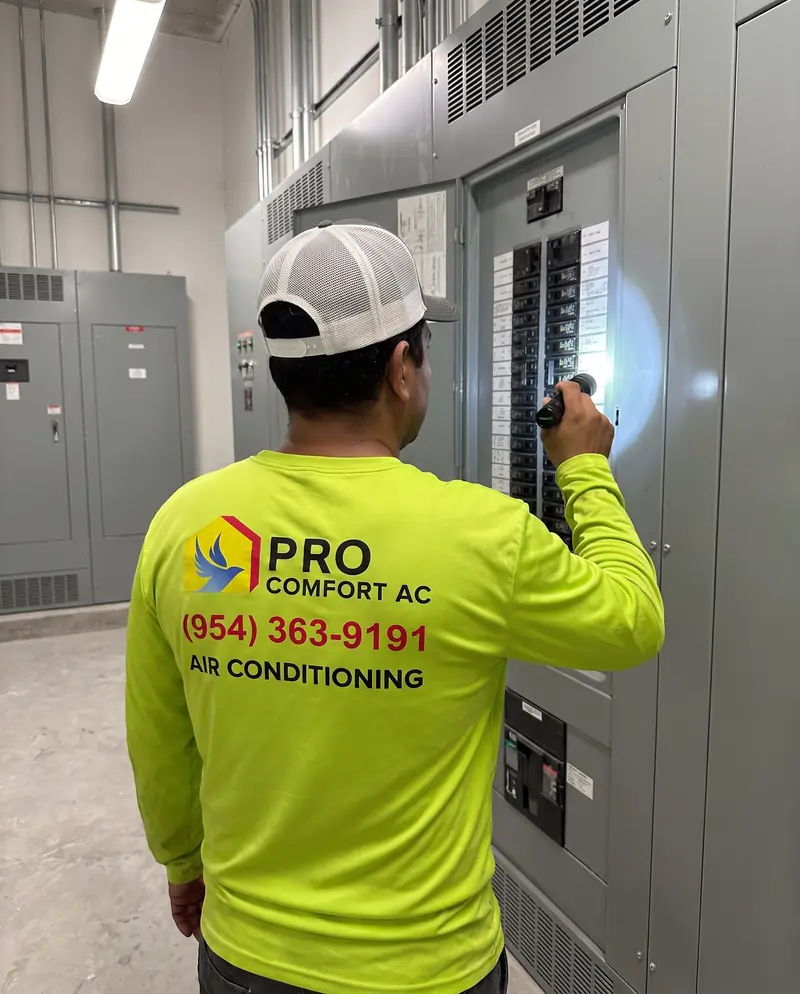
Responsibility depends on your building’s records and governing documents. A neighbor’s replacement can be a useful reference, but it does not establish who owns the wiring or approves the work in your case.
Confirm access early so equipment does not arrive before the contractor can reach the relevant circuit.
Your replacement quote should identify what was checked, what can stay, what needs changing, and who will perform the work. “Electrical included” or “electrical extra” is too vague when the scope could range from a connection change to panel work.
Look for these details before signing:
When comparing estimates, check that each contractor includes the same electrical work. A lower total may exclude an item another contractor has already priced.
A Boca Raton mailing address alone does not establish which permitting authority handles the project. Ask your contractor to confirm the authority for your address; association approval is a separate requirement.
Different equipment and existing circuit conditions can produce different outcomes, even in the same building. The following hypothetical examples show how the decision can vary.
An owner selects a replacement with electrical requirements that the existing circuit can support. The contractor confirms that the wiring, breaker, and disconnect are suitable and in acceptable condition. The estimate states which components will remain, with no panel replacement included.
The deciding factor is the confirmed match between the new equipment and the existing installation. Matching the old unit’s tonnage alone would not establish that result.
Another owner’s proposed system has requirements the existing AC circuit does not meet. The assessment identifies the specific wiring or protection changes needed and confirms that the panel can support the revised installation.
The quote lists those circuit changes separately. The owner has additional electrical work to budget for, but that does not become a full panel replacement simply because the new AC needs a different circuit arrangement.
If the assessment instead identifies a panel condition or capacity problem, the contractor should explain that finding and arrange the appropriate further evaluation before confirming the work.
No. A higher efficiency rating does not confirm that your existing circuit is suitable. The proposed model’s electrical ratings and the actual installation still need checking.
For systems rated under SEER2, the rating describes cooling efficiency. It does not replace the nameplate information used to assess the circuit. Choose equipment for the comfort and performance you need, then have its electrical requirements checked before ordering.
Not on its own. A larger breaker is only appropriate when the equipment requirements, wiring, panel compatibility, and applicable rules support it.
If someone recommends a breaker change, ask whether the entire AC circuit has been assessed. A breaker-only proposal should not substitute for checking the conductors and the manufacturer’s requirements. Have qualified professionals determine and complete the required work.
Thermostat wiring is a related but separate compatibility check. The control wiring and thermostat must work with the new equipment, but a thermostat change does not by itself establish a need for a panel upgrade.
Ask for control changes to be identified separately in the estimate. That keeps the power-supply work, thermostat work, and equipment installation clear when you review the total.
When setting your replacement budget, base the electrical allowance on the assessed scope. Ask whether the quoted amount is fixed, an allowance, or still subject to an electrical assessment.
If you are financing the replacement, confirm whether the electrical work is included in the financed amount or billed separately. This is especially useful when the HVAC contractor and electrician provide separate estimates.
Before committing to the replacement, ask for an AC replacement assessment that compares the proposed equipment with your existing electrical setup.
You should come away knowing what can stay, what needs changing, and whether a panel or service assessment is required. Any upgrade recommendation should have a specific reason and a clearly stated scope.
Pro Comfort AC LLC
817 SE 9th St
Deerfield Beach, FL 33441
Phone: (954)363-9191
Email: procomfortac@gmail.com
Business Hours
Monday – Sunday: Open 24 Hours
Emergency Service Available
When you arrange your assessment, share any building access restrictions and ask for the electrical findings to be listed separately in your quote. That gives you a clearer scope to approve before installation is scheduled.