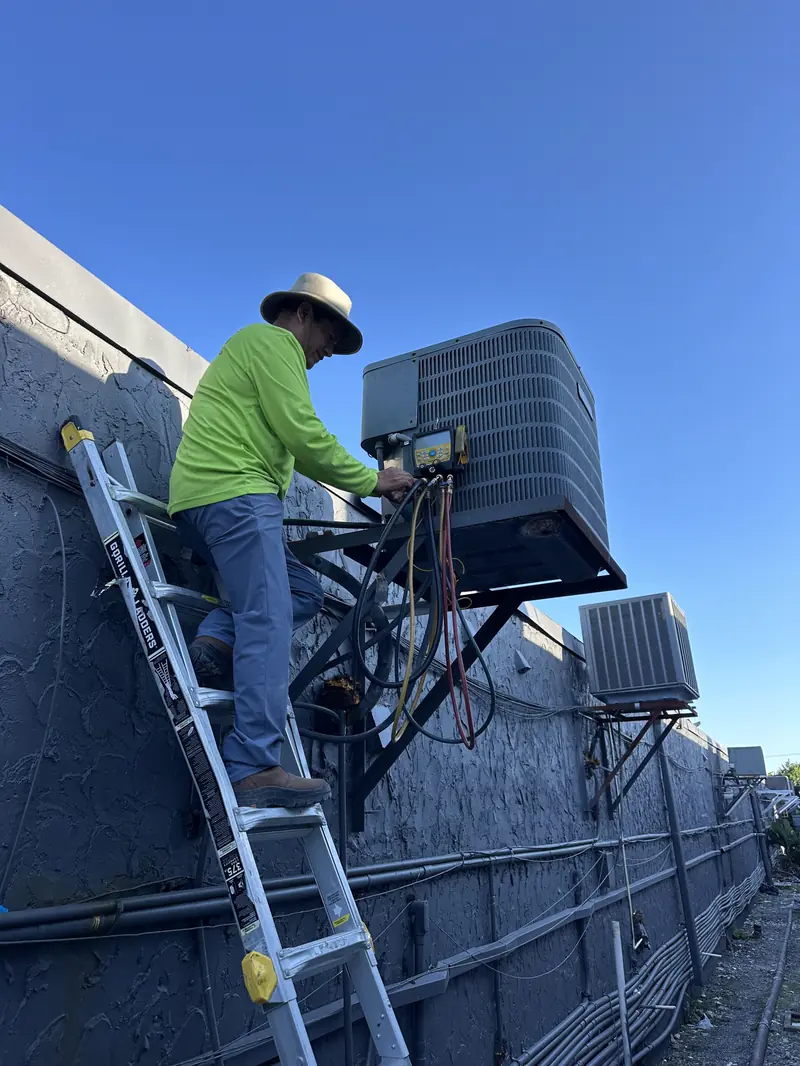
You may be able to move your condo AC condenser in Boca Raton if the new location meets the equipment’s installation requirements, your building approves the change, and the piping, electrical work, and applicable permits allow it. Before booking the move, have both locations assessed. A spot that frees up balcony space still needs suitable airflow, support, and service access.
Possibly, but the roof needs to be assessed for your specific system and building. The height difference, route back to the indoor unit, mounting requirements, and roof access can all affect whether the move is practical.
Start by identifying the equipment you have. A conventional split system has an indoor air handler and a separate outdoor condenser. A ductless mini-split also has an outdoor unit, with its own installation limits. An indoor water-source heat pump connected to a shared building loop does not have a separate outdoor condenser to move.
For rooftop or pancake equipment, confirm the system’s configuration first. A packaged rooftop unit and a thin horizontal air handler are different arrangements, even if both are described as “rooftop AC.”
Give the technician a clear starting point: where the condenser sits now, where you want it moved, and what you hope to gain. Reclaiming balcony space, changing a renovation layout, and moving equipment away from a seating area can lead to different proposals.
No. Moving the condenser changes its location. Replacing it changes the equipment. You can consider both together, but the quote should distinguish them so you know what you are approving.
Replacement in the same location:
New equipment goes into the existing outdoor spot. The replacement still needs the appropriate equipment and building review.
Relocation of the existing condenser:
Your current equipment moves to another spot, with any necessary changes to its connections and support.
Relocation with replacement:
New equipment is installed in a different location, so both the equipment choice and proposed position need assessment.
If you plan to replace only the outdoor unit, its compatibility with the indoor equipment needs a separate review. A compatible replacement does not automatically make the proposed new location suitable.
The new spot must meet the manufacturer’s requirements for the exact equipment and the applicable building requirements. Enough floor space is only one part of the decision.
The condenser needs space to draw in air and discharge heat. A tight enclosure, nearby equipment, or proposed screening can interfere with that airflow. The technician also needs room to reach service panels and maintain the unit after the move.
Ask how future service visits will work. A location that is accessible during construction may become difficult to reach once landscaping, balcony furniture, or other equipment is in place.
The proposed mounting arrangement needs to support and secure the equipment appropriately. For a roof location, that includes reviewing the support, anchoring, and any effect on the roof surface. Existing brackets or a nearby platform should not be treated as approval for your unit.
Moving the condenser to a more exposed spot can also change its exposure to wind and salt air. If the move includes replacement, consider suitability for coastal conditions when choosing the new equipment.
A different condenser location can change both the refrigerant piping route and the electrical connection. Even a move that looks short from your balcony may require a longer route around shared walls, roof areas, or other building features.
The refrigerant lines connect the outdoor condenser to the indoor equipment. Their permitted length, size, and height difference depend on the system. A balcony-to-roof move therefore needs more than a straight-line distance measurement.
The technician should document the proposed route and check it against the equipment instructions. The assessment should also establish whether existing lines can remain, need extending, or need replacing. Reaching the new location does not, by itself, mean the piping is suitable.
You do not need to choose the piping solution yourself. You do need a quote that explains what changes, why those changes are necessary, and whether opening walls or working through common areas is included.
Moving the unit may require a different electrical route and disconnect location. The disconnect is the local shutoff used when servicing the equipment. Its placement and the wiring route need review for the proposed location.
A relocation does not automatically mean you need a panel upgrade. Ask the contractor to separate work caused by the move from any electrical changes required by replacement equipment.
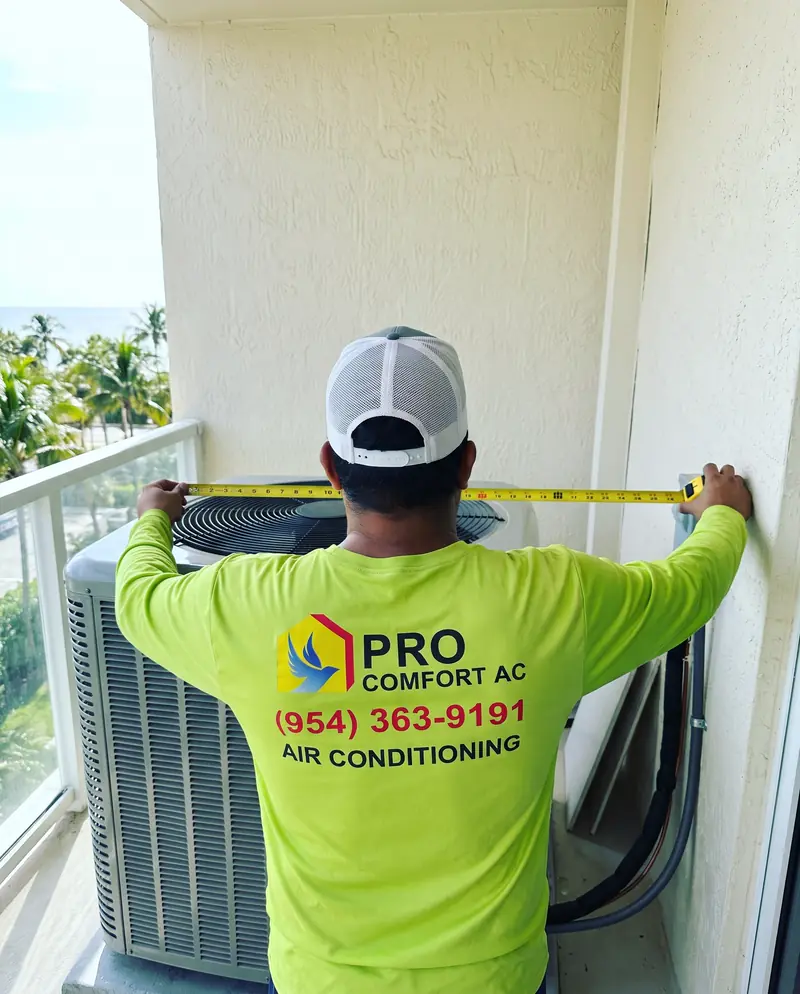
Confirm the building’s approval process and the applicable AC permit requirements before committing to the move. Association approval and permit approval address different parts of the project; one does not replace the other.
Ask your property manager for the alteration requirements that apply to a new outdoor equipment location. The proposal may need to address:
Your contractor should confirm which building department has jurisdiction over the property and what it requires for the proposed work. A Boca Raton mailing address alone does not establish the permit authority.
Get approval for the proposed location in writing. Permission to replace an existing unit should not be assumed to include permission to move it elsewhere.
A useful comparison shows what you gain, what work the move adds, and what remains unresolved. Ask for measured findings and a marked plan rather than two empty columns or a verbal “it should work.”
Current Location
What to Compare
Proposed Location
Use of Space
Identify the space the condenser occupies and the problem you want to solve.
Show the usable space gained and any equipment or screening that remains.
Airflow and Clearance
Record the existing arrangement and any restrictions.
Check the required clearances against walls, screening, and nearby equipment.
Service Access
Explain how the unit is reached today.
Confirm the access route and any building restrictions on future visits.
Refrigerant Connections
Identify the existing route and assess the lines being considered for reuse.
Document the proposed route, height difference, and necessary piping changes.
Electrical Connection
Identify the existing supply and disconnect.
Specify the route and electrical work needed at the new location.
Support and Building Approval
Record the current mounting arrangement.
Identify the proposed support, required approvals, and unresolved conditions.
The assessment should end with a clear outcome: the proposed location is workable, it needs changes, or it cannot proceed as proposed. If approval or a technical check is still pending, that should be visible before you accept the quote.
Your quote should identify the agreed location and explain the work needed to make it usable. A single line saying “move AC unit” leaves too much open.
Look for these details in the written scope:
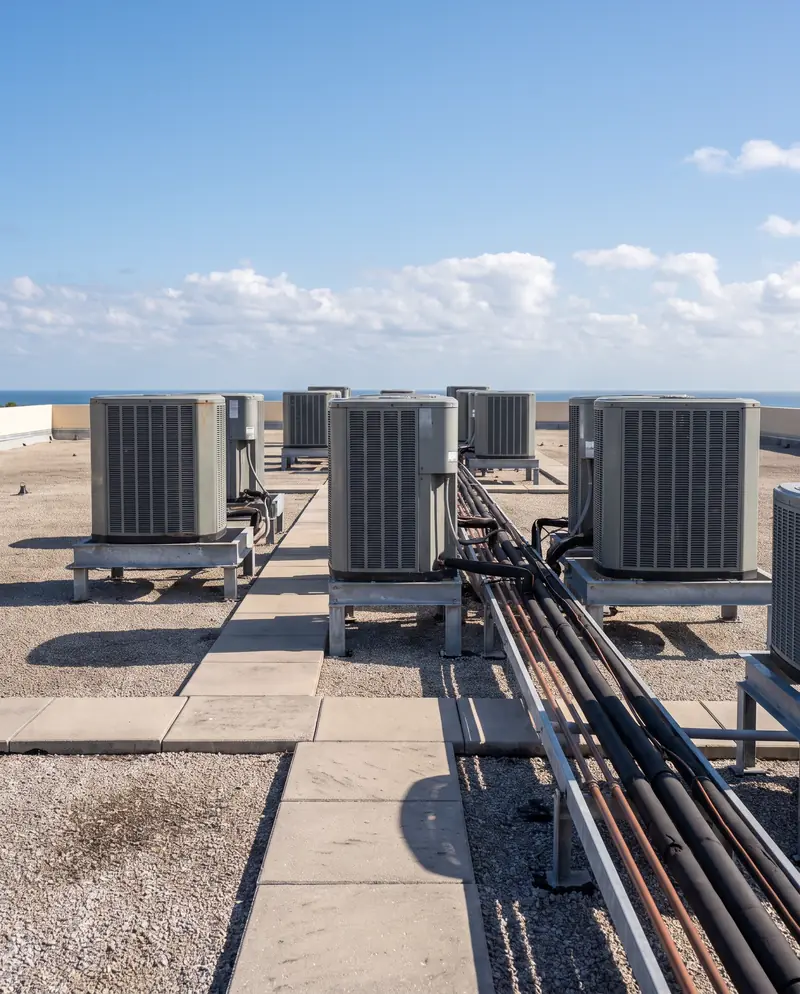
If replacement is included, compare quotes for the same equipment and work. One price may include the relocation connections and restoration while another covers equipment alone.
For a move during renovation, agree on timing before walls or finishes close. The proposal should identify which decisions and approvals must be settled before the next trade starts.
Possibly, if it is suitable for the proposed equipment and installation. Its current use does not prove that it can support a different unit or mounting arrangement.
Ask whether the assessment calls for retaining, modifying, or replacing the support, and whether additional structural review is needed. That decision should appear in the scope before installation.
The building may decline the proposal or require changes under its governing documents and alteration process. A technically workable location can still be unacceptable because of common-area use, appearance, access, or other building requirements.
If the preferred spot is refused, ask whether management permits an alternative location. Have that alternative assessed before treating it as a solution.
No. Relocation alone does not determine whether the whole system needs replacement. The equipment’s condition, compatibility, and suitability for the new location need separate review.
If the system is aging, compare moving the existing condenser with installing a new system in the proposed location. When both indoor and outdoor equipment will change, include the relocation requirements in your condo AC replacement plan so equipment selection, access, and approvals are coordinated.
To request an assessment of your proposed condenser move, share your address, equipment model, photographs of both locations, and any alteration requirements supplied by management. These details help establish whether the location is worth pursuing and what needs to be resolved before scheduling work.
Pro Comfort AC LLC
817 SE 9th St
Deerfield Beach, FL 33441
Phone: (954)363-9191
Email: procomfortac@gmail.com
Business Hours
Monday – Sunday: Open 24 Hours
Emergency Service Available