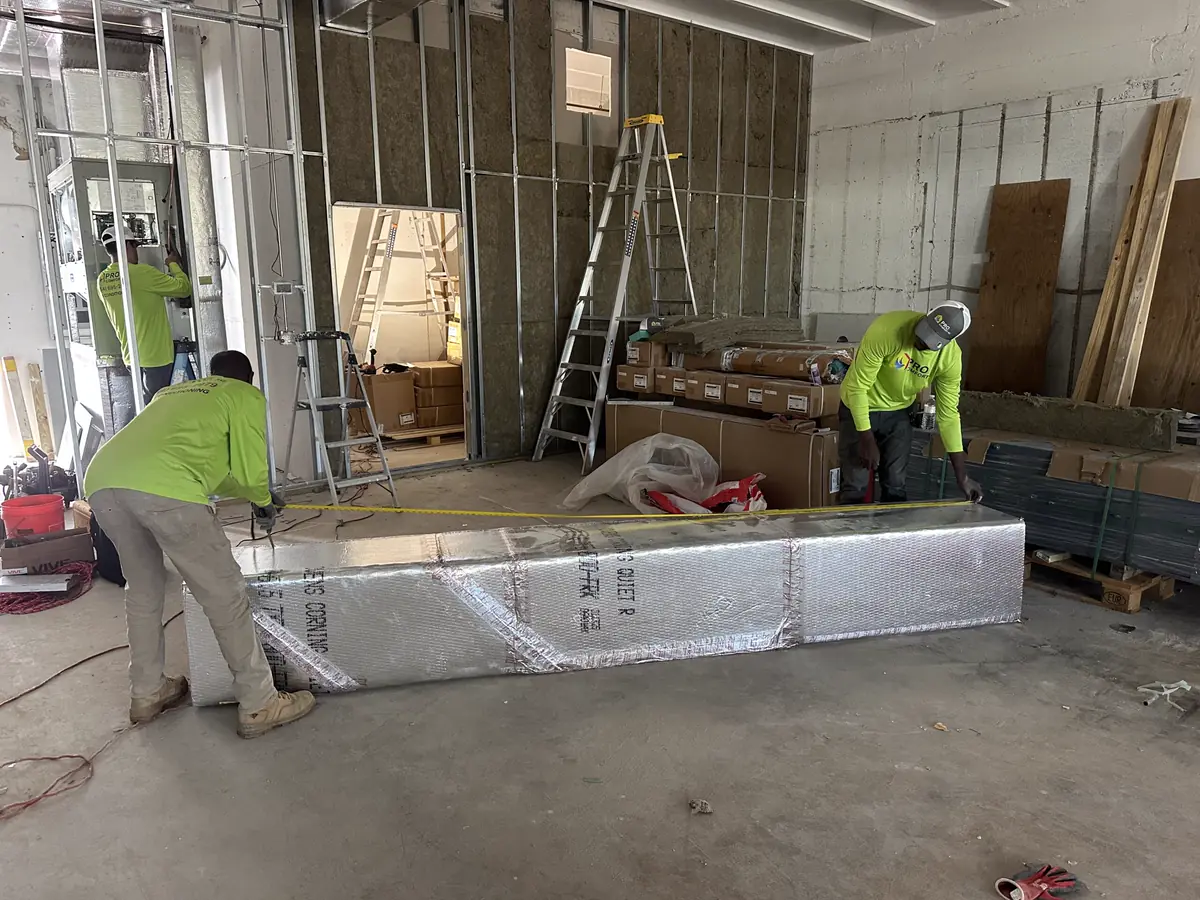
Not necessarily. Existing ducts can stay if they are properly sized, structurally sound, sealed, insulated, dry and capable of moving the airflow your new AC requires. Replacement or redesign makes sense when testing finds serious leakage, damaged or crushed runs, inadequate returns, failed insulation, contamination that cannot be corrected, or a layout that limits comfort and humidity control.
That answer should come from inspection and measurements, not the age of the ducts or a bundled quote. One contractor may recommend replacing everything while another proposes connecting new equipment to the existing system. The useful question is not simply whether the ducts are old. It is whether they can support the AC your home needs now.
An air conditioner does not cool rooms on its own. Its blower moves conditioned air through the supply ducts and pulls air back through the returns. When that path is too small, damaged or restricted, the equipment has to work against extra resistance.
The result may be weak vents, uneven temperatures, noticeable air noise or poor moisture removal. A new system can still disappoint when the ductwork cannot carry its required airflow.
Three questions belong in the early stages of AC replacement planning:
Capacity
Are the supply and return ducts large enough for the proposed equipment?
Condition
Are the ducts, connections and insulation sound, dry and properly supported?
Layout
Can the system deliver and return air where each room needs it?
The indoor unit matters here. The air handler and its blower have their own airflow and pressure limits, so the ducts must be evaluated against the exact equipment being proposed. A visual glance at the attic cannot answer that question by itself.
Old ducts can often be reused. Ductwork has no universal expiration date, and age alone does not reveal whether it performs well. A well-supported metal trunk with sealed joints may remain serviceable for years, while newer flex ducts can fail early if it is compressed, sharply bent or poorly installed.
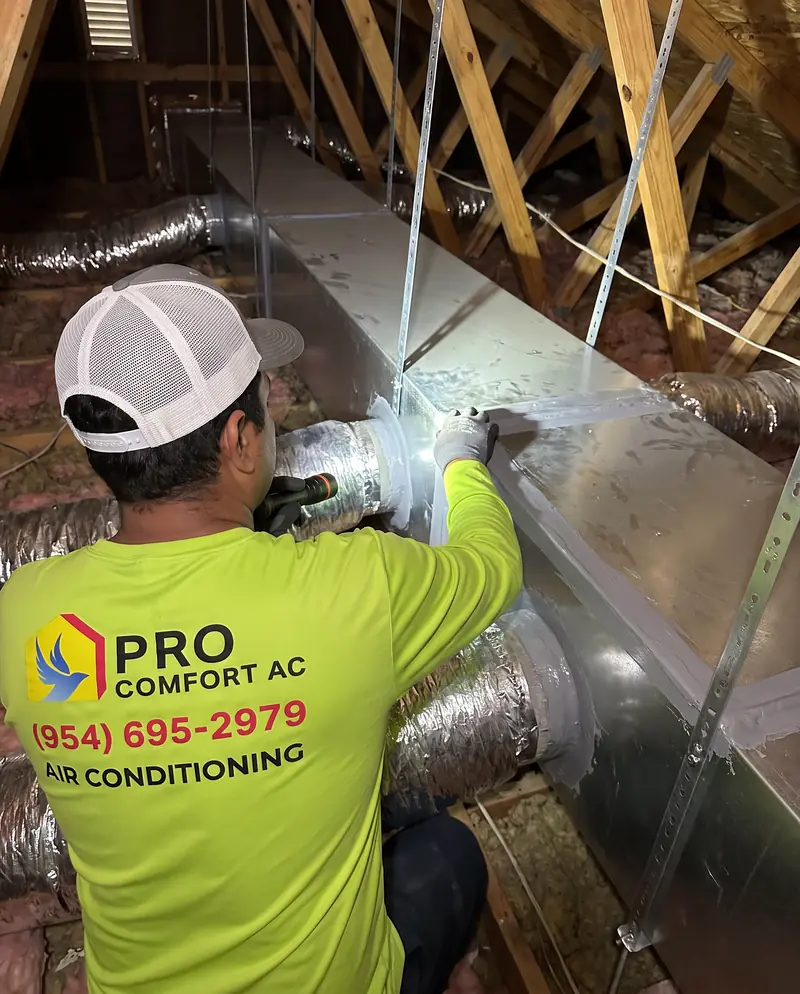
Keeping the existing system may be reasonable when the inspection shows:
The equipment should also be sized from the home’s current cooling load, not copied from the old unit’s tonnage. Renovations, window changes, insulation work and room additions can alter that load. Once the right equipment capacity is known, the ducts can be checked against the airflow it requires.
Cleaning, sealing, spot repair and full replacement solve different problems. The right scope follows the evidence. If only two branches are damaged, replacing every run may add cost without improving the result. If the entire return system is undersized, sealing a few joints will not correct the restriction.
Action
Keep
Ducts are sound, dry, insulated, sealed and able to deliver the required airflow
Condition photos, airflow findings, static-pressure readings and return review
Incorrect AC sizing or room-load problems
Action
Clean
Debris is present and the duct material can be cleaned safely
Source inspection and a written cleaning scope
Leaks, crushed runs, sizing, failed insulation or the source of moisture
Action
Seal
Ducts are structurally usable but connections or seams leak
Identified leak locations or leakage testing when appropriate
Inadequate returns, damaged insulation or a poor layout
Action
Repair or partially replace
Damage is limited to specific runs, boots, plenums, supports or insulation
A defect map, photos and a post-work test plan
Problems affecting the entire duct design
Action
Redesign or fully replace
Capacity, layout, return paths or widespread damage make smaller corrections impractical
Room loads, design airflow, equipment data and a duct design method
Equipment, drainage or building-envelope problems outside the duct system
A written recommendation should place each issue in one of those categories. Duct sealing, repair and replacement can then be priced as separate options where more than one approach is reasonable.
Be cautious when a quote treats “ductwork” as a single unexplained line item. You should be able to see what is being changed, why it is needed and how the result will be tested.
Undersized ductwork cannot be diagnosed by appearance alone. A technician needs to compare the equipment’s required airflow with the duct dimensions, return capacity, filter, coil, registers and measured resistance across the system.
Total external static pressure is one important reading. It describes the resistance the blower faces outside the equipment cabinet. There is no single correct number for every residential system, so the measurement must be compared with the manufacturer’s data for the specific air handler, blower setting and installed components.
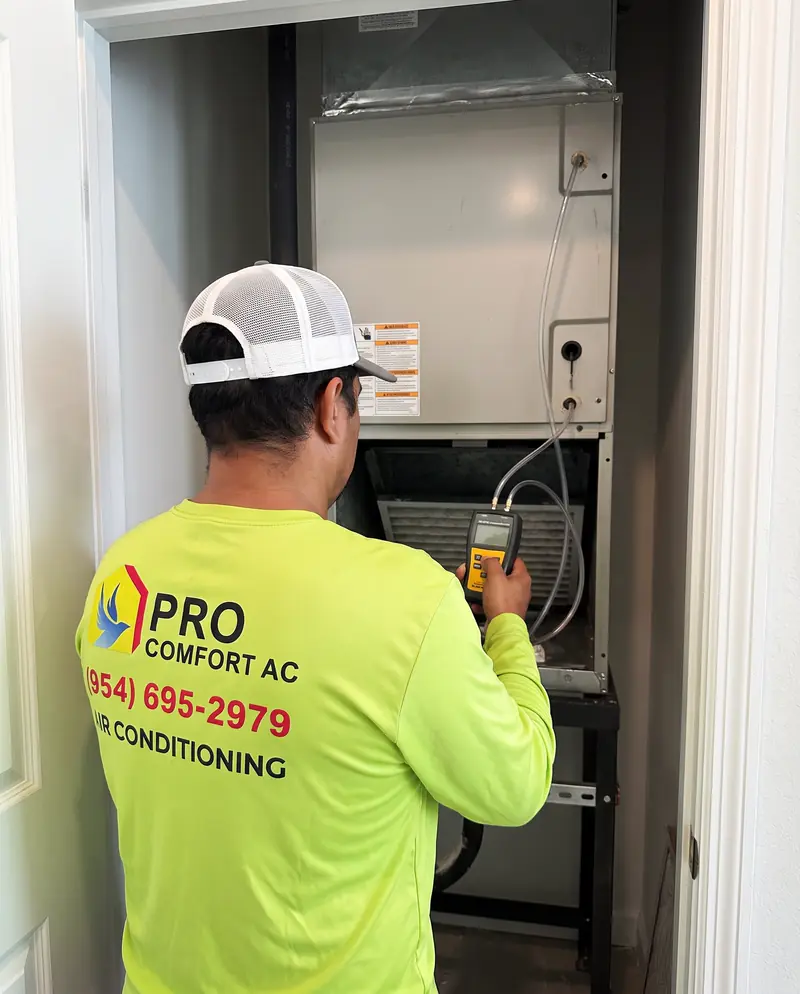
A useful assessment may include:
One high reading does not automatically mean every duct must be replaced. A restrictive filter, dirty coil, closed damper, undersized return or crushed branch can each affect the result. The measurements help narrow the cause before the scope is written.
For a replacement or redesign, the load and duct calculations serve different jobs. ACCA Manual J estimates room-by-room heating and cooling loads. Manual D uses those loads, the equipment airflow and the available pressure to design the duct system. Together, they help prevent a new AC from being paired with ducts that cannot deliver its air.
Many Florida ducts run through attics, closets, soffits or tight chases outside the conditioned space. This puts cold supply air close to hot, humid air, making damaged insulation and air leaks more likely to affect comfort and moisture levels.
Return leaks can pull humid air into the system, while supply leaks allow cooled air to escape before it reaches the rooms.
Condensation on a duct does not automatically mean the duct needs to be replaced. The cause may be damaged insulation, air leakage or humid air reaching a cold duct surface. Depending on the findings, sealing a leak or repairing the insulation may be enough. Widespread damage or a poor layout may call for partial or full replacement.
High indoor humidity also deserves a wider diagnosis. Duct leakage and poor airflow may contribute, but equipment size, runtime, controls, drainage and outside air entering the home can matter too. A variable-speed AC may handle humidity differently from a single-stage system, but equipment staging will not correct damaged or undersized ducts.
If there is visible growth, wet material, water damage or suspected hazardous material, pause the duct decision until the material and moisture source have been properly assessed. An odor or stain alone is not enough to justify replacing all the ductwork.
A useful duct inspection connects physical condition and measured airflow to the exact replacement system. It should also address the rooms where you already notice weak airflow, noise, temperature differences or moisture.
Ask the contractor to document:
This work belongs before equipment is ordered. Otherwise, the duct decision may be based on a system that has already been selected, even if the measurements point to a different airflow requirement.
If full replacement is recommended, ask why spot repairs or partial replacement would not work. If no duct work is recommended despite ongoing comfort problems, ask how the measurements rule the ducts out. Either answer should be supported by findings you can review.
Start by separating the equipment from every duct correction. A higher proposal may include useful work that a lower bid omits, but a large duct allowance is not automatically a better plan.
For each quote, compare:
Ask for a price beside each duct action rather than one combined allowance. That gives you room to question a recommendation without losing sight of necessary work. It also reveals whether two bids that appear far apart are offering the same scope.
The expected result should be specific but not guaranteed beyond what testing can support. “Replace two crushed branches and verify airflow at the affected rooms” is clearer than “upgrade all ductwork for better comfort.”
There is no useful statewide price for this decision because the scope varies too much. Sealing accessible joints, replacing several damaged flex runs and redesigning an entire supply-and-return system are different projects.
Cost is shaped by:
The better comparison is a line-item proposal tied to documented findings. It may not be the shortest quote, but it gives you a clear way to compare what each contractor intends to do.
Before approving a new AC, ask for a duct and airflow assessment that clearly separates what can stay from what needs cleaning, sealing, repair, redesign or replacement. Each recommendation should connect to a photo, measurement or design finding and include a way to check the completed work.
Contact our team to request an assessment and discuss the proposed equipment, current comfort problems and duct findings.
Pro Comfort AC LLC
817 SE 9th St
Deerfield Beach, FL 33441
Phone: (954)363-9191
Email: procomfortac@gmail.com
Business Hours
Monday – Sunday: Open 24 Hours
Emergency Service Available