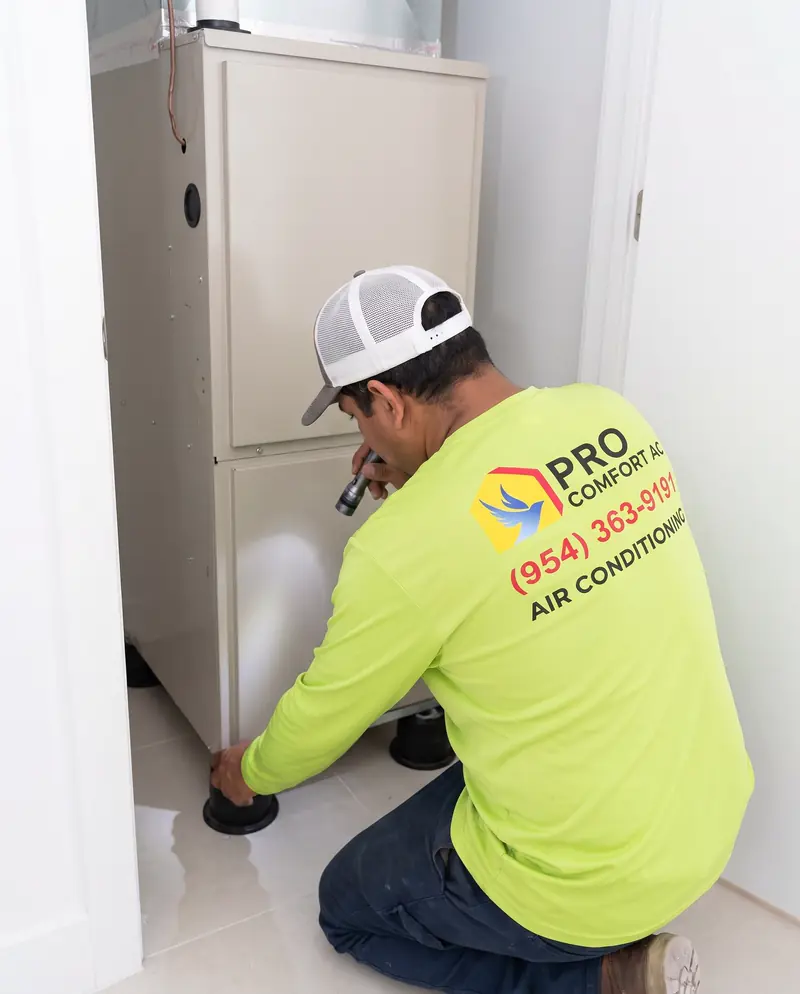
Before you sign a quote for a new indoor coil, set it beside two things, the typical prices for the job and the age of everything else in the system. A new coil can be a sound repair or money spent on a system near the end of its life, and the rest of the system decides which.
Replacing an evaporator coil costs about $627 to $2,700 nationally as of April 2026, around $1,350 on average with labor and refrigerant included. Trane’s April 2026 guide puts the job at $2,000 or more nationally even when a manufacturer warranty pays for the coil, because the labor, refrigerant and taxes aren’t covered.
There’s no reliable Florida-only coil price to go by, but these national ranges still give you a fair way to check a coil quote.
A coil replacement price changes with which coil failed, the size of the system and any manufacturer’s warranty still covering the part.
| Coil Job | Typical National Range | What’s Behind the Number |
|---|---|---|
| Indoor coil, typical job | $627 to $2,700 as of April 2026, about $1,350 on average | The coil, the labor and the refrigerant |
| Indoor coil by system size | About $700 to $2,350 for 3 tons and $900 to $2,700 for 5 tons, as of April 2026 | A bigger system takes a bigger coil and more refrigerant |
| Indoor coil part under a manufacturer warranty | $2,000 or more, as of April 2026 | You still pay for labor, refrigerant and taxes |
| Indoor coil with no warranty help, upper end | Up to $5,000 or more, as of April 2026 | You pay for the whole job |
| Outdoor condenser coil | $600 to $2,400 as of January 2026; $1,000 to $2,700 or more as of March 2026 | Often priced alongside a new outdoor unit |
If your quote lands inside the range for your coil and system size, it’s in line with national prices. A quote well above it is fair to question line by line, starting with the labor hours and the pounds of refrigerant.
Six parts of the job move a coil replacement price, and each one is a fair question to raise before you sign.
Factor
Coil type
Why It Moves the PriceReplacing an A-coil averages about $1,300 nationally, an N or Z coil $1,550 and a slab coil $1,200, as of April 2026
What to Ask About Your QuoteWhich coil shape fits the air handler, and is it cased or uncased?
Factor
System size
Why It Moves the PriceMore tonnage means a larger coil and a larger refrigerant charge
What to Ask About Your QuoteWhat size is the new coil?
Factor
Refrigerant
Why It Moves the PriceThe type and the amount the system holds change the cost of the recharge
What to Ask About Your QuoteWhich refrigerant, and how many pounds are in the quote?
Factor
Labor steps
Why It Moves the PriceRecovering the old charge, brazing, a nitrogen pressure test, a vacuum and a weighed recharge all take time
What to Ask About Your QuoteAre all of these steps included?
Factor
Access
Why It Moves the PriceA tight closet, an attic or a condo closet adds hours
What to Ask About Your QuoteHow long will the job take?
Factor
Warranty
Why It Moves the PriceA manufacturer parts warranty may cover the coil while you pay for labor, leak search and recharge
What to Ask About Your QuoteIs the coil still under the manufacturer’s parts warranty?
The evaporator coil is housed in the indoor air handler, so the cabinet’s size and how easy it is to reach affect the labor.
A coil still under warranty saves you the cost of the part, though the labor usually stays with you, so ask what a parts warranty does and doesn’t cover on your system before you compare quotes.
Your system has two coils, and they do opposite jobs. The evaporator coil inside the air handler absorbs heat from the house, and the condenser coil in the outdoor unit releases that heat outside.
The two jobs fall in overlapping national price ranges, but the decision behind them differs. The outdoor unit holds the condenser coil and the compressor, so a quote for a new outdoor coil often turns into a question about the whole outdoor unit.
Outdoor coils near the coast also take steady salt exposure, which is why brands and coil coatings for coastal homes come up in these quotes.
Indoor coils can fail early from formicary corrosion, which happens when copper coils react with household chemicals such as cleaners and air fresheners and form tiny holes. Those pinholes are often why a coil leaks well before the rest of the system wears out.
Ice is a different signal. It can point to low refrigerant, and a coil that keeps icing over isn’t always a failed coil, so have the cause found before anyone quotes a new one.
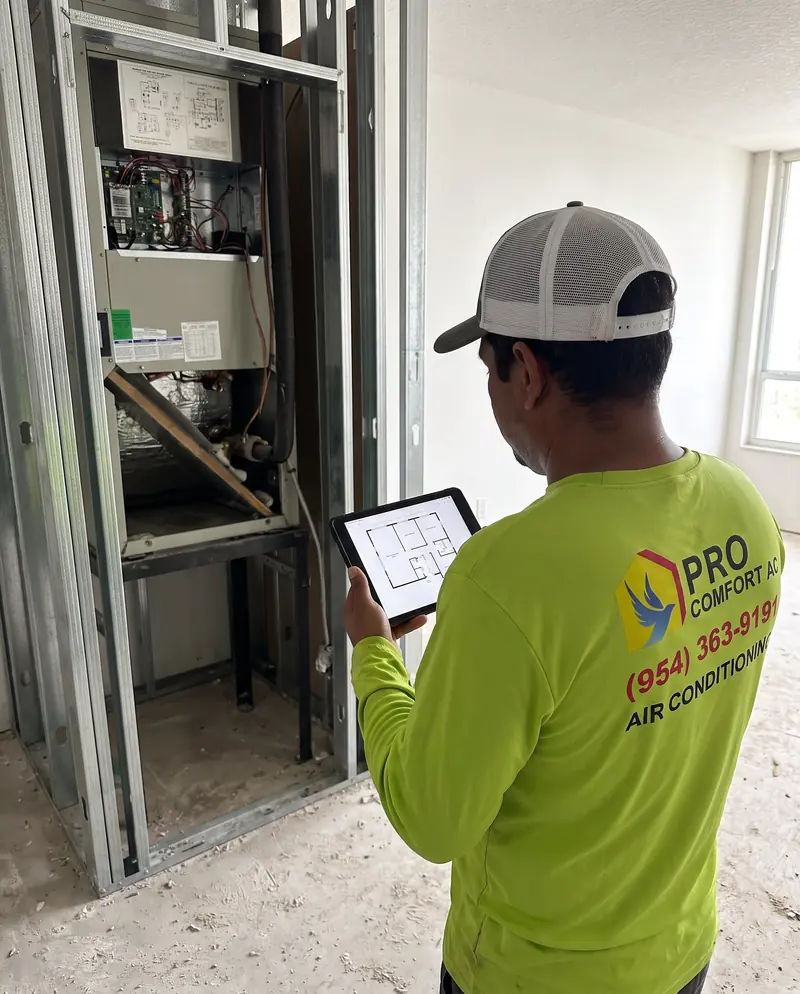
An evaporator coil typically lasts about 10 to 15 years with regular maintenance, and corrosion can end it sooner. Compare the coil’s age with the outdoor unit’s, because a new coil on an aging outdoor unit leaves the oldest parts of the system in place.
Replacing only the evaporator coil costs the least up front, and it also leaves more of the old system running. A new air handler houses the blower and the evaporator coil, so it replaces more of the indoor side than a coil swap does.
New indoor coil only
Typical Installed Cost$627 to $2,700 nationally, as of April 2026
What Stays OldThe blower, the outdoor unit and the refrigerant lines
Refrigerant Question to SettleDoes the coil match the outdoor unit, and was that unit replaced before?
New air handler with blower and coil
Typical Installed Cost$1,500 to $4,200 installed nationally, as of October 2026
What Stays OldThe outdoor unit and the refrigerant lines
Refrigerant Question to SettleWas the outdoor unit replaced before, and when?
New matched system
Typical Installed CostQuoted home by home, with no single national range
What Stays OldWhatever the installer reuses
Refrigerant Question to SettleWhich current refrigerant will the new system use?
The cheaper path keeps more old parts working beside the new coil. If the outdoor unit is old too, the coil and a complete new system are worth pricing side by side, so you can see what the extra money replaces.
Those refrigerant questions come from EPA’s 2026 rule, and for a coil or an air handler, it turns on what was replaced before.
It can, in one situation, when the other half of the system was already replaced.
EPA’s May 2026 final rule, which took effect on July 27, 2026, speaks to that case. Once the condensing unit has been replaced, a later indoor-coil replacement "would be considered the installation of a new system which cannot use a refrigerant that exceeds the limit," and the rule treats the reverse order the same way.
EPA’s homeowner questions on split systems, updated in November 2026, say a homeowner can replace a faulty indoor coil with "a similar R-410A component." To the question of replacing the condensing unit first and the coil later, EPA’s answer there is "Systems may be repaired over time."
If your outdoor unit was replaced on its own a few years ago, that earlier condenser-only replacement is the history the rule’s coil clause looks at.
The two documents read differently on that one case, so your installer applies the rule in force to your system’s own history, including which half was replaced and when.
A new coil is worth it only if the outdoor unit, the compressor and the refrigerant are worth keeping. The rest of the system decides it, so look at each of these before you say yes to the work.
Start with the diagnosis. Before you approve a coil quote, a diagnosis to confirm the coil failed rules out a cheaper fix, such as a leaking valve.
Price the leak search too. Not every leak means a new coil, and the cost of finding a refrigerant leak is the first number to get.
Look at the outdoor unit and compressor. If they’re worn, the new coil ends up paired with parts that may soon need repairs of their own.
Check the refrigerant. On an R-22 system, the coil question becomes a whole-system question.
Ask about the warranty. A coil part still under the manufacturer’s warranty takes the part off the bill, which can tip a close call toward repair.
Think about the match. EPA notes that a mismatched coil and outdoor unit may not be as efficient as parts designed to work together.
Rules of thumb such as the $5,000 rule give only a rough guide, and for a coil, the system’s age and refrigerant type matter more.
No. Refrigerant for home air conditioners can be bought only by technicians with EPA Section 608 certification, or their employers, and venting refrigerant during service is prohibited. The old charge has to be recovered, and the new coil has to be pressure tested and charged before the system runs again.
We’re a state-certified air conditioning contractor, license CAC1822561, and you can check that license number with the state before any work starts.
If you’d like another look before you sign, send us the quote you have, along with the system’s age, and request an estimate for the coil work to set beside it. A second opinion starts with a diagnostic visit, and its fee counts toward the repair if you decide to go ahead with it.
That way, your decision rests on your own system rather than on a single quote.
Pro Comfort AC LLC
817 SE 9th St
Deerfield Beach, FL 33441
Phone: (954)363-9191
Email: procomfortac@gmail.com
Business Hours
Monday – Sunday: Open 24 Hours
Emergency Service Available