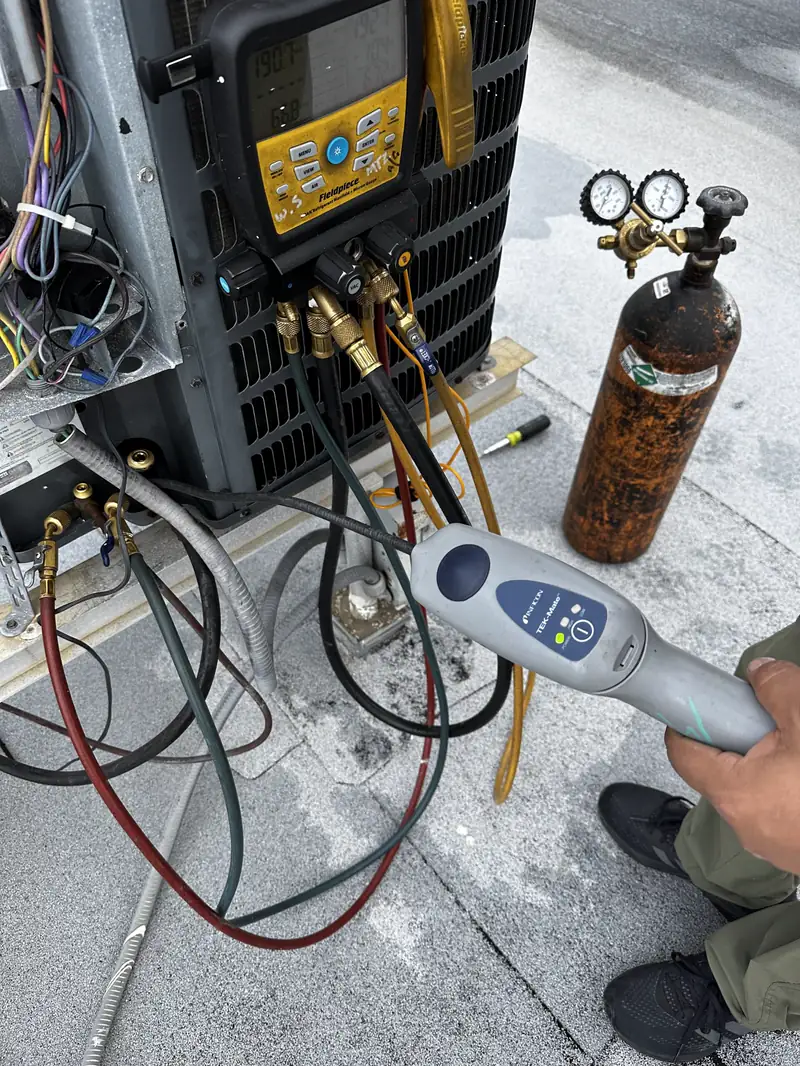
You may be able to reuse your condo’s refrigerant lines with a new AC if the copper piping meets the replacement equipment’s requirements and passes the required checks. Changing refrigerants does not automatically mean replacing the lines. Before you approve the work, your installer should confirm the pipe size, route, condition, and preparation needed for the proposed system.
For a condo owner in Boca Raton, this decision can affect more than the equipment price. If the pipes run behind finished walls or through shared building spaces, knowing whether they can stay helps you plan access, repairs, and association approvals before installation begins.
Not always. Existing copper lines can sometimes stay when their size, length, condition, and preparation meet the new system’s installation requirements. Other projects need new piping because the existing lines are damaged, unsuitable, or outside the manufacturer’s specifications.
The pair of copper pipes connecting your indoor air handler to the outdoor unit is called the refrigerant line set. These pipes carry refrigerant between the two units. They are separate from the drain that carries away condensation.
If your building uses a water-source heat pump, its building water-loop connections are different from the refrigerant lines discussed here. Confirming which system you have prevents confusion about what the replacement includes.
For a split system, the useful question is: “Can these existing lines work with the exact equipment you’re proposing?” The answer should come from the equipment instructions and an assessment of your piping. Approval to keep the copper does not establish that you can keep the old indoor unit while replacing the outdoor unit; that requires a separate equipment compatibility assessment.
No. Switching from R410A to R454B does not create a blanket requirement to replace every existing line set. Reuse depends on the new equipment’s instructions and whether the existing piping meets them.
Bosch, for example, allows existing R410A line sets to be reused with its new R454B split systems under specified conditions. Those conditions include correct sizing, required cleaning and nitrogen purging, pressure testing, and a leak-free installation that meets applicable requirements. That is a manufacturer-specific example, not approval for every replacement system.
Whether your proposed system uses R32 or R454B, ask your installer to identify the instructions that support keeping your existing lines. The refrigerant name alone does not settle the piping decision.
Reusing copper pipes does not mean keeping the old refrigerant. The new system must use its approved refrigerant. R454B is not a drop-in substitute for R410A in equipment designed for R410A.
The decision depends on the proposed equipment, the existing pipe dimensions and route, and the condition checks. A line set that worked with your old AC is not automatically suitable for its replacement.
Use these points to understand the recommendation:
Check
Equipment requirements
Installation instructions for the proposed indoor and outdoor models
Reuse must be supported by the specified equipment requirements
Check
Pipe size and route
Copper diameter, total run length, and vertical rise
Lines outside the approved limits may need replacement or a revised design
Check
Existing condition
Visible damage, corrosion, repair history, and previous leaks
Problems need investigation before the lines are accepted
Check
Preparation and testing
Required cleaning, pressure testing, and other verification
Reuse depends on completing the specified work and meeting acceptance requirements
Check
Concealed sections
What can be inspected or tested and what remains uncertain
Unresolved conditions should be identified before the quote becomes a firm commitment
Your installer should explain whether the recommendation is to reuse, replace, or investigate further. If more information is needed, ask what would settle the question and whether obtaining it involves opening a wall or arranging building access.
Ask for the relevant piping requirements for the exact equipment listed in your proposal. The documentation should support the existing line size and route, along with any conditions for reuse.
You do not need to interpret the entire installation manual yourself. Your installer should explain how your piping meets the requirements and identify anything that still needs checking. If the equipment model changes before installation, the line-set decision needs to be reviewed against the replacement model.
A concealed or shared route can make inspection and replacement more involved, but it does not automatically rule out reuse or new piping. The assessment should distinguish what is known from what still needs investigation.
A chase is a space used to route building pipes or other services. Your refrigerant lines might pass through a vertical chase, above a hallway ceiling, or behind finished walls before reaching the outdoor unit.
Ask your installer to describe the route and identify where access may be needed. A simple sketch can make the proposed work easier for you and the building manager to review.
Access QuestionWhat To Record Before Approving The Work
Your condo documents and association procedures determine how shared-space access is handled. Include those arrangements in your condo AC replacement plan, especially if the proposed work extends beyond your unit. Permission to replace the equipment may not include permission to open a chase or alter the piping route.
If the current route cannot be used, ask for the proposed alternative before authorizing additional work.
The quote should identify the lines being retained, why they are suitable, and what preparation and testing are included. “Reuse existing lines” alone leaves too much unanswered.
Look for these details:
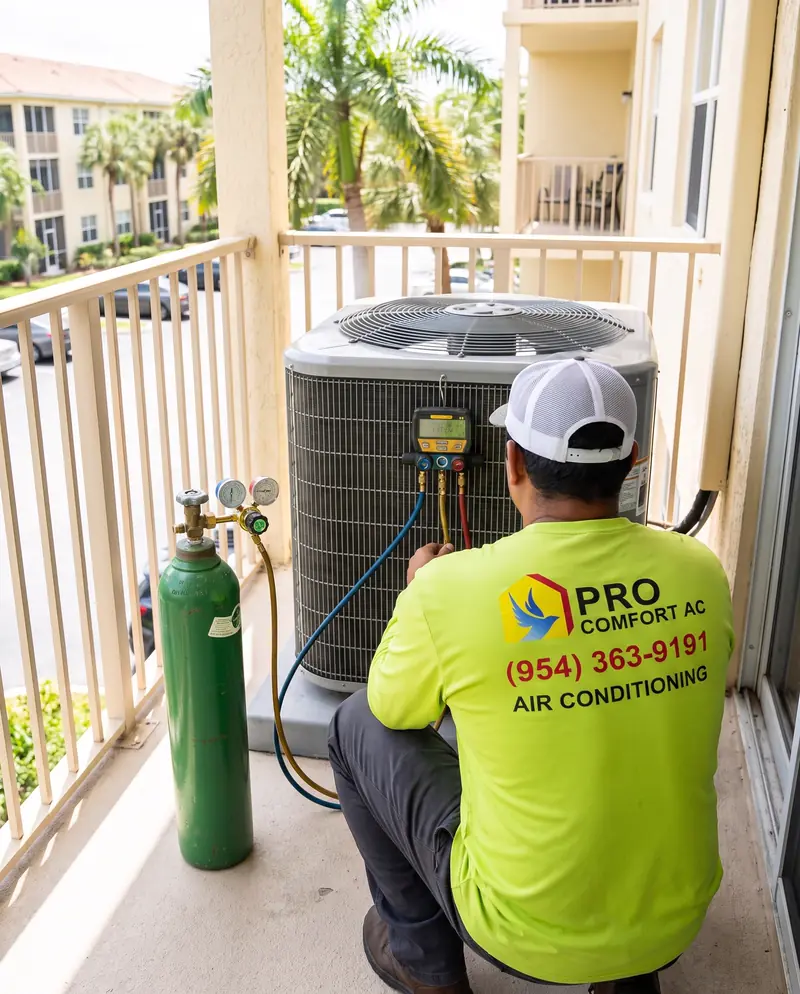
Ask whether reuse is already supported by the assessment or whether the quoted price assumes the lines will pass later checks. That distinction helps you understand how firm the price is.
When comparing replacement quotes, check that both contractors include the same line-set work. A proposal allowing for preparation and testing is different from one that simply assumes the existing copper can stay.
New lines may be necessary when the existing piping fails the required checks, does not meet the new equipment’s specifications, or cannot serve a planned equipment move. The recommendation should explain which issue applies to your condo.
A leak, damaged section, or contamination concern needs a clear resolution. Ask whether the proposed work involves repairing a specific section or replacing the full run, and why that approach is appropriate.
Replacing the AC equipment does not resolve a defect in piping that remains connected to it.
Existing lines may have the wrong diameter or a route that exceeds the proposed equipment’s limits. Ask which requirement cannot be met so you understand the reason for replacement.
A general statement that the lines are “too old” is less useful than an explanation tied to their condition or the new equipment.
Moving the indoor cabinet or outdoor unit may require a different pipe path or additional piping. The assessment should account for connection access, building permissions, and any work needed along the new route.
If walls or ceilings will already be opened during a renovation, discuss piping access before the finishes are restored. Coordinating the work can avoid reopening the same area later.
It may reduce the need to open walls along the existing route, but it is not a guarantee. Your installer still needs to assess the piping, reach the necessary connections, and complete the required preparation and testing.
Ask which access work is included even if the lines stay, and what findings could change that plan. If a concealed section needs attention, clarify how the contractor will obtain access and who will restore the affected finishes.
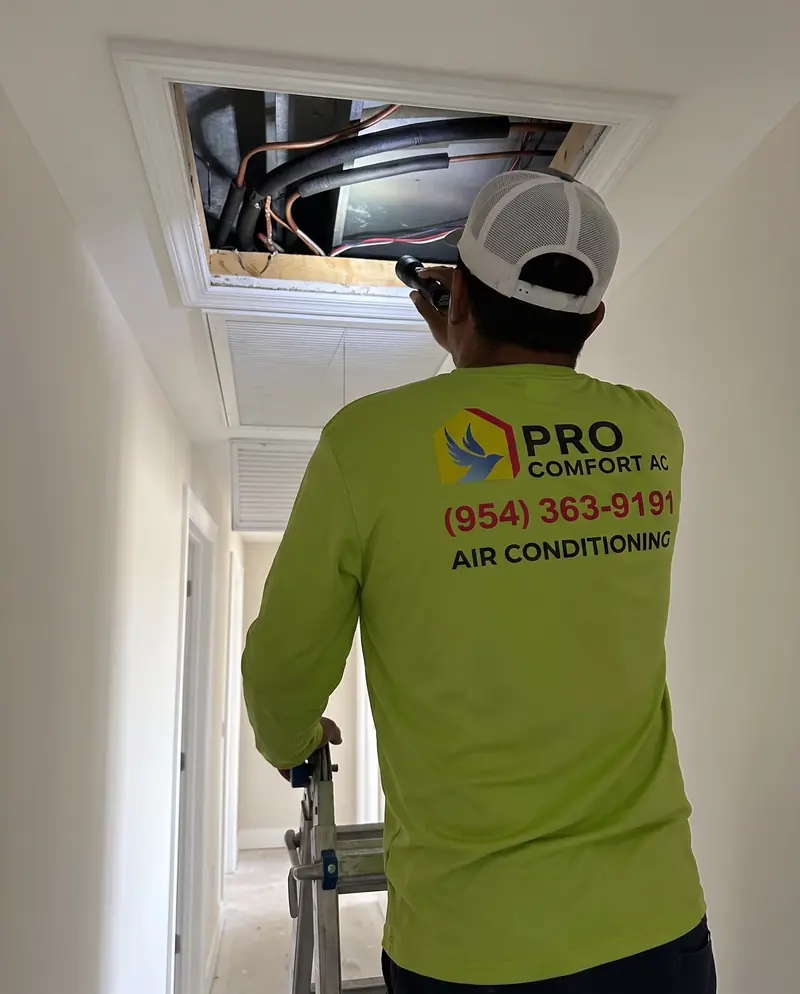
Before scheduling installation, confirm any approvals or access arrangements required for the line-set work. This helps you plan around building work hours and avoid delays caused by unresolved access.
If you are replacing your Boca Raton condo AC, request an assessment of the existing refrigerant lines. Share any known leak history, previous repairs, and information about where the pipes run.
The recommendation should give you a clear outcome: reuse the lines with the required preparation, replace them for a documented reason, or investigate an unresolved condition. That gives you a practical basis for approving the work and understanding what could change the price.
Pro Comfort AC LLC
817 SE 9th St
Deerfield Beach, FL 33441
Phone: (954)363-9191
Email: procomfortac@gmail.com
Business Hours
Monday – Sunday: Open 24 Hours
Emergency Service Available